Topic
Jiří Sázel: "After 18 years of working in the Himalayas, it is no longer a problem for me to meet a person on every corner in Ladakh whose life has been changed by our work."
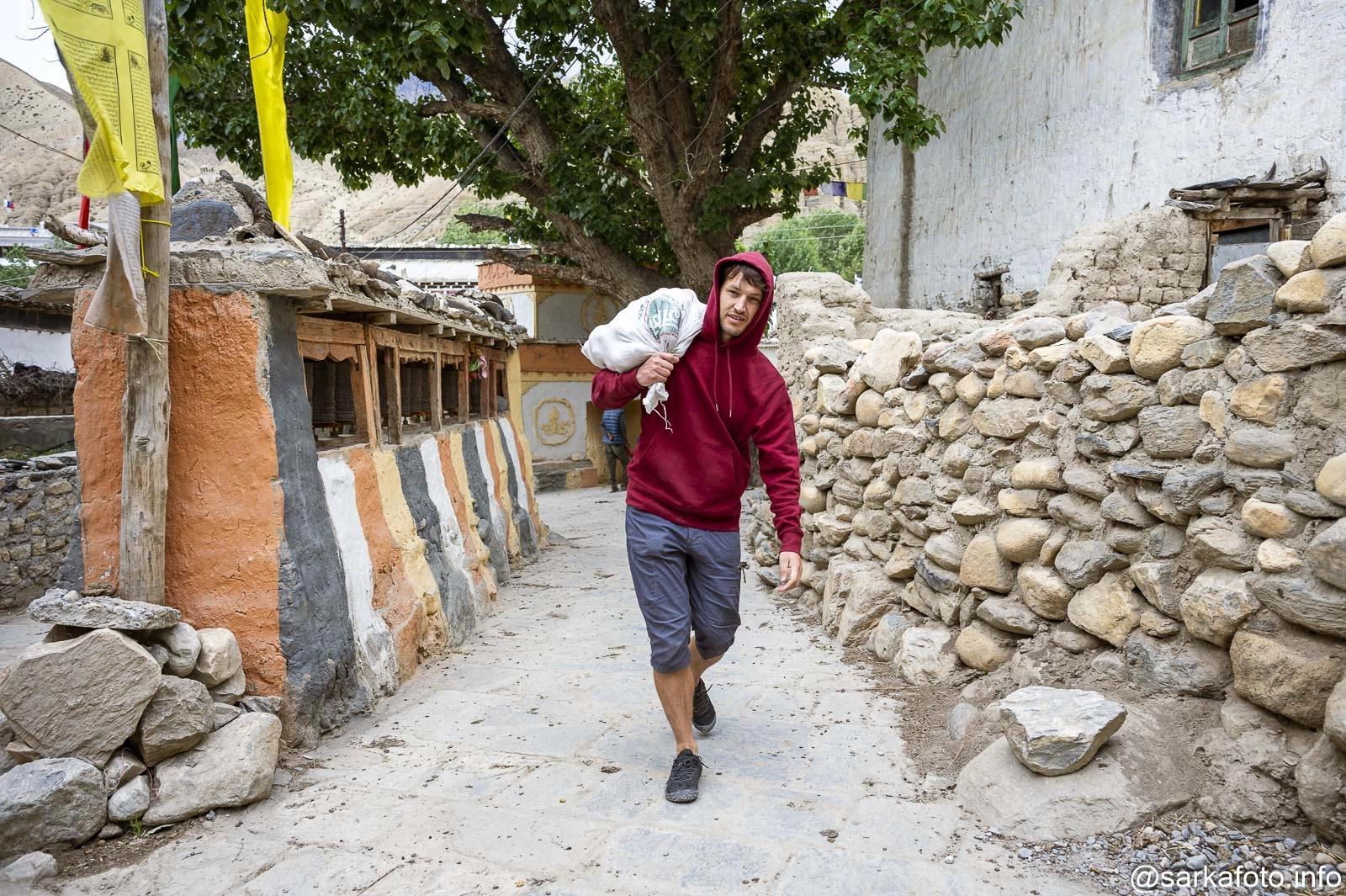
Jiří Sázel, a graduate of Faculty of Civil Engineering BUT (FCE BUT) and founder of the nonprofit Himálajský patron, has been connecting technical education with aid in remote Ladakh for 18 years. During this time, he has managed to build a wide network of activities and personal contacts there. In the interview, he recalls the journey from a civil engineering student to leading a respected mission that supports the education of local children and inspires new generations of volunteers.
Let's go back to the very beginning of your career. What originally led you to the decision to study civil engineering at Brno University of Technology? Were you close to technology since childhood or was it a pragmatic choice? Did anyone influence your decision?
We had a natural tendency in our family to gravitate towards technical fields and I just inherited it. My parents felt that I might have a tendency to gravitate towards civil engineering, so I went on to study civil engineering in high school. I didn't have much of an idea of what to do with my life, so I just continued in the field through college.
When you look back on your student years at BUT today, what is the strongest memory or experience that comes to mind first? Was there a moment during your studies - either positive or challenging - that fundamentally shaped your approach to problem solving?
I was a big nerd at BUT. I also enjoyed provoking the teachers, which resulted in extra study assignments, but that logic didn't work too well for me.
There was a PhD conference where I went with papers on the Himalayan School, but also with a dissertation on dam management. I won in both categories and I guess I was unique in that.
On the other hand, by being cooped up all the time and learning something, I developed few friendships, which I view as a disadvantage from today's perspective.
University isn't just about scripts, it's about people. Did you meet a teacher or mentor at the BUT who inspired you personally or professionally and whose ideas you still carry to this day?
There were a few teachers during my studies who won people over. For example, I like to think of my math teacher Ota Pribyl, who is still at FAST today, if I'm not mistaken. He was able to explain even very complicated things in a completely normal way, and it was a fascinating contrast between other teachers who were not so clear. It was obvious that he perceived that the aim of teaching was not just to present the issues but to ensure that they were thoroughly understood.
At first glance, it may seem that there is a huge gulf between a technical education at BUT and running a humanitarian organisation. How do you perceive this connection? Was the transition from 'technician' to director of a non-profit a gradual process, or a sudden turning point in your life?
This career change was terribly challenging. I didn't really know what I was getting into. I was already a nerd during college, doing homework in a corner somewhere, and once in a while, that homework would get pulled out. And suddenly, with a nonprofit, I was going to start caring about how people felt and organizing cultural and social events for them, which I had only despised up until then. For example, I knew nothing about music. I remember the actor Pavel Liška helping me choose a musician for a benefit concert because he saw that I was completely out of my depth and couldn't see the difference between a local brass band and Lenka Dusilova.
In retrospect, however, I see the career change as a major benefit and I am well aware of the downsides of staying in one field all your life. The formula for the downside of one specialty, in my experience, is that detailed understanding and erudition within one field lends people the feeling that they understand all other fields in exactly the same way.
It is often said that technical schools teach students primarily specific ways of thinking and structured problem solving. Do you still use these skills learned at the BUT today when managing logistically challenging projects in the Himalayas? How does your technical background give you an advantage?
The advantage of having a technical background working in the humanities was that I was not afraid of technical solutions. For example, programmers just aren't among humanities-based people, and it was no problem for me to program my own database or make a website, which definitely helped this nonprofit. Likewise, being able to speak into how we build a school in the Himalayas all the time and not having to hire expensive experts was a big help.
Our nonprofit also currently has a benefit store where we sell mostly clothing. We sell the clothes as engineers. All the brands talk about emotions and use an infinite number of different adjectives. We talk about parameters and use descriptions of what it is. It's fascinating that people buy this. I guess it's so unusual that it just grabs them.
Let's go to your 'child' - the Himalayan Patron Society. What was the very first, decisive impulse that led you to start an organization aimed at promoting education in such a remote area? Was it a particular journey, an encounter with a particular child, or a feeling that 'just' traveling was not enough?
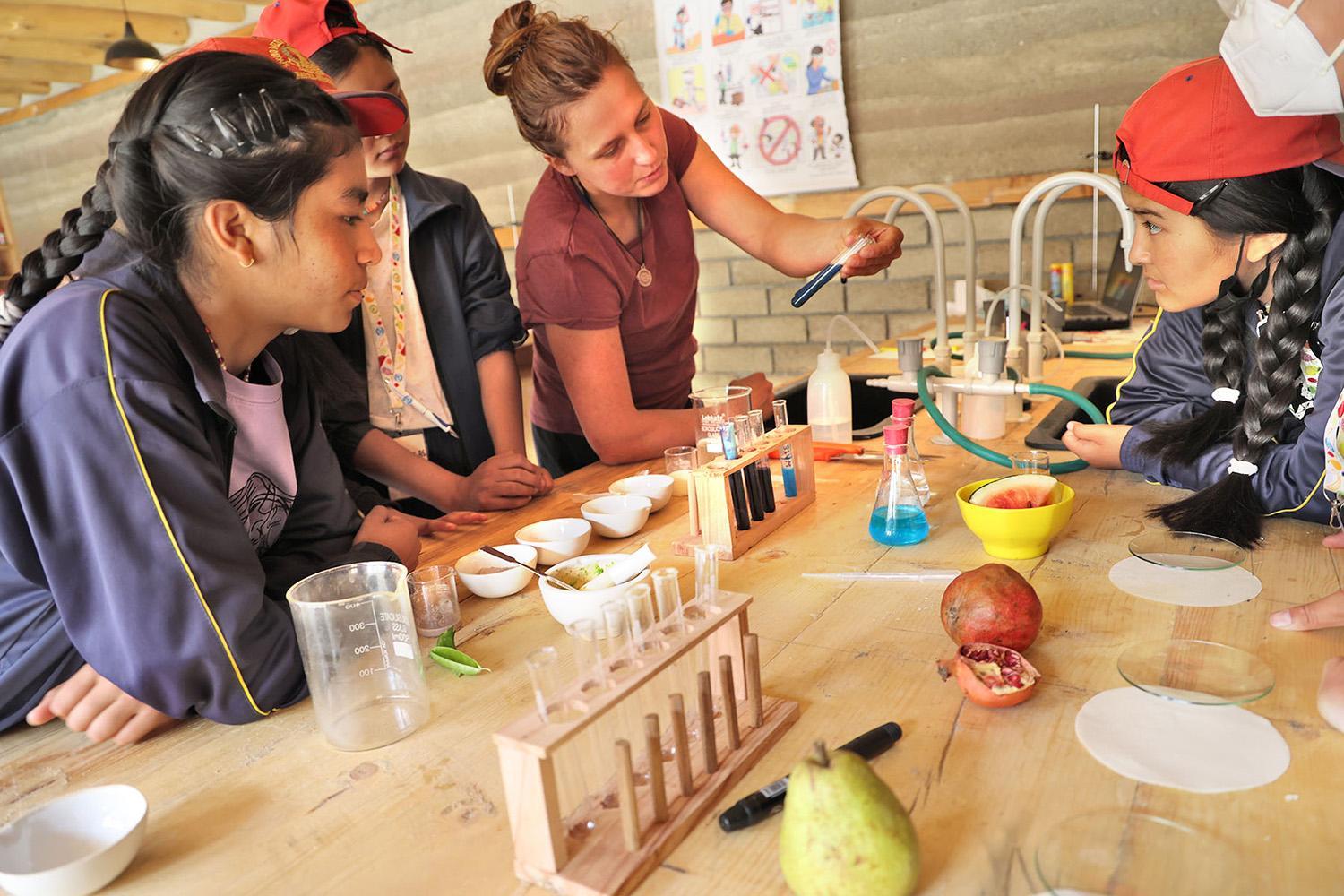
The development of the nonprofit was gradual. I never thought it would get this far. However, it just sort of kept going, and I stuck with it. There was certainly no major point of any epiphany.
The world is full of places that need help. Why did your choice fall specifically on the Himalayan region and India's Ladakh (Little Tibet)? What has endeared you to this place and its people so much that you have dedicated a large part of your life to them?
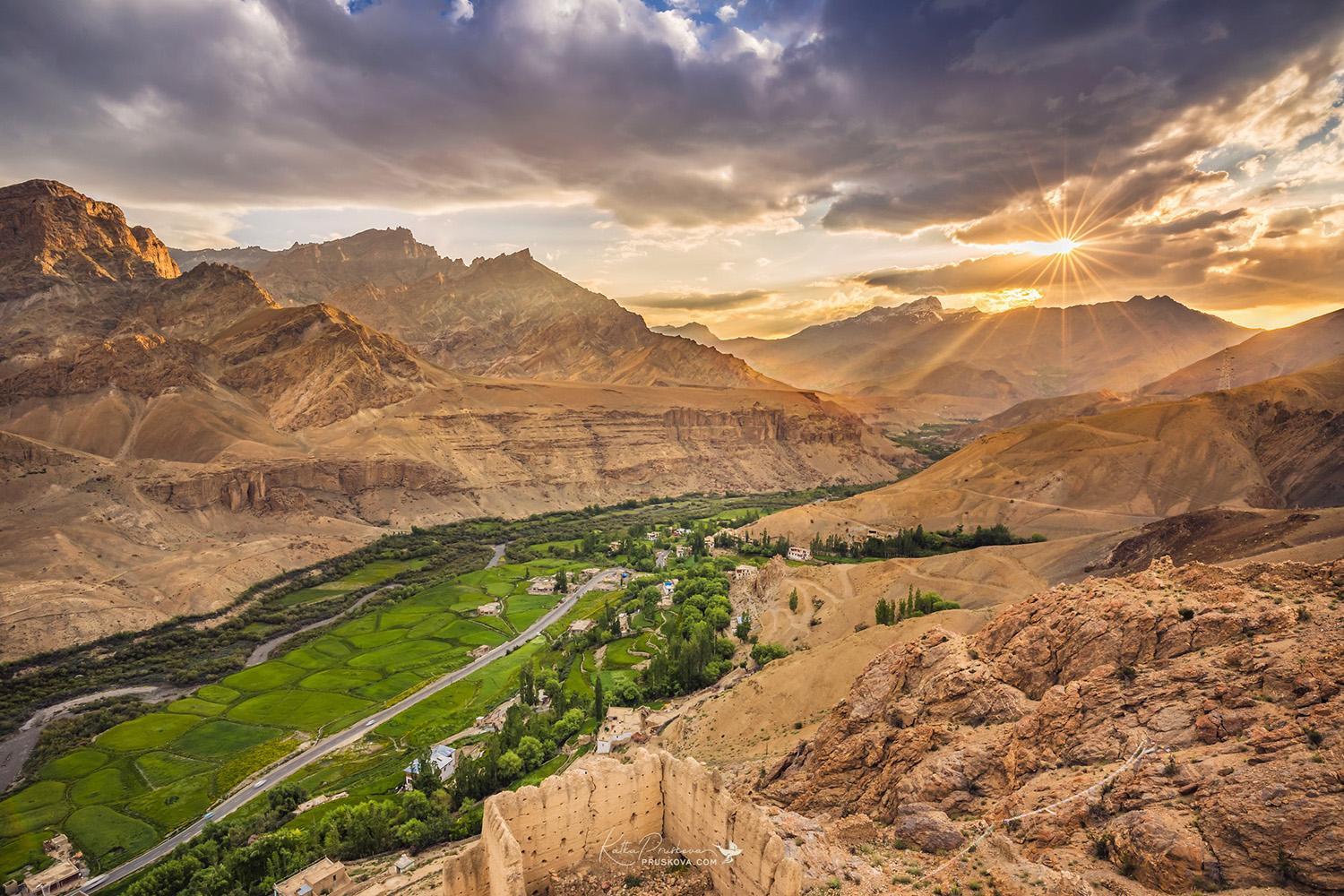
It is a combination of a willingness to help and a sympathy for Tibetan culture. During my time in college, I kept feeling that the fact that other people in the world were poor was my problem and I wanted to do something about it. As a child, my father took me to see the film Seven Years in Tibet, which stayed with me as a strong memory, and the moment I came across the opportunity to go to the Himalayas as a volunteer at the end of my Master's degree, I immediately wanted to go. My roommates joked that it took me much longer to decide what pants to bring than it did to go to the Himalayas.
Do you see any difference between children in India and children in the country in terms of how they value the opportunity to be educated? Do you have the ability to make that comparison?
I would say that both the Czech and Himalayan education systems are beginning to address their transformation in recent years. The traditional teacher has been seamlessly replaced by YouTube for the last 10 years. With the coming of artificial intelligence, it will be completely different. The situations and problems faced by Czech and Himalayan children will soon be very similar: for example, they will not want to respect a teacher who is actually stupid compared to AI.
And on the other hand, there are problems in the Himalayas that Czech children cannot even imagine. For example, children as young as 3 years old study in boarding schools and meet their parents a few times a year. Unfortunately, they all have lifelong traumas from this. Compared to the problems that Czech children have, it's unbelievable.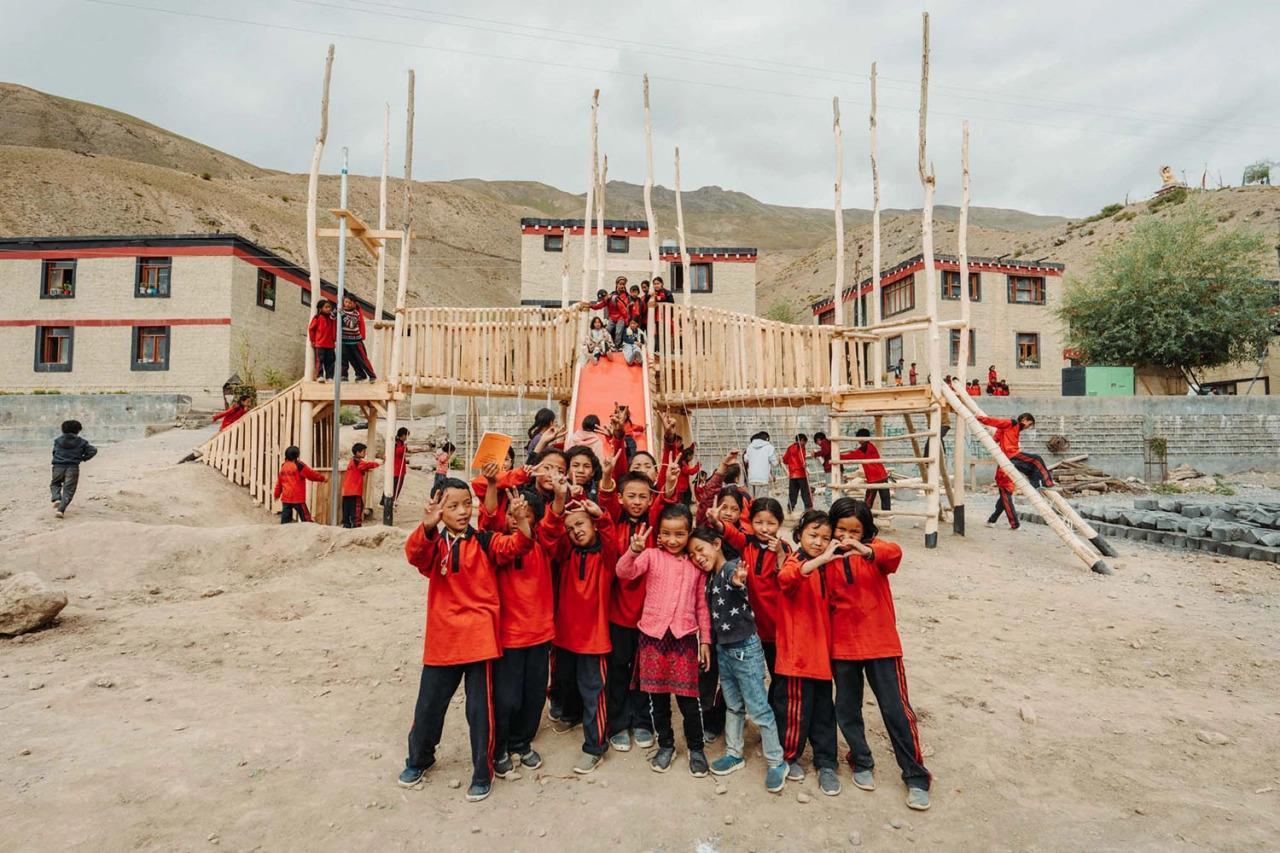
Working in the non-profit sector, and in a developing country at that, brings a huge amount of bureaucracy, stress and frustration alongside the joy. What is your personal 'fuel'? What motivates you to get up and keep going, even when the going gets tough or when you hit a seemingly insurmountable obstacle?
The fuel is the results of the work so far. If we didn't have them, I don't think I could do it. However, being healthy, exercising, eating well and having normal relationships are also essential.
When you look at the track record of the Himalayan Patron, what do you consider your greatest tangible achievement? It's not necessarily the largest school built, but perhaps a specific story of a child whose life has been changed by your organization.
In 18 years of working in the Himalayas, it is no longer a problem for me to meet a person on every corner in Ladakh, whose lives have been changed by our work. People stop me on the street and say, "Hi, Jirka, thanks to you, I dared to do this."
One nice story is that of cameraman Jigmet, who closely observed the work of Czech filmmakers and thus became the best local filmmaker. He shoots funny commercials for the local government and is paid handsomely for it. He has just completed his master's degree in film directing in Barcelona. When he started there, there was a rather comical situation as to whether he could even enroll without having completed elementary school.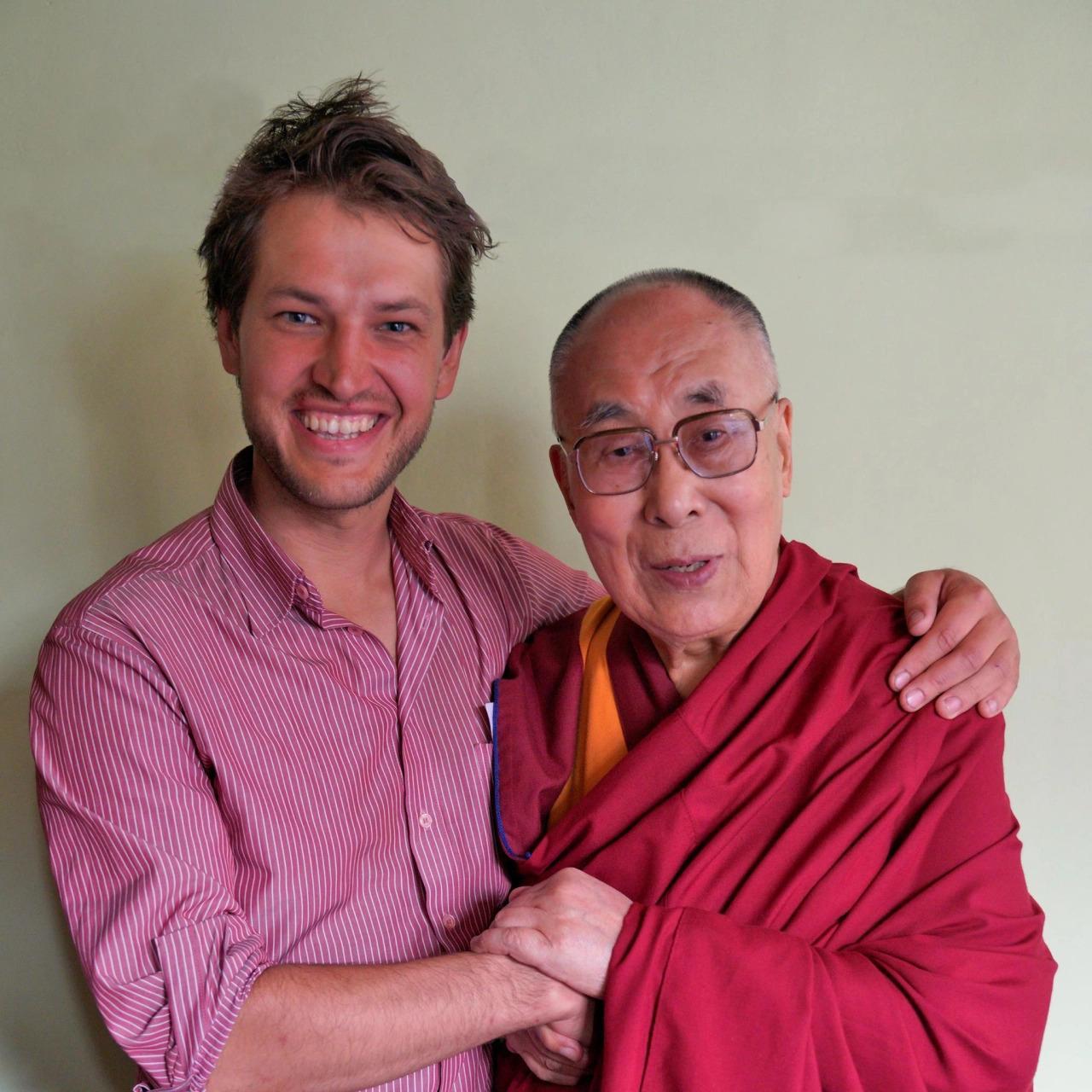
Many of our readers are recent graduates of Brno University of Technology who are just starting out on their careers and may be hesitating between taking the conventional path of becoming an engineer in a corporation or trying something on their own, perhaps even outside their field. With the benefit of hindsight and your experience, what advice would you give them? How do you feel about staying in touch with the university after graduation? Does contact with the university help you in your work?
If you go your own way, it will hurt a lot, but it will shape you. If you start your own non-profit organization, it will hurt, and on top of that, you won't have any money, so it will shape you twice as much. If you go into a corporation, peace of mind and money are not bad advantages either.
I am glad to have contact with the university and consider it a truly unique thing. I don't think it's very common.
Source: BUT Alumni Portal
BUT startup LR SmartWater is digitizing Czech heating industry. Their models will also help water utilities and cities
FCE BUT graduate František Bílek: I consider the gold medal from the EXPO 2025 world exhibition in Osaka to be an exceptional achievement
Sustainable energy projects are not a luxury. They can save and make money
Surveyors from BUT save cultural monuments
Graduates of BUT are contributing to a revolution in logistics. They are preparing infrastructure of delivery of parcels by drones