Topic
Professional Protective Gear Under X-Rays: CEITEC Researchers Verify the Quality of a Ballistic Helmet Without Making a Single Cut
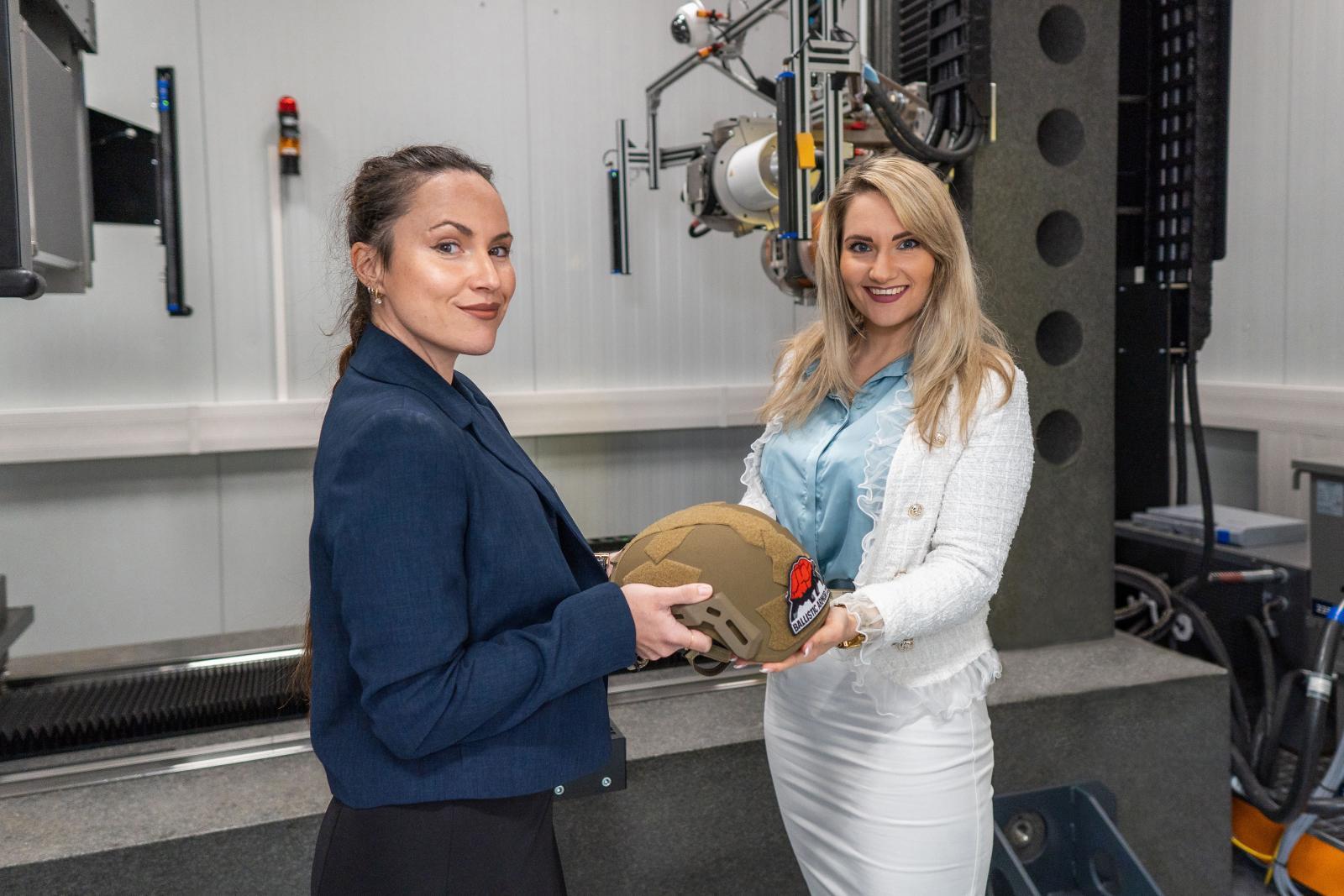
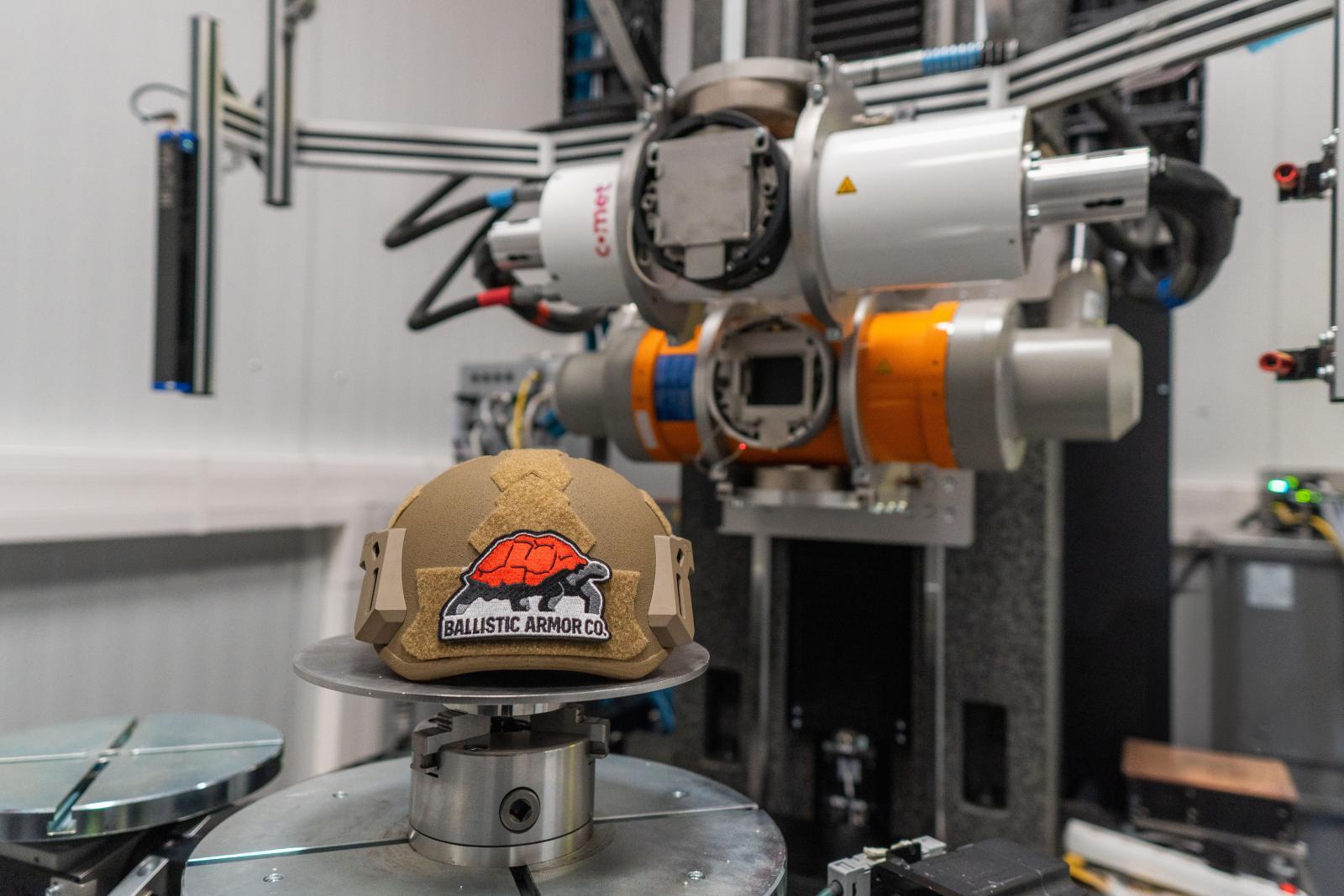
Scientists from the CTLAB at CEITEC Brno University of Technology used a new industrial CT scanner to examine the Bastion ballistic helmet manufactured by the U.S.-based company Ballistic Armor Co. Without making a single cut, the scanner revealed the helmet's internal structure, including its individual protective layers, and confirmed the absence of manufacturing defects. The results demonstrate the technology's potential for quality control and the development of protective equipment for the defense industry.
Computed tomography (CT) is an imaging technique widely used in medicine. Using X-rays, CT scanners produce detailed 2D cross-sectional images or 3D models of internal organs, allowing physicians to examine the inside of the human body without surgery and identify structural changes in tissues. Industrial CT scanners at CTLAB CEITEC operate on the same principle but use significantly higher X-ray energies than medical systems. This enables researchers to inspect larger and more complex objects with exceptional precision while keeping them completely intact through non-destructive testing.
The laboratory's newest scanner, the Waygate Technologies phoenix v|tome|x L450, installed only at the end of last year, is unique in the research environment. Its size and power allow it to penetrate, for example, steel objects up to 7 centimeters (2.8 inches) thick while maintaining a resolution of only a few tens of micrometers.
"Based on its technical capabilities, we knew this system could analyze highly complex composite materials. That's why we challenged it with the Bastion ballistic helmet from Ballistic Armor Co.," explains Tomáš Zikmund from the X-ray Computed Micro- and Nano-Tomography Laboratory at CEITEC Brno University of Technology (CTLAB CEITEC). The helmet is designed to provide protection against handgun ammunition.
The helmet is manufactured from Aramid fibers, better known by the trade name Kevlar. Aramid is widely used in ballistic protection and aerospace applications because of its exceptional strength, durability, and low weight. Combined with the helmet's other materials, it forms a highly complex internal structure that only the most advanced CT systems can visualize.
CT Helps Ensure Quality Without Damaging the Product
As part of the study, the Bastion helmet was exposed to X-rays for several hours. The result was a highly detailed 3D model of its internal structure, clearly revealing the individual ballistic layers as well as the soft padding materials—all without cutting the helmet apart. The analysis also detected no manufacturing defects.
"Results from non-destructive CT inspections like this improve our understanding of how protective equipment is built and help manufacturers maintain the highest standards of quality and safety," says Anna Smith, Director of Business Development at Ballistic Armor Co.
Non-destructive CT analysis, however, is not a substitute for standard ballistic testing, which remains essential for verifying that protective equipment meets the required ballistic resistance specified by applicable standards. Instead, the technology serves as an effective tool for routine manufacturing quality control, verification of production consistency, and regular audits of products whose ballistic performance has already been validated.
According to Tomáš Zikmund, the successful test marks another important milestone in demonstrating the capabilities of the laboratory's new CT system for defense applications. Earlier this spring, the research team showcased the scanner by examining an airsoft rifle, non-destructively verifying the correct placement of mechanical components and wiring while also inspecting the materials for pores and microcracks.
These studies demonstrate that industrial CT has an important role to play in the defense sector. In many cases, it can complement destructive quality-control methods used during manufacturing by enabling detailed inspections without disassembling or damaging the product. Modern CT technology provides deep, highly precise, and completely non-destructive inspection. It does not, however, replace conventional ballistic testing, which remains the only method capable of verifying the required level of ballistic protection.
"Our goal is to strengthen collaboration between science, technology development, and the defense industry," Zikmund concludes. "We believe our technology can help manufacturers not only improve production quality but also gain valuable insights into the behavior of materials and the design principles behind modern protective equipment."
Author: Kristina Blűmelová
Source: CEITEC BUT
A lack of hay for horses inspired Joes Jančář to create a smart nutrition for plants
“I expected chaos, dirt and mess,“ says a researcher from CEITEC BUT who taught children in the Himalayas
Ceramics that glow. Young scientist wins award for research into new materials for lasers and X-rays
Ordered nanocrystal ensemble that degrades pollutants using light. Meet Brno PhD Talent winner Anjali Valadi Palliyalil
Gene therapy in developing countries. Alžběta Ressnerová is working on an easier application of CRISPR-Cas9