Topic
14 July 2026
Strait of Hormuz? Risk engineers know how to mitigate impacts of crises

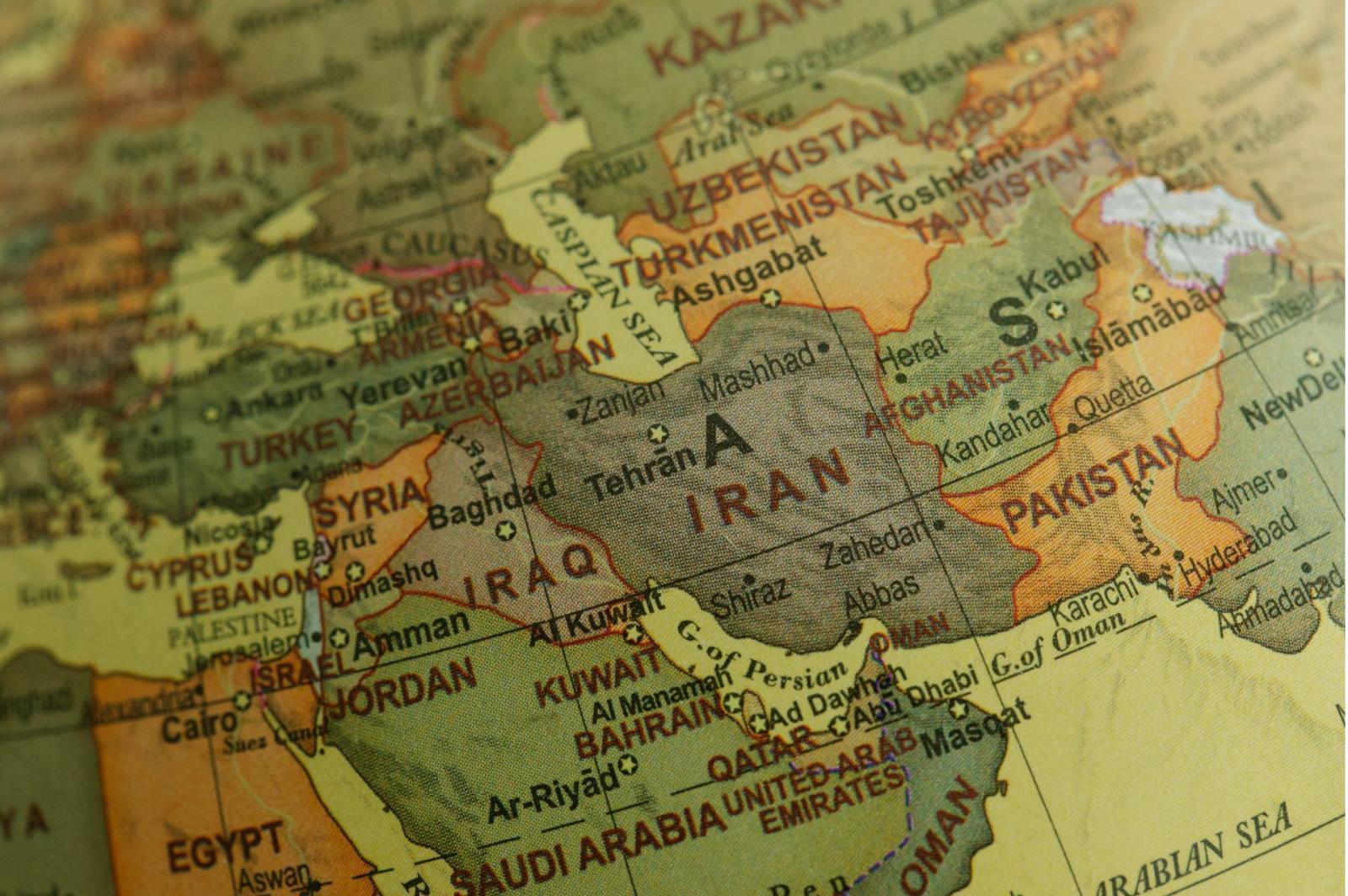
When people hear ‘Strait of Hormuz,’ most think primarily of oil.
Energy is certainly the first thing that comes to mind, and that’s understandable. However, the Strait of Hormuz also carries enormous quantities of raw materials for the chemical industry, fertilizers, plastics, aluminum, and other critical materials. When such a hub is disrupted, the impacts can be felt in manufacturing, transportation, agriculture, and the prices of everyday goods. And at the end of it all are the people, businesses, and households that are very directly affected by the crisis.
Why is this crisis particularly interesting from a risk management perspective?
It’s a good example of how risk often spreads beyond its point of origin. An event in one part of the world can, within a short time, affect energy prices, the availability of materials, transportation, and food security in completely different regions. In risk management, therefore, we strive to look not only at the threat itself, but also at the connections, dependencies, and vulnerabilities of the entire system. It is precisely this way of thinking that we pass on to our students. We teach them to understand the world in context rather than perceiving individual, isolated problems.
So how do such crises manifest themselves in each of our lives?
People do not see many of the impacts immediately. They come gradually. Higher energy prices can drive up the costs of transportation, production, and storage, and this will later be reflected in the prices of goods and services. If the availability of fertilizers becomes more difficult, it can have an impact on agriculture and, over time, on food prices as well. Risk management is therefore not some distant theory for a narrow circle of experts, but a field that helps protect the normal functioning of society.
Is it even possible to prepare for something like this?
We usually cannot completely prevent such events. However, we can mitigate their impacts through appropriate preventive and reactive measures.
What kind of measures?
Identifying the system’s vulnerabilities. Having contingency plans ready. Seeking alternative suppliers. Building up reserves. Or improving decision-making under uncertainty. Resilience to crises is built over the long term, thoughtfully, and often very discreetly.
Can companies and institutions learn any lessons from the Hormuz crisis?
The main lesson? Operating at maximum efficiency without any reserves is a fragile approach. A system designed solely for low costs and speed may function excellently in calm times, but a crisis will quickly expose its vulnerability. Both companies and public institutions should be aware of their critical suppliers, transportation routes, contractual obligations, and possible disruption scenarios. Responsible preparation significantly reduces damage.
What role do data, modeling, and artificial intelligence play in risk engineering?
Today, data gives us possibilities we didn’t have before. We can track price trends, transportation delays, material availability, or supply chain vulnerabilities. Artificial intelligence and modeling can help create scenarios and identify weaknesses more quickly. At the same time, however, we tell students that technology alone is not enough. A good professional must be able to combine data with judgment, experience, ethics, and an understanding of the real world.
What do students learn in the Risk Management of Technical and Economic Systems program?
Above all, they learn to analyze risks in technical, economic, and social systems. They focus on critical infrastructure, business continuity, crisis management, supply chains, the impacts of emergencies, and data analytics. We place great emphasis on practical thinking. It’s not enough to simply describe a problem; it’s important to be able to propose solutions. We want our graduates to be able to help organizations prepare better and make better decisions.

I believe the world will increasingly need individuals who can combine technical and economic thinking with the ability to make decisions in the face of uncertainty. In addition to methods, we teach students a way of thinking—one that is analytical, responsible, and at the same time human. This program is for those who want to understand complex problems and seek solutions with real impact. And that is exactly what companies, public institutions, and society as a whole need today. Because crises like the one in the Strait of Hormuz show that the future ahead of us will certainly not be easy—but that makes it all the more interesting.
Source: IFE BUT
Experience BUT at Researchers' Night: What Happens Inside a Car During a Crash?
How does the age of tyres affect road safety? The answer will be offered by research from the IFE
A hundred-year-old water system and a missing sewer system. Nevertheless, Kamenka is one of the most expensive districts in Brno
Unique Damage Catalogue maps dozens of traffic accidents. It will help forensic experts and insurance companies.
Historical legacy affects the value of cultural monuments. For example, the distance from the stop has an influence