Faculty of Civil Engineering
“If our minds are empty, we won’t be able to come up with anything, even with the help of AI,” says Professor Jan Černocký, winner of the Česká hlava National Government Prize

Professor Jan Černocký from the Faculty of Information Technology at Brno University of Technology received the Česká hlava National Government Award for 2026 on 10 November 2026. He was honoured for his significant contribution to the development of modern speech technologies utilising artificial intelligence. Černocký is one of the world’s leading experts in speech processing. He leads the Brno-based research group Speech@FIT, which has grown into an internationally respected centre. Its researchers are teaching computers not only to transcribe the spoken word, but also to recognise speakers and languages, and to extract information from speech even in conditions that other systems still struggle to handle effectively.
Černocký himself describes his current role primarily as that of a ‘pioneer’. Alongside his own research, he has spent more than two decades building a team, securing international projects and attracting talented scientists to the Czech Republic – in short, creating the conditions for those around him to focus on cutting-edge science. In the interview, he looks back to a time when neural networks were still largely regarded as a technological dead end. He also explains where academic research is currently competing with tech giants, and why he fears a loss of critical thinking in society.
***
Was speech technology a subject you wanted to pursue from the outset, perhaps even whilst studying engineering?
Honestly? I originally wanted to study at Brno University of Technology as a ‘fallback’, just so I’d have a university degree. And I saw myself more in the role of a musician or perhaps a studio technician. In my fourth year, I got my first taste of computer speech processing as part of a year-long project. Even then, I thought it was interesting. The next turning point came when I went on an internship to France – I was working there on my master’s thesis, specifically on speech coding at very low bit rates. And then things just took off from there. I enrolled on a joint Czech-French PhD programme…
… which was probably quite unusual at the time, wasn’t it?
Yes, there were very few engineers who went to France. That was probably also the reason why, back in 1994, the French Embassy awarded me a scholarship. The interview itself was a disaster: they didn’t understand me, and I didn’t understand them. I was lucky. I only learnt French properly once I got there – from my French friends at the halls of residence.
When did you start working with neural networks in your research, which are now one of the most talked-about technological concepts?
I’d been interested in the subject ever since I arrived at Professor Hynek Heřmanský’s laboratory at the Oregon Graduate Institute in Portland. It was 2001, and I’d just completed my PhD. We were training neural networks at a time when the academic community was rather sceptical about them, and Hynek, who was going against the mainstream in this regard, was regarded as something of an oddball.
Did you feel at the time that you were working with a technology that belonged to the future?
Yes and no. Imagine this: you’re a young scientist working on speech recognition. Your boss is championing a particular area, but you’re surrounded by plenty of sceptics. Hynek Heřmanský was absolutely convinced of this direction. I believed in it, yet at the same time I had my doubts.
To what extent do you think it is essential to be open to the scientific world and to work without regard to borders?
I myself am a product of international collaboration. If it hadn’t been for my studies in France and my post-doc with Hynek Heřmanský in Oregon, I’d probably be doing something else and wouldn’t have received the ‘Česká hlava’ award. Secondly, it’s a purely pragmatic matter: we simply don’t have enough talented people who want to devote themselves fully to research. And thirdly, I’m convinced that people all over the world are equally clever and equally foolish. There’s no one in our group today who just sits in Brno and doesn’t take part in international collaboration.
You’ve received the most prestigious domestic scientific award, the ‘Česká hlava’. What insight, to use the technical terminology, do you take from this?
I take from this the conclusion that I’m doing a good job as a ‘path-clearer’. And also that this isn’t an award primarily for me, but for our entire Speech@FIT group. And I’m receiving it on their behalf as their representative – the longest-serving and most visible member. For nearly thirty years, I’ve mainly been clearing the way, talking to people, trying to attract clever people to Brno and keep them here.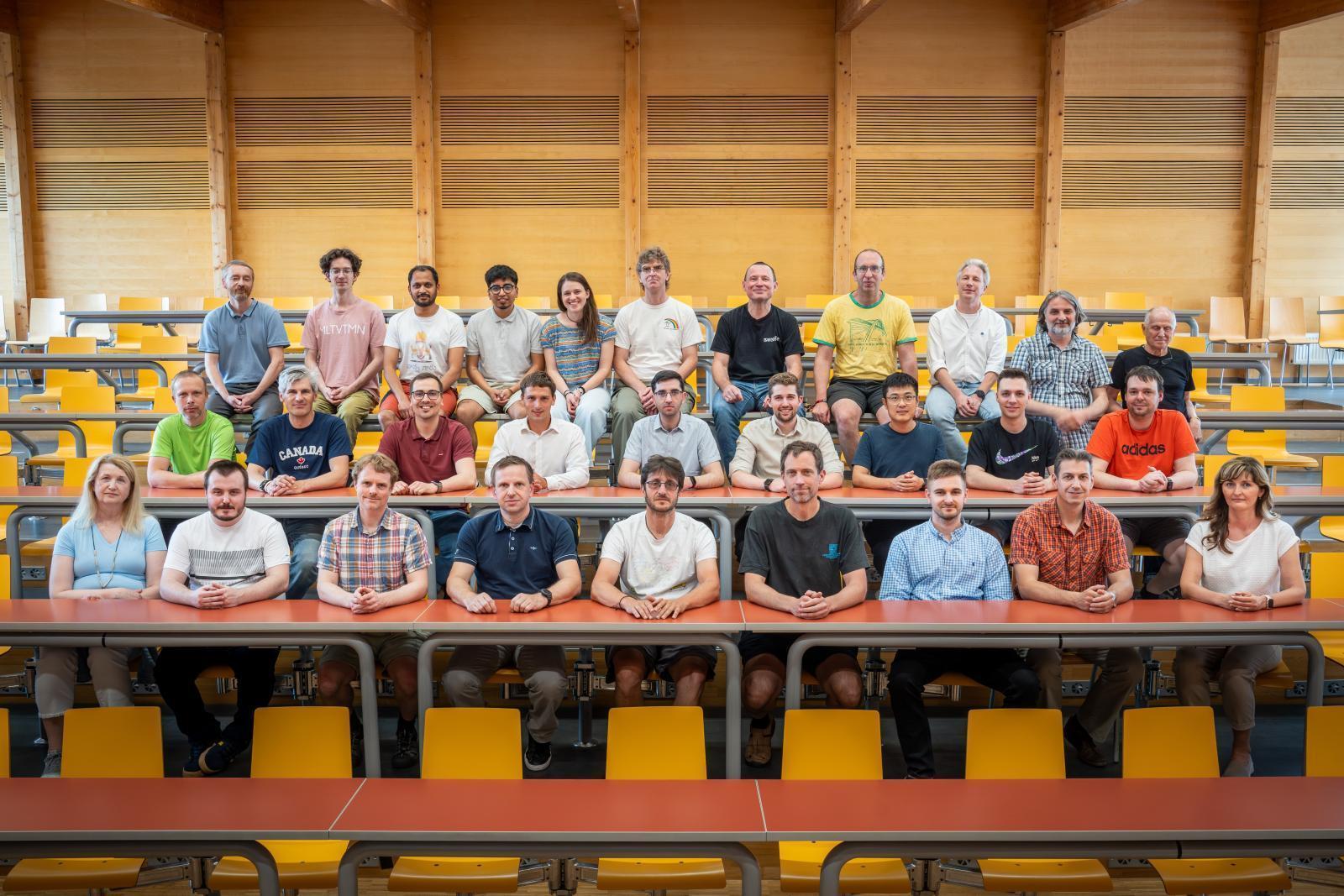
To what extent do you consider yourself a scientist today, and to what extent a research and science manager?
I’m 50 per cent a manager; 30 per cent of my time is spent on project- and administrative-type tasks, which ideally I shouldn’t be doing. I spend about 10 per cent of my time teaching – I really enjoy that. And I devote 10 per cent to research: reading, thinking, looking for challenges and trends. I’d love to have more ‘research time’. I enjoy connecting people and steering research topics.
And don’t you regret not being more immersed in your own research?
Every now and then, I do feel that kind of tension. But if my role as an organiser were demotivating, I wouldn’t be doing it. My colleagues’ successes make me happy. I’m actually ‘proxy-happy’ (laughs). When something works out in the lab, I’m delighted.
If you had to describe in two sentences to a layperson what your research group specialises in, what words would you choose?
We’re trying to improve computers’ understanding of human speech, even under complex conditions. These days, almost every mobile phone can recognise speech, transcribe it and summarise it. We’re trying to help with this in situations involving complex acoustic conditions: for example, when lots of people are talking at once, with all sorts of background noise and other speakers to be heard in the background. Commercial recognition systems have their weaknesses in this area, so there’s scope for us to offer better solutions. However, it is becoming increasingly difficult to find relevant research topics that haven’t already been ‘snatched up’ by the big tech companies over the last five years.
Is competition from global companies a major problem for your research?
Yes. But nothing is black and white. Companies such as Google or OpenAI produce models that are so powerful that you simply cannot train anything comparable in an academic laboratory. And we must make use of these tools for cutting-edge research. Academia and the private sector need each other. However, we are also constrained by data protection policies and copyright laws, which limit our ability to create training datasets. Paradoxically, the consequences of these regulations have a greater impact on academic research and local firms than on multinational giants.
And what about the major scientific challenges you’re currently facing?
There are two areas where we have high hopes. And then there’s one where we’re likely to lose the race. The first of these promising areas is the aforementioned speech recognition of speakers with massive overlap – here, over the last three years, we’ve achieved a series of excellent, functional results that outperform the models of large companies. The second is a pilot project in which we’re looking at stress and cognitive load in pilots of various types of aircraft. We have a great deal of work ahead of us in creating representative datasets and in machine learning. And where will we lose out? I fear it will be in the field of voice forgery detection – deepfakes. Here, I see a window of five to ten years during which we’ll be able to make reasonable progress, after which it will all come to an end. The reason? Standard speech encoders in our mobiles and computers will contain the same components as speech synthesisers and voice modifiers. They’ll produce high-quality output, whether you ‘feed’ them a real speaker’s speech, text or a voice forgery.
Which is a frightening prospect…
I wouldn’t paint such a bleak picture. Unfortunately, it will lead to a significant decline in trust in electronic communication – a trend, incidentally, that is already beginning today. But then again, airlines, hotels and taxi services will be delighted. We’ll return to face-to-face contact.
Given your area of expertise, I can’t avoid the much-discussed topic of AI safety: how do you view the current public debate? Are we facing a major problem, or is there an element of hysteria here, stemming from a lack of understanding of the basics of the technology in question?
This is a difficult question. Is a new industrial revolution unfolding around us – a transformation on a scale comparable to the early days of the internet? Probably so. The potential for the automation of cognitive and thinking processes is enormous. Models work with words, sounds, images or video – and everyone who has access to these types of information is using AI. And it’s expanding rapidly. What’s more, absolutely everyone ‘understands’ artificial intelligence. It’s everywhere; large companies are only encouraging it, as they have their own economic reasons for doing so. Do you know how this might all end? The technology will become too expensive. And by that I don’t just mean subscriptions to use the tools, but the broader societal impacts of running AI. Self-regulation may well occur – to put it simply: when ordinary people are no longer able to heat or ‘air-condition’ their homes because data centres have driven up energy prices massively, they’ll go and ‘sort it out’ with them. And one more connection comes to mind: I still believe that the positive impacts of AI are currently focused on a narrow, elite segment of society. I’d be interested to know if and when AI will bring revolutionary positive impacts to the general public.
And what has AI taken away from people?
It affects our abilities to learn, reason and think critically. Social media is, of course, linked to this; it’s just that in the past, the term ‘AI’ wasn’t used in that context, but rather terms like ‘classification’, ‘customer preferences’ and the like. I don’t see the danger of AI in AGI enslaving or poisoning us tomorrow. I fear that people will become less intelligent, lose their critical thinking skills, and society will cease to function as we are used to.
That is why we need to support education. Where do you think the roots of the persistently low interest in technical subjects lie? Does the problem arise in secondary schools?
Earlier, as early as the second stage of primary school. Even at this stage, maths and technical subjects can become an interesting challenge. We need to encourage children’s curiosity and a love of maths. You have to show them how maths is useful in life, that it can be a source of intellectual stimulation as well as a decent livelihood. There are plenty of things around us that are based on the beauty of maths – from mobile phones to electric cars and GPS, right through to AI. However, I fundamentally disagree with the idea that children should have more lessons in AI – its ethical implications should be discussed in civic education – but otherwise I am in favour of increasing the number of lessons in maths, physics, biology and history. And I wouldn’t do away with rote learning: if our minds are empty, we won’t be able to come up with anything, even with the help of AI.
The final question that has to be asked: Is there anything in the field of science and its organisation that you’d still like to achieve?
I still feel I have plenty of energy, but I certainly need to find someone to take over from me in the future. In the scientific field, I’d still like to find one more topic to explore – although I have no idea whether there’ll be time for it. But if we continue to have an influx of skilful, open-minded, clever people and I can follow their rising careers, I’ll be satisfied. That’s what keeps me going in my work. And also the environment I move in: it won’t let me slow down intellectually; it prevents my brain from becoming encrusted with fat. Fortunately, my mind’s still working – if it lasts another ten or fifteen years, I’ll be happy. I try not to get too comfortable physically either; in fact, I’m probably moving around more now than ever before in my life. In that respect, I have a clear goal: to climb Mount Ararat (laughs).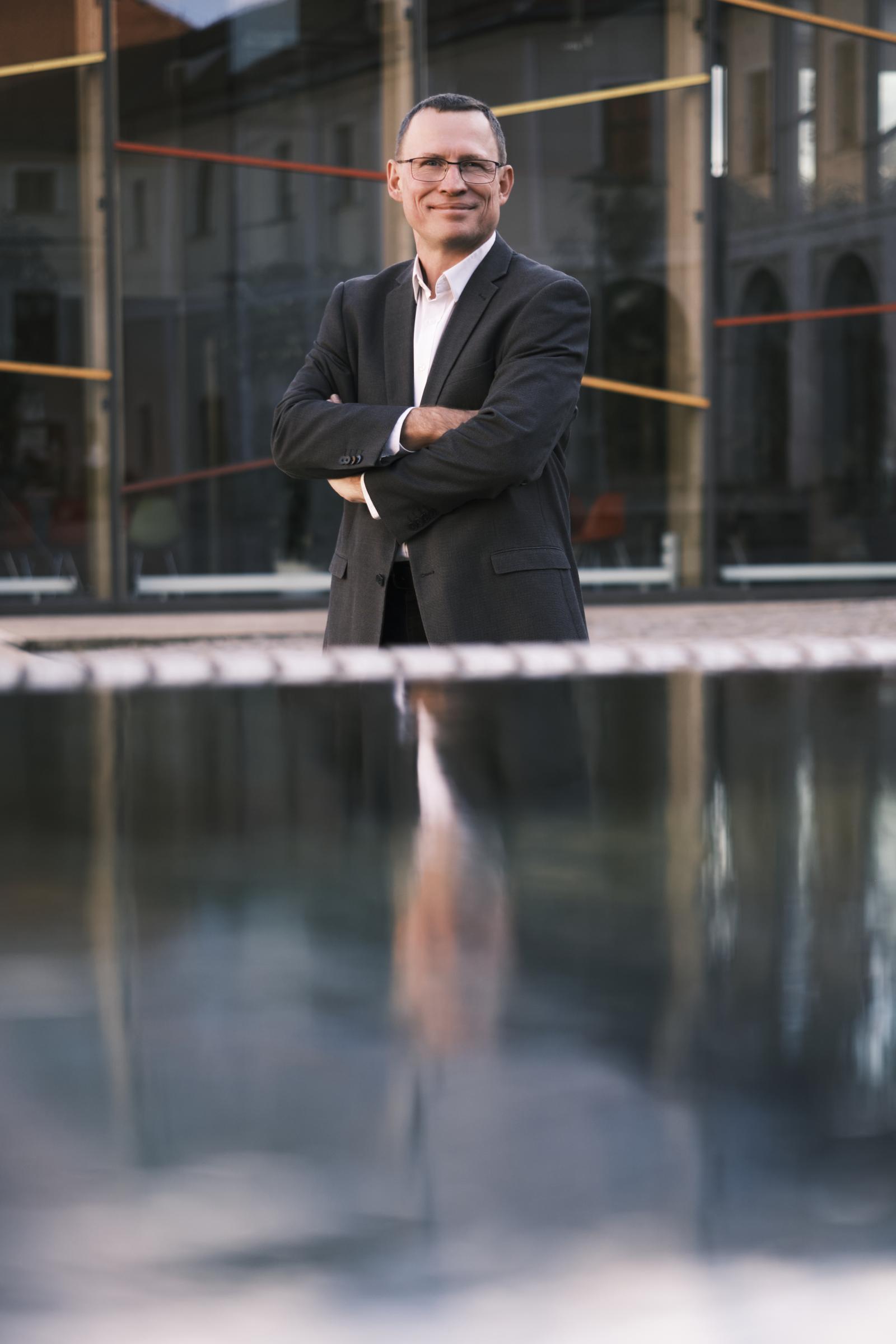
Source: FIT BUT
We haven't reached worst point yet. Interview with Anton Firc, Joseph Fourier Prize awardee
Up to 400 gigabits per second. Experts from FIT BUT have developed one of the fastest accelerator network cards in the world
LECTURE AS A STORY WITH A PLOT, DENOUEMENT AND LESSON
"The fact that current systems don't work well is a major motivation," says Alexander Polok, who won the Joseph Fourier Prize
FIT BUT is helping to develop the Záchranka app