Ideas and discoveries
22 March 2026
BUT startup LR SmartWater is digitizing Czech heating industry. Their models will also help water utilities and cities

Years ago, Jaroslav Raclavský from the Faculty of Civil Engineering at BUT taught Jakub Lžičař. Today, they run the BUT startup LR SmartWater together and aim to move Czech district heating and water management into the 21st century. They offer customers, for example, digital twins—mathematical models that help optimize operations, detect problems, and better prepare for the future. The article is published on the occasion of today’s World Water Day and, among other things, shows how modern technologies can contribute to sustainable water resource management.
At the beginning, they were a lecturer and a student at the Institute of Municipal Water Management at the Faculty of Civil Engineering, BUT. Later, they became colleagues in projects at the AdMaS centre. Today, according to their own words, Jaroslav Raclavský and Jakub Lžičař are primarily friends—and since last summer, also co-founders of LR SmartWater. “Even though my colleague Lžičař returned to his home region of Pardubice after finishing his studies, we stayed in touch, continued to collaborate, and helped each other out. I was usually more on the theoretical side, while he focused more on practice. We often talk on the phone, and at some point, we started discussing whether we should take our theoretical knowledge and practical experience from projects and give it a more formal framework. And we came to the conclusion that we would start a company,” describes Jaroslav Raclavský.
They founded the company in response to a market opportunity
And so they did. During last summer, LR SmartWater was established and is now also an official BUT startup. Although it offers services across utility networks—from water supply to sewer systems—it sees the greatest opportunity in district heating. “My colleague Lžičař has long been active in the implementation of utility networks, and he saw room for development precisely in district heating. More than a million people are connected to it. At the same time, certain requirements are coming from the European Union, but a large part of the district heating market is not covered by what we do—that is, digital twins,” explains Raclavský.
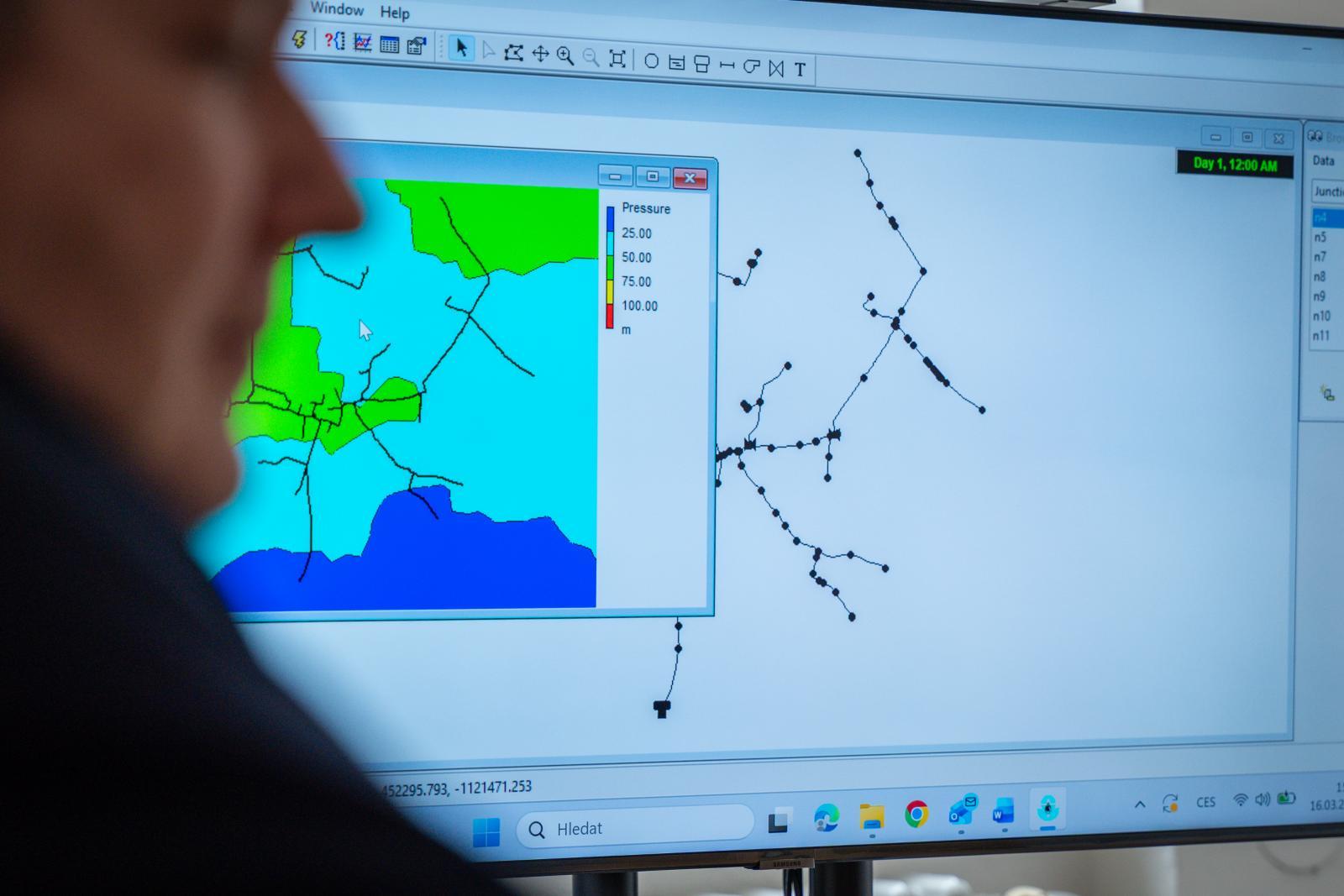
According to him, these are mathematical models that aim to replicate reality. “Once we have such a model, we can better manage and optimize the network and support operators in further development. These dynamic models are calibrated to reflect how the network actually operates. We can also introduce new elements into it—for example, renewable energy sources in district heating. Moreover, we can place them in an optimized way. The European Union is pushing for a gradual transition from non-renewable to renewable sources, and that is exactly where our services are heading. In the future, there should also be a gradual shift from high-temperature to low-temperature operation—and that cannot be done optimally without a model. We therefore see a gap in this area in the Czech Republic and decided to fill it,” says Raclavský.
They are also supported by software from a German company. “We knew what we wanted and were looking for a partner with experience in this field. In Germany, we found a major research company developing such specialized software. In the future, we should represent them. They are mathematicians and researchers, so they have mastered the theory. We, on the other hand, have practical experience. So we agreed that, in return, we would provide them with insights from real-world operations,” describes Jaroslav Raclavský.
Operators like the solution—but are hesitant to adopt it for now
In addition to district heating, Jakub Lžičař and Jaroslav Raclavský also plan to improve water supply and sewer networks. “We want to work with operators on what can be done to make networks function better. In water supply systems, the main issue is water quality. In sewer systems, it is optimization and preparedness for the future. We can already see that rainfall patterns have changed and that heavy downpours are more sudden. In the past, networks were designed for two-year rainfall events; now we are talking about five- to ten-year events. At the same time, cities and municipalities are expanding but still operate on infrastructure designed for fewer inhabitants and a certain level of industry,” explains Jakub Lžičař.
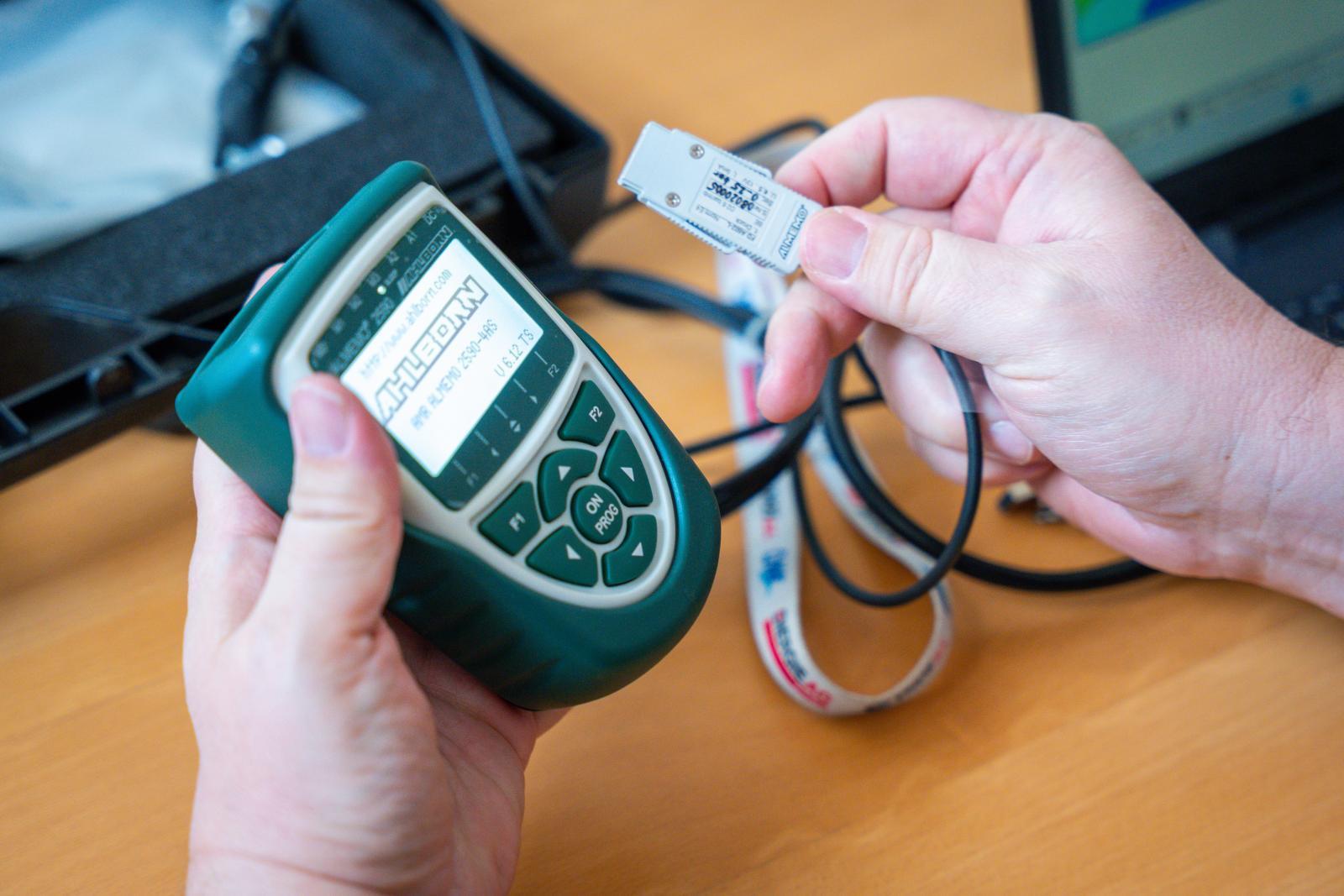
According to Lžičař and Raclavský, there is interest from operators. At the same time, however, they also encounter concerns about modernization. “Everyone tells us it sounds great—that they would like it, but… They are used to doing things a certain way. They are worried they will have to learn something new. They are afraid it will turn out they have been doing things wrong so far,” confirms Jakub Lžičař, describing a certain hesitation among potential customers. “It is understandable—these are new things. Technologies and processes at a higher level of expertise, so people are not yet familiar with them. At the moment, we focus on those who already have problems and need to solve them—they welcome such options,” adds Jaroslav Raclavský, noting that energy and water are sensitive issues for Europe and will become even more so in the future. “We cannot afford to waste them. And we want to show what possibilities already exist today,” he adds.
According to Lžičař and Raclavský, several projects in the Czech Republic are already under negotiation. At the same time, they have received an offer to participate in a major development project in Asia. “We definitely want to be involved in European projects in the future, but for now we are a small team, so we need to proceed step by step. However, we believe in what we do. In academia, new solutions often end up in a drawer, which is a shame—we want to bring them into real-world operation,” concludes Jaroslav Raclavský.
(zeh)
Jiří Sázel: "After 18 years of working in the Himalayas, it is no longer a problem for me to meet a person on every corner in Ladakh whose life has been changed by our work."
Water losses in the Czech Republic reach 15 percent, the situation is getting better every year
Surveyors from BUT save cultural monuments
Graduates of BUT are contributing to a revolution in logistics. They are preparing infrastructure of delivery of parcels by drones
Sustainable energy projects are not a luxury. They can save and make money