People
22 June 2026
Professorship is not end of road. I want talented people to carry on our work, says Klára Částková
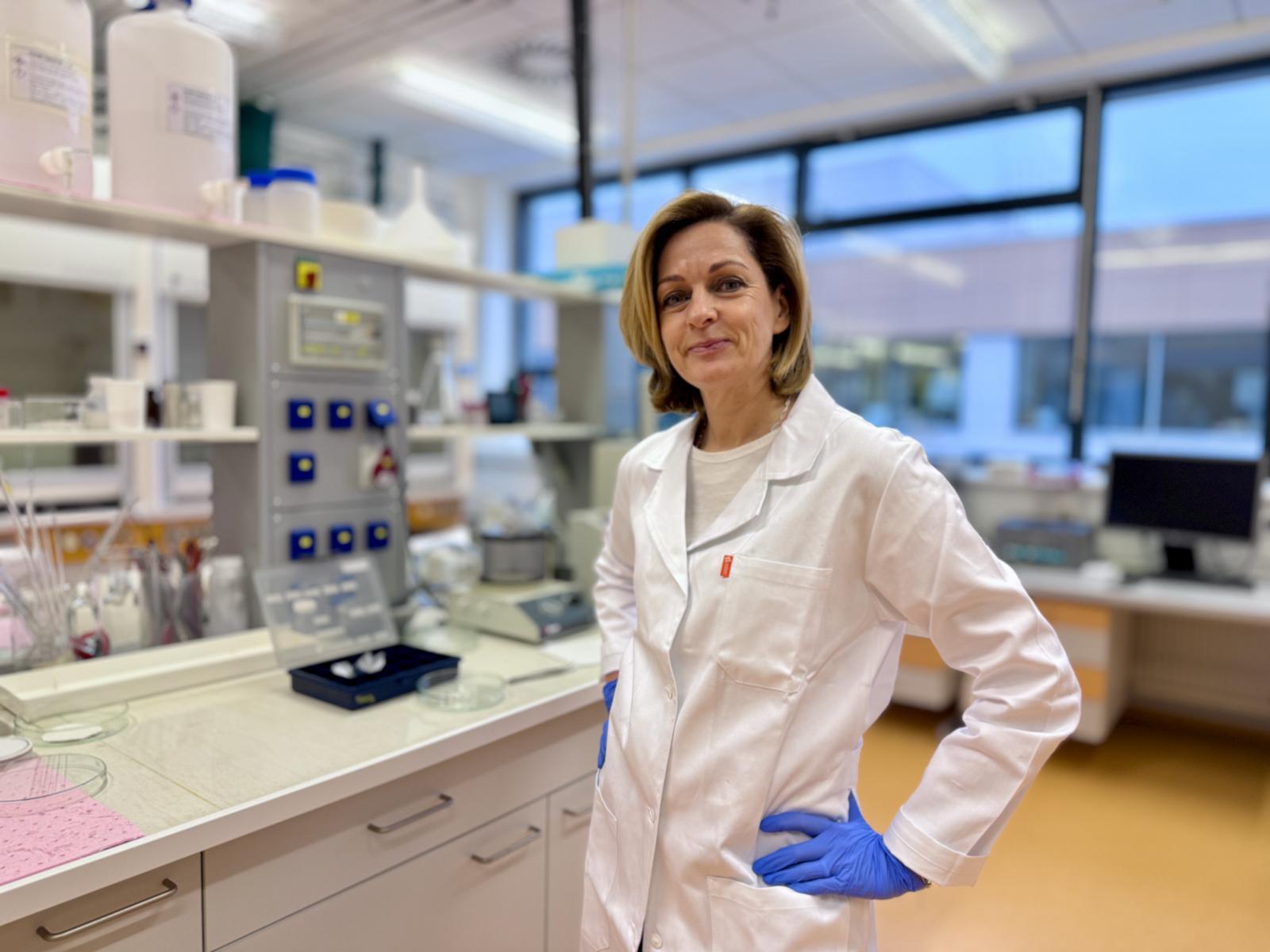
“Professor Jaroslav Cihlář, my great role model and something of a scientific father to me, once jokingly said: ‘Klára, a professorship is the summit; after that, nothing awaits you.’ Even some students thought that people become professors just before retirement, that it is essentially the final stop. But I certainly don’t feel like I’ve reached the end…” says Klára Částková with a smile as she reflects on her newly acquired title.
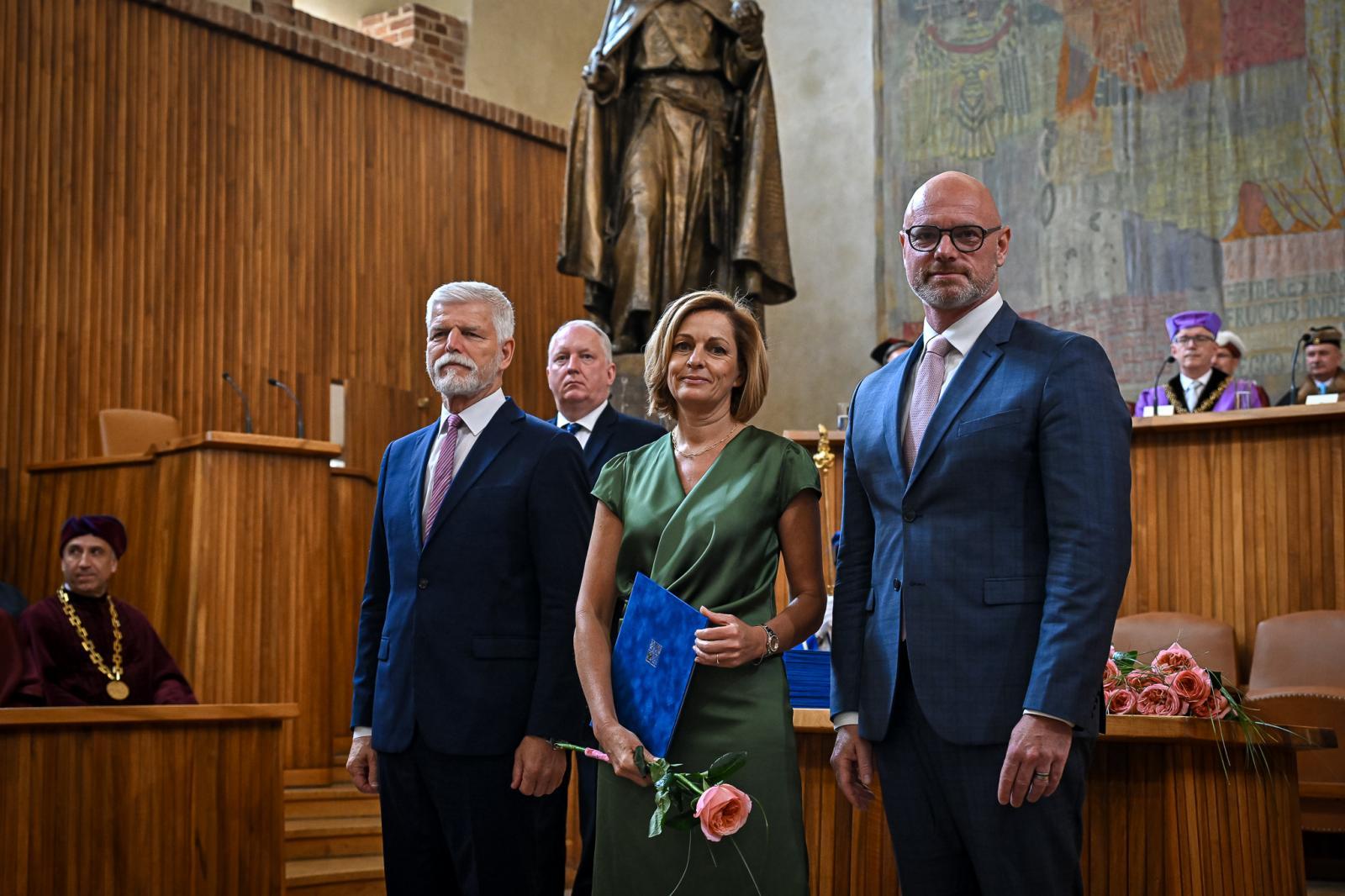
What many academics consider a defining milestone of their lives, she sees more as a responsibility. “You suddenly start asking yourself what you will leave behind. Professor Cihlář has mentored several other professors and many successful scientists. That is the real legacy for me. One day, I want talented people to continue our work, people who will develop their own research groups and continue advancing the field,” Částková adds.
When most people hear the word ceramics, they think of a mug or floor tiles. Advanced ceramics, however, represent an extraordinarily diverse group of materials with applications extending far beyond medicine. “Ceramic biomaterials offer several advantages. They are biocompatible, meaning the body tolerates them well, and some are even bioactive. In other words, they can trigger reactions in the body that support healing or integration with surrounding tissue,” explains Částková.

Science as a Common Language
The development of modern biomaterials relies on collaboration among materials engineers, chemists, physicists, physicians, and many other specialists. It seems that interdisciplinarity is something Professor Částková particularly enjoys. “Every discipline has its own terminology and way of thinking. When experts from different fields meet for the first time, it often feels as though they are speaking different languages. Yet it is precisely these connections that produce the most exciting results today,” she believes.
Although scientists around the world are striving to replicate the natural structures of the human body, nature still remains one step ahead. “We have not surpassed nature yet. Bone, for example, is an extraordinarily sophisticated composite material that combines different structures and properties. Today, however, we have technologies that allow us to create similarly complex structures, so we are steadily moving closer. On the other hand, technological progress can achieve a great deal, but ageing itself also has its purpose, and not everything can be replaced. Even if we perfect the biomechanics of the human body, we still have a brain that ages in ways we cannot yet replace,” says Částková, tempering visions of immortality.
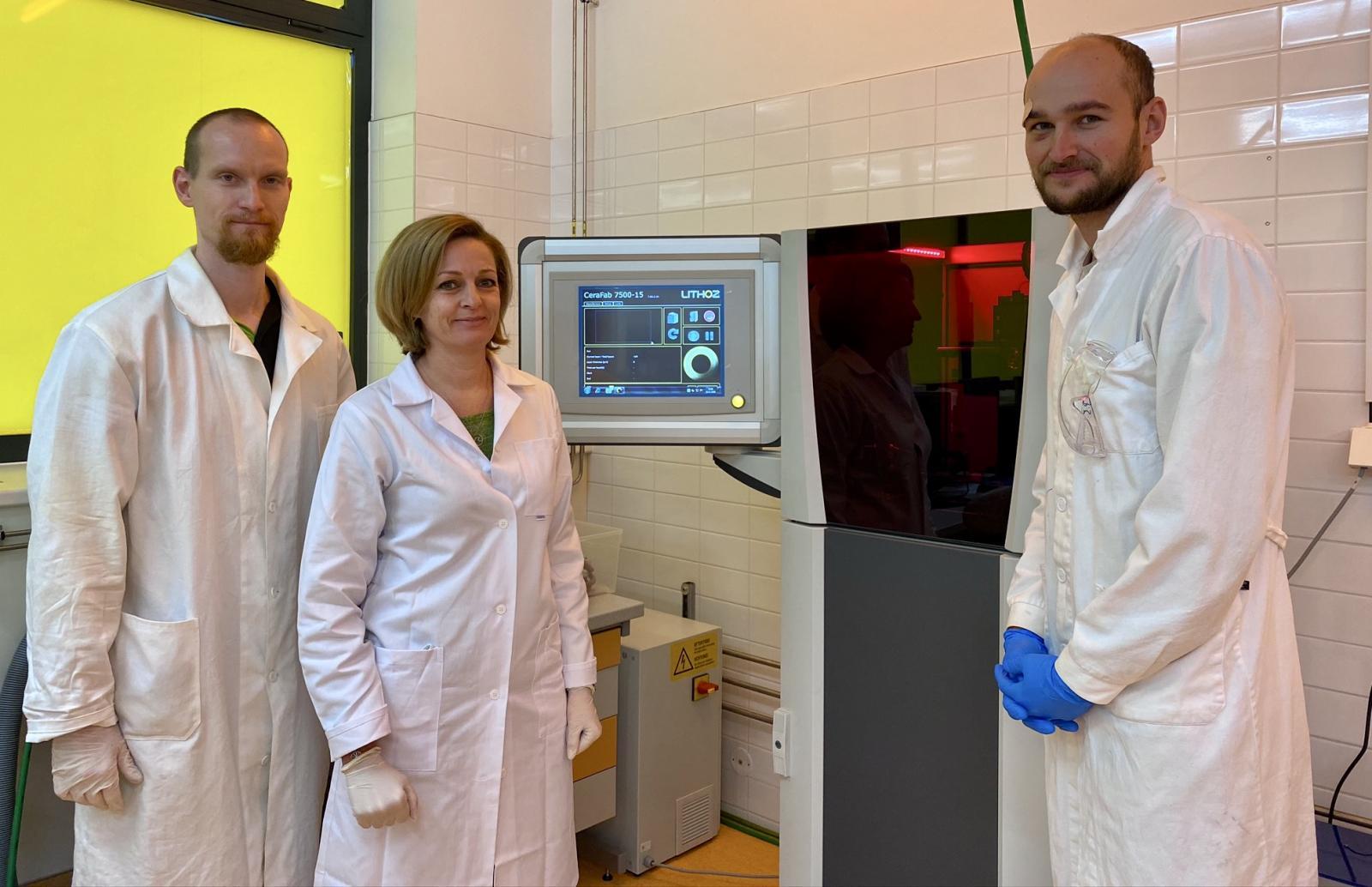
She sees one of the greatest opportunities of the coming years in multimaterial 3D printing of ceramics and their composites. “We are trying to combine different materials to achieve a desired set of complex characteristics. For example, the outer part of a biomaterial could be mechanically strong, while the inner part could be bioactive, degradable, and capable of interacting with the body. However, we face numerous technological challenges, especially at the interfaces between materials with different physicochemical properties. It would be wonderful if we could master the entire process—from preparing printing precursors to producing the final multimaterial structure for a specific application,” hopes Částková, noting that the impact of such a technology would be enormous both for fundamental research and for industrial applications.
Although science occupies a significant part of her life, she strives to maintain the much-discussed work–life balance. “I belong to the kind of people who think about their work in the evenings and on weekends, sometimes even discussing it with colleagues on WhatsApp during family activities,” she laughs. At the same time, she adds that she cannot imagine recharging her scientific batteries without sport, friends, and family. “You have to make time for yourself. Go cycling, play tennis, or spend time with the people close to you. That is the only way to maintain a positive relationship with your work,” she concludes. And she seems to be doing it well, because she speaks about her work with such enthusiasm and energy that it is almost certain that, in her case, the idea of a ‘final stop after becoming a professor’ is nowhere in sight.
Although scientists around the world are striving to replicate the natural structures of the human body, nature still remains one step ahead. “We have not surpassed nature yet. Bone, for example, is an extraordinarily sophisticated composite material that combines different structures and properties. Today, however, we have technologies that allow us to create similarly complex structures, so we are steadily moving closer. On the other hand, technological progress can achieve a great deal, but ageing itself also has its purpose, and not everything can be replaced. Even if we perfect the biomechanics of the human body, we still have a brain that ages in ways we cannot yet replace,” says Částková, tempering visions of immortality.
Although science occupies a significant part of her life, she strives to maintain the much-discussed work–life balance. “I belong to the kind of people who think about their work in the evenings and on weekends, sometimes even discussing it with colleagues on WhatsApp during family activities,” she laughs. At the same time, she adds that she cannot imagine recharging her scientific batteries without sport, friends, and family. “You have to make time for yourself. Go cycling, play tennis, or spend time with the people close to you. That is the only way to maintain a positive relationship with your work,” she concludes. And she seems to be doing it well, because she speaks about her work with such enthusiasm and energy that it is almost certain that, in her case, the idea of a ‘final stop after becoming a professor’ is nowhere in sight.
The king of cycling Jakub Mašek got an internship at the European space agency
Unlocking the Mysteries of the Sun: An Interview with Prof. Shadia Habbal
Jakub Dokulil is developing microscope that will track movement of cellular molecules
Optical fibres will help peek into the deepest parts of the brain. A doctoral student from FME is involved in the research
Alexandra Streďanská’s fascination with fascia and hyaluronic acid