People
18 May 2026
Without water, chemistry cannot exist: FCH BUT graduates now work on water treatment projects at ASIO

Why did you choose the Faculty of Chemistry at BUT and your field of study?
Richard: I enjoyed chemistry in high school, and at the same time I was interested in food science and food processing. That is why I chose chemistry and food technology. The faculty caught my attention already during the Open Day. A lady from the study office approached my friend and me and spoke about studying there with genuine enthusiasm and conviction. That really motivated me.
Jan: It was similar for me – I had always enjoyed chemistry. You can “perform magic like Harry Potter,” mix two things together and create something new. What interested me about FCH BUT was how closely connected the studies were to real practice. I also liked the possibility of admission without entrance exams because it removed a lot of stress. You get an opportunity, but you still have to work hard to succeed. You can also change your specialization during your studies. I started with medical applications and later moved to natural products.
What did your studies at the faculty give you the most – professionally and personally?
Jan: Professionally, definitely analytical knowledge and practical experience from laboratories. Meeting companies at events such as the Day of Chemistry was also very valuable. That is often the first time students see where they could apply their skills in the future. On a personal level, my studies gave me not only friends and many experiences, but I also met my dance and life partner there, which is probably the greatest win of all.
Richard: I also made many friends there and met my girlfriend. Besides that, I gained a lot of knowledge and, most importantly, a way of thinking. The faculty taught us to look at things in a broader context, not just focus on a single problem, and to think about possible risks as well. That is definitely useful in practice.
Do you remember any particular subject or teacher who influenced you significantly?
Richard: In general, I think all of them influenced us, whether through their knowledge, approach, or way of working. The person who influenced me the most was Dr. Pořízka, with whom I worked on both my bachelor’s and diploma thesis. We spent a lot of time together, and I especially appreciated that he supported independence and encouraged us to find our own solutions to problems. I would also mention Professor Márová and Professor Obruča. Their courses were not easy, but they were extremely important.
Jan: I really enjoyed Analytical Laboratories I with Dr. Řezáčová, where we received an unknown sample and had to determine its composition. It was practical and required real thinking. Another great experience was Inorganic Laboratories II and working on my diploma thesis with Associate Professor Diviš. I also have only good memories and experiences connected with Professor Obruča, who knew how to pass his knowledge on to students.
Is there a particular moment or experience that comes to mind when you think of the Faculty of Chemistry?
Richard: The people and the atmosphere. The faculty is smaller, so people know each other and stick together. You help one another, prepare for exams together, and a really strong community forms.
Jan: I always remember the welcome event for first-year students. I experienced it three times – first as a new student, later as a faculty representative, and finally as part of a student association. I really enjoyed working in the association. Together, we founded the strojLAB project, which involved students from several BUT faculties. It was amazing to see how people from different fields could complement one another. Looking at where strojLAB is today feels incredible.
Richard: Back then, I had a bit of an aversion to physics-related subjects. At the time they seemed unnecessary and I did not want to study them. But now that I work in environmental engineering and our portfolio also includes construction-related elements, I can clearly see how important that knowledge is and that I cannot do without it.
Jan: For me, it was more about practical matters. For a long time, I commuted to Brno because it seemed unnecessary to pay for accommodation when I lived within commuting distance. Later, my friends and I found a shared apartment, and suddenly I could spend much more time with others – and use it better than sitting on a bus (laughs).
Could you briefly introduce ASIO and your work there?
Jan: ASIO is an engineering and supply company focused on wastewater treatment and water purification technologies – for example for small municipalities, industry, or drinking water production. In general, the company deals with everything connected to water management. I work as a technical sales representative. I am the first line of communication with investors, designers, and construction companies. I prepare solution proposals and take part in meetings and conferences. It is a very diverse job – every project is different, and that is what I enjoy about it.
Richard: I work as a process engineer for municipal wastewater treatment plant projects. I design technologies so that the entire system works properly. Sometimes I joke with Honza because I propose more expensive technologies for projects than he would like as a salesman (laughs).
Jan: And then I have to battle the competition (laughs).
Richard: My work also includes field trips, training, and technical supervision. I enjoy it because there is a nice balance between office work and fieldwork.
What do you remember about starting at the company?
Jan: The interview was completely relaxed and stress-free. The company welcomed us warmly and gradually trained us. The team is very friendly, so fitting in was easy.
Richard: I completely agree. The atmosphere has been very friendly from the interview onward. Whenever someone had a problem or did not know what to do, there was always someone willing to help.
In what ways did your studies prepare you well, and what surprised you instead?

Richard: The transition from food technology was huge for me as well, but thanks to the company’s approach and my own attitude, adapting was fairly easy.
How long did it take before you started feeling confident at work?
Richard: You can manage the basics within a few months, but every project is different, so situations still come up where I am not completely sure.
Jan: It also depends on who you are talking to. If you are discussing a project with someone who has twenty more years of experience, naturally you do not feel as confident as with someone hearing about it for the first time.
Does your current job match the ideas you had during your studies?
Richard: I had a rough idea, but it involved the food industry. In the end, things turned out differently, but I do not mind at all. I remembered ASIO from the Day of Chemistry, where our current director represented the company. When I was looking for a job and sending out CVs, I thought of the company again because it had left an impression on me even after all that time. And it worked out.
Jan: I imagined myself more in a laboratory. But I also met ASIO at the Day of Chemistry, where I immediately got along well with the director. I told him I would be interested in business connected with the technical knowledge gained at the faculty. He replied that such a position was about to open. And now we are the ones attending the Day of Chemistry to recruit students (laughs).
Which knowledge or skills from university do you use most often today?
Richard: I would again mention waste processing with Associate Professor Diviš and biochemistry. We work with wastewater treatment plants and activated sludge, so these processes are essential and it is important to understand them.
Jan: Searching for information, navigating professional texts, and sometimes writing them as well. When you have seventy pages of technical material, you need to know how to find the important information. And that is something you learn very well at this faculty.
Can you tell, in your cooperation, that you graduated from the same faculty? In what way exactly?
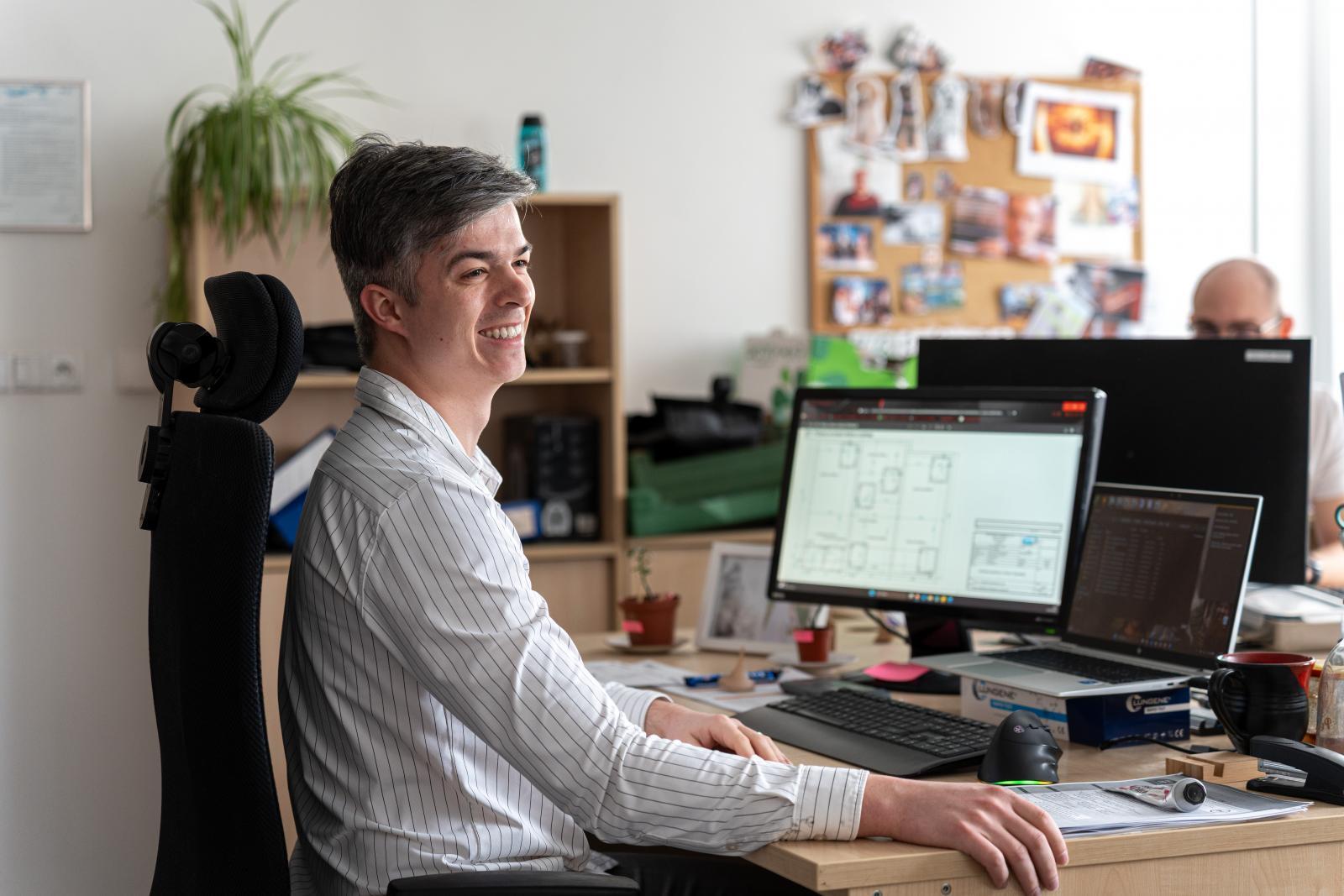
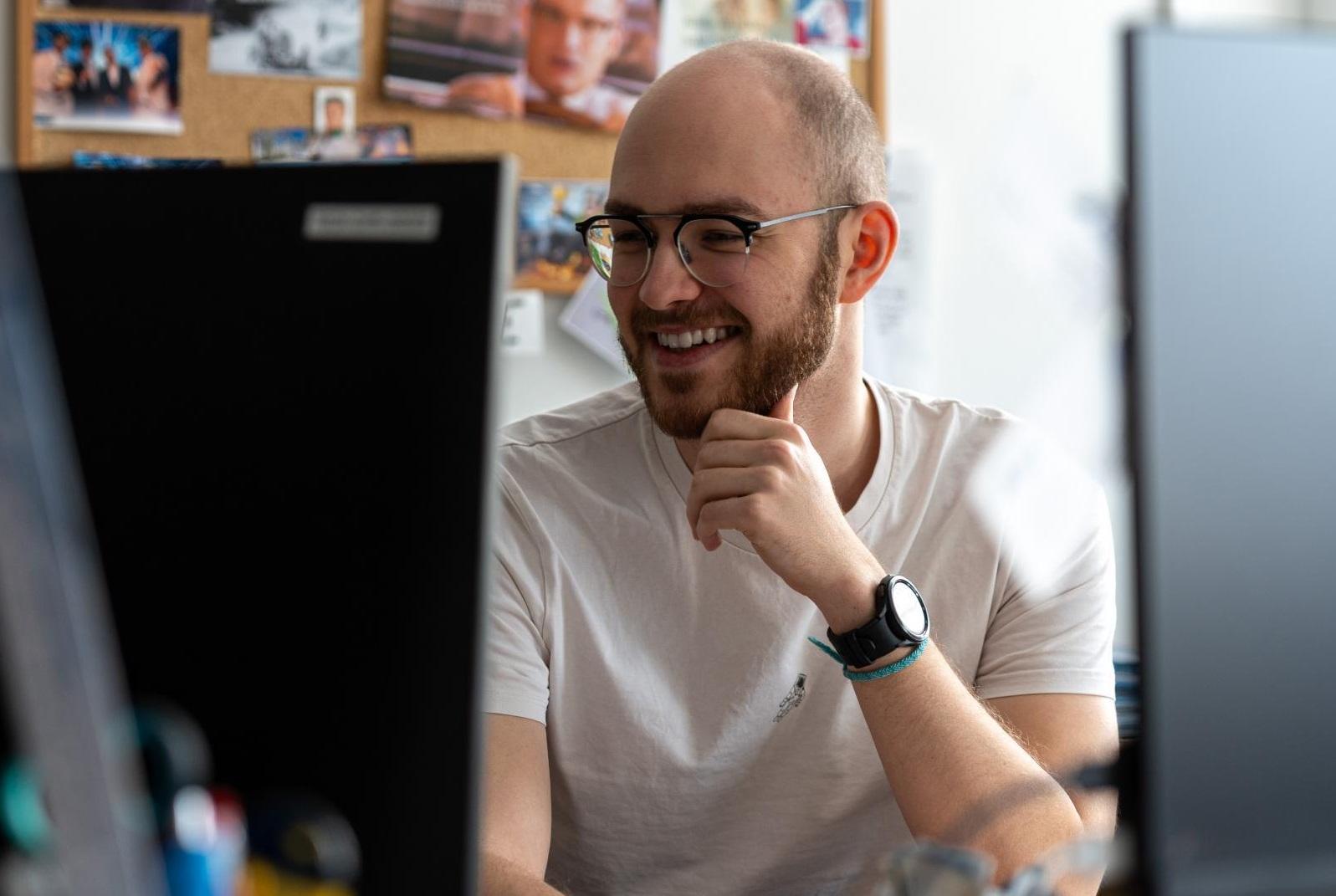
Jan: Yes, but take it with humor. I turned grey and Richard lost his hair, so that is our shared feature (laughs). We did not know each other before, we only met here, but we often reminisce about the faculty and follow what is happening there.
Richard: We both try to react quickly, be proactive, and trust one another within the team. Many laboratory exercises were done in pairs or groups, so teamwork was very important there.
Jan: Or semester projects, where everyone had their own role.
How has your role changed since you started?
Jan: We are more confident now and take on greater responsibility. When I write something or calculate something, I have to stand behind it and not shift responsibility onto others.
Richard: I have only been here for seven months, so my role has not changed much yet (laughs). But of course, I am also gradually taking on more responsibility and independence in my tasks.
What do you enjoy most about your work, and what is the most challenging part?

Jan: For me, one of the biggest positives is the team. The atmosphere is great and there is never a dull moment. The most demanding part for me is public procurement procedures or large projects where several technologies and disciplines intersect, so finding your way around can sometimes be difficult.
What qualities do you think are the most important for a chemist in practice?
Richard: Definitely the ability to search for information, a practical mindset, and the ability to connect things into a broader context.
Jan: Communication skills and willingness to learn are also very important. Today, chemists often cooperate with people from many different fields. And of course, attention to detail. I think these qualities are strongly encouraged at the faculty.
What advice would you give to current faculty students?
Jan: If a company catches your interest, try to get an internship or part-time job there. The company gets to know you, you gain experience and contacts, and they may later offer you a permanent position once they have already trained you.
Richard: Enjoy student life with all its advantages and disadvantages. It passes incredibly quickly.
What does practical experience give students that studying alone cannot?
Jan: Mainly stepping outside the academic environment. At school, people move within a certain bubble, and only at work do they discover how the real world functions.
Richard: Exactly. You gain a more pragmatic perspective.
Would you do anything differently during your studies today?
Richard: Maybe I would focus more on presentations and public speaking. It is often needed at work, for example when presenting a project to customers or at conferences.
Jan: I am satisfied with my decisions. They brought me to where I am today.
Thank you for the interview, and we wish you continued success in your careers!
Source: FCH BUT
Bold innovation in recycling: researcher Silvestr Figalla turns waste sludge into a valuable raw material
How to give plastics a second (and third) life: Research at FCH VUT may change sorting and recycling
What do science and juggling have in common? Both require patience, says Vojtěch Jašek, who focuses on research in chemical recycling
From Prosecco to Bioplastics: An Italian Scientist's Journey to Sustainable Innovations
Ecodesign as a path to sustainability: Researchers from FCH BUT help Czech companies prepare for the future