Topic
Beneath the surface: why what we build with matters. PhD student Ondřej Kunovský on low-carbon cements
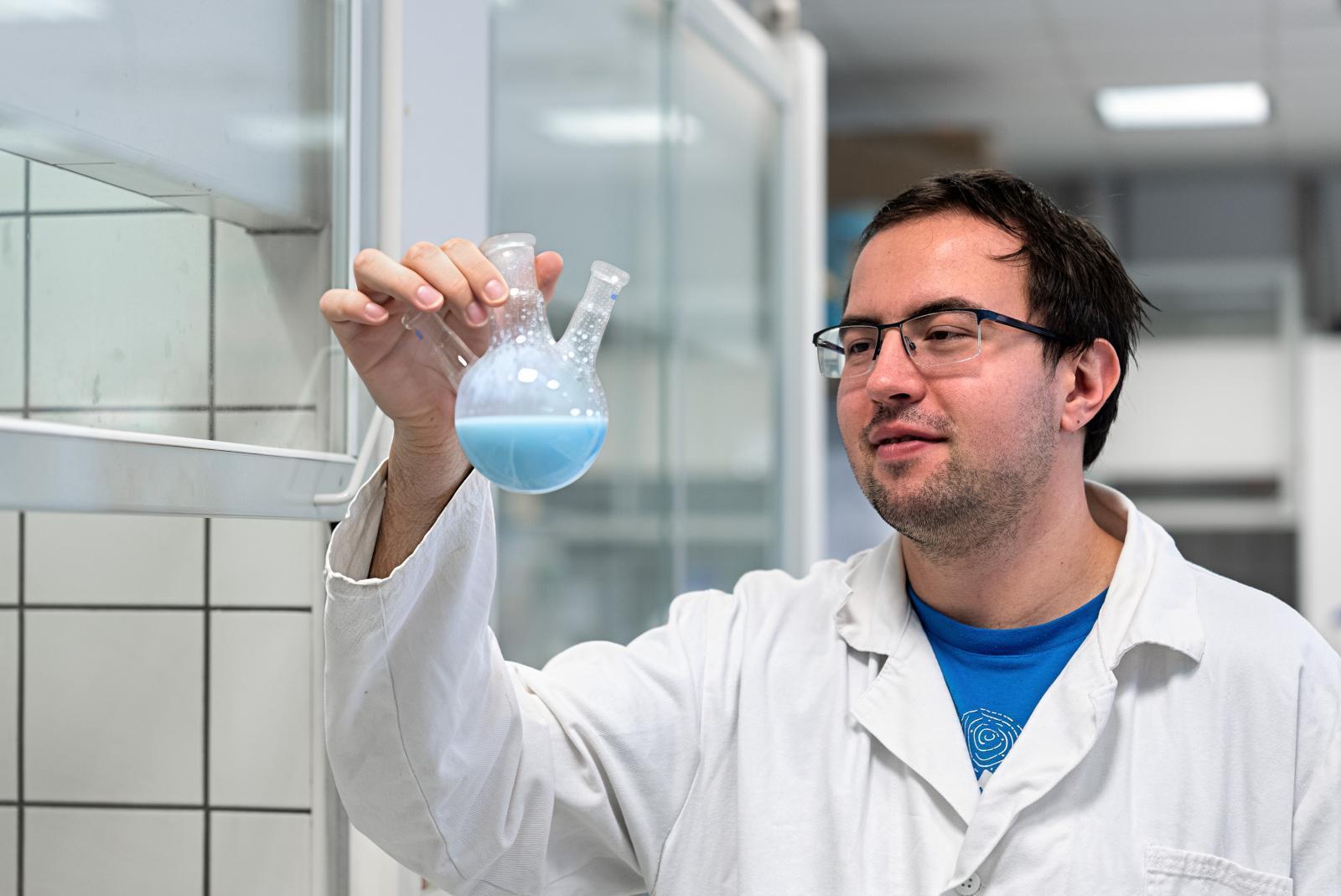
The binder is key
To understand the purpose of the project, Ondřej Kunovský starts from the basics: “Simply put, concrete consists of aggregates and cement paste, which acts as the binder. And it is within the binder that the main component we are interested in is formed – C-S-H gel.”
C-S-H gel is one of the products formed during the reaction of cement with water. However, this gel can also be prepared synthetically in the laboratory. “If we prepare synthetic C-S-H gel under controlled conditions, we can use it as a growth seed. This allows us to influence hydration, meaning the process of setting and hardening,” he explains. It works as a “grain” around which a solid structure begins to build up – similar to crystal growth in a supersaturated solution.
To monitor these seeds within the material, researchers prepare doped variants depending on the type of cement in which they are used (e.g. aluminium, alkali metals). Identification is carried out using electron microscopy and elemental analysis (SEM-EDS). “One method is rarely enough. It is often a combination of several approaches,” adds Ondřej Kunovský.
The project is led by the Faculty of Chemistry at Brno University of Technology, and the principal investigator is Associate Professor František Šoukal. The research activities are divided into several parts – seed synthesis, preparation of a hybrid binder system, and the study of their interactions. The project is carried out in collaboration with scientists from the Faculty of Civil Engineering at the Czech Technical University in Prague, who perform nanoindentation experiments. The results are subsequently used in numerical modelling to predict various strength characteristics. Ondřej’s involvement in the project forms part of his doctoral research under the supervision of Dr Eva Bartoníčková. Specifically, he focuses on studying the amorphous form of C-S-H phases.
Cement as a complex chemical system
At first glance, concrete production may seem simple: by mixing cement, water, and aggregates, a mixture is created that subsequently sets and hardens. The reality, however, is different. “The chemical processes required for cement production and its subsequent hydration are very complex. There are many phases reacting and interacting with each other. It is a complex system, even if it does not appear so at first sight,” describes Ondřej Kunovský.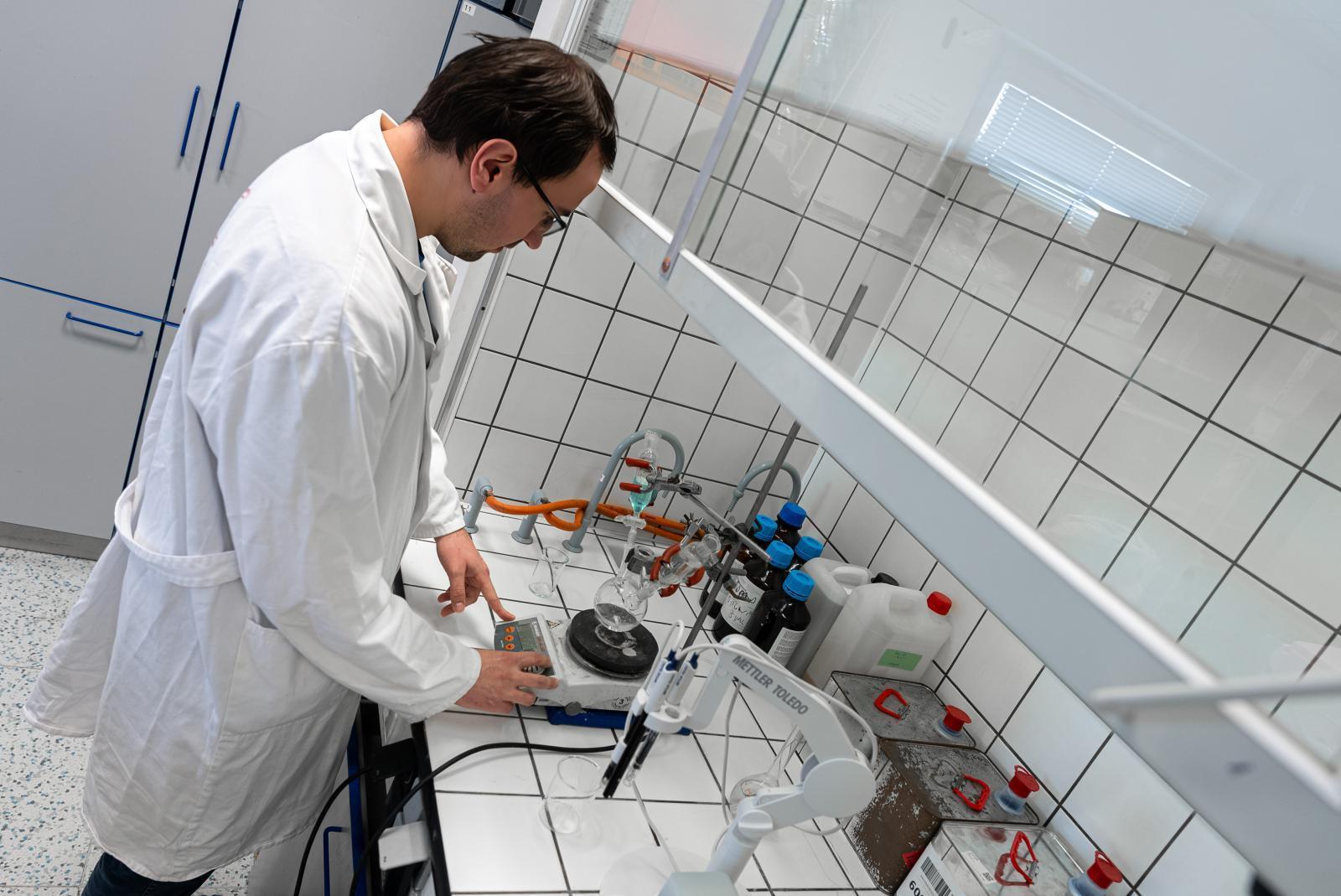
The project focuses on the development of hybrid low-carbon cements that combine conventional Portland cement with alkali-activated materials. The main goal is to improve early mechanical properties, meaning the strength of the material in the first hours after hardening. Some low-carbon cements exhibit a slower onset of hydration, which is why synthetic seeds are added to regulate the process more effectively.
For the average person, the specific cement used is not important. “No one will probably notice what type of cement a pavement is made of. What matters to them is that it performs better.” Better primarily means more durable. “If the structure is denser, the material will last longer,” adds Ondřej Kunovský.
Concrete mainly degrades in two ways. “When water enters the pores, freezes and thaws, it disrupts the structure.” The second issue is carbonation, where carbon dioxide penetrates and alters the internal structure of the material.
Fundamental research matters
The transfer of results into practice takes time. Ondřej Kunovský explains: “Before a material can be introduced into production, it must be operationally verified and subsequently incorporated into relevant standards at national and international levels. In construction, every material must be thoroughly assessed in terms of structural safety to ensure the stability and safety of buildings.”
Commercial “nanoseeds” in the form of accelerators already exist on the market. Their composition resembles our synthetic systems, although they also contain additional components. Ondřej emphasises that this is fundamental research: “The GA CR project is not focused on applied research. Our goal is primarily to understand the chemistry and structure of the system – how the material functions at the microscopic level. This understanding is a necessary step towards future applications. It is certainly not research destined for a drawer,” smiles Ondřej Kunovský.
From A to Z: design, measure, evaluate, interpret
According to Ondřej, the most valuable experience of working on the project as part of his PhD is the opportunity to go through the entire research process. “Design the experiment, measure it, evaluate it. You always obtain results, but the question is how to interpret them,” he summarises. Personal motivation is also crucial. For him, it lies mainly in the opportunity to contribute to improving widely used materials in practice.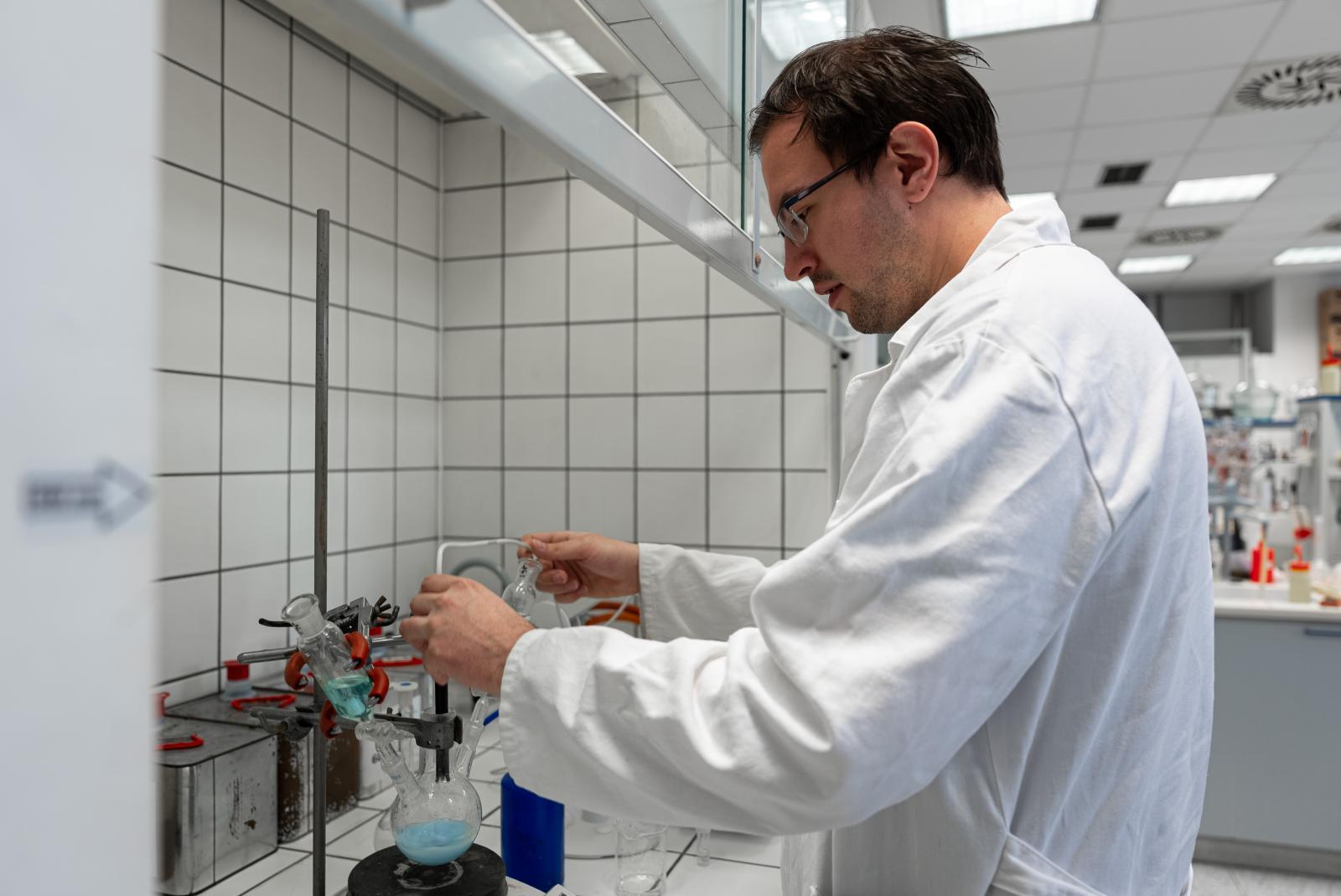
Another added value of doctoral studies, according to Ondřej, is travelling: “The conference in Mostar, focused on thermal analysis and calorimetry, made the strongest impression on me. We are a relatively small scientific community, so we all know each other and meet regularly, which can make collaboration easier.”
He also considers balancing work and free time very important. “It is necessary to relax. When something does not work out, I meet friends, watch a film, or play a game and switch off for a while. A clear head has proven useful, because then the solution is more likely to come to me. When you rush, not everything works out,” reflects Ondřej Kunovský.
He leaves his future open. “I would like to stay in this field, but you never know. I prefer to keep all options open. C-S-H gel is not only responsible for the strength of concrete. Thanks to its chemical activity, it can bind certain heavy metals, and therefore it is also used in research focused on the immobilisation of environmental pollutants.”
One thing is already certain: if his research helps extend the service life of construction materials, it will have an impact on the everyday lives of us all. Longer durability means fewer repairs, lower costs, and reduced environmental burden.
-jo-
Source: FCH BUT

Cheaper, better quality and eco-friendly. FCH BUT researchers create new dextrin adhesive
Without water, chemistry cannot exist: FCH BUT graduates now work on water treatment projects at ASIO
PhD student Jiří Lindovský: I enjoy tackling the challenges of transferring experiments from the lab to practice
Ecodesign as a path to sustainability: Researchers from FCH BUT help Czech companies prepare for the future
From Munich to Brno by bike: Interview with double degree student Jana