Topic
Experience BUT at Researchers' Night: What Do Informal Spaces Look Like Without Prejudice?

Informal settlements are home to at least a quarter of the world's urban population, yet they are still more often viewed through prejudice than genuine understanding. What does a city look like when most of us know it only from images of disasters or poverty? Visitors to Researchers' Night will find out at the Faculty of Architecture of BUT.
Invisible, functional, endangered. These three words capture the essence of informal settlements in Addis Ababa, Ethiopia, and Kathmandu, Nepal, which will be explored through the lecture Purposely Invisible Metamorphosis: Informal Settlements Without Prejudice and the exhibition Purposely Invisible: From Temporary to Permanent, returning in a new format especially for Researchers' Night.
"Informal neighbourhoods are usually described by what they lack. We ask the opposite question: what do these places actually enable, and what is lost when they are demolished?" explains Diana Hodulíková from the FA BUT, who researches the topic together with Petr Preininger. The programme will reveal why these places are much more than simply "slums", explore their internal spatial logic, and explain how they evolve within the socio-economic context of each country.
Theory, however, will not remain confined to the exhibition walls. Visitors will also be drawn into a card game, taking on the role of residents of informal settlements striving to secure the future of their community while facing circumstances beyond their control that often determine the fate of an entire neighbourhood.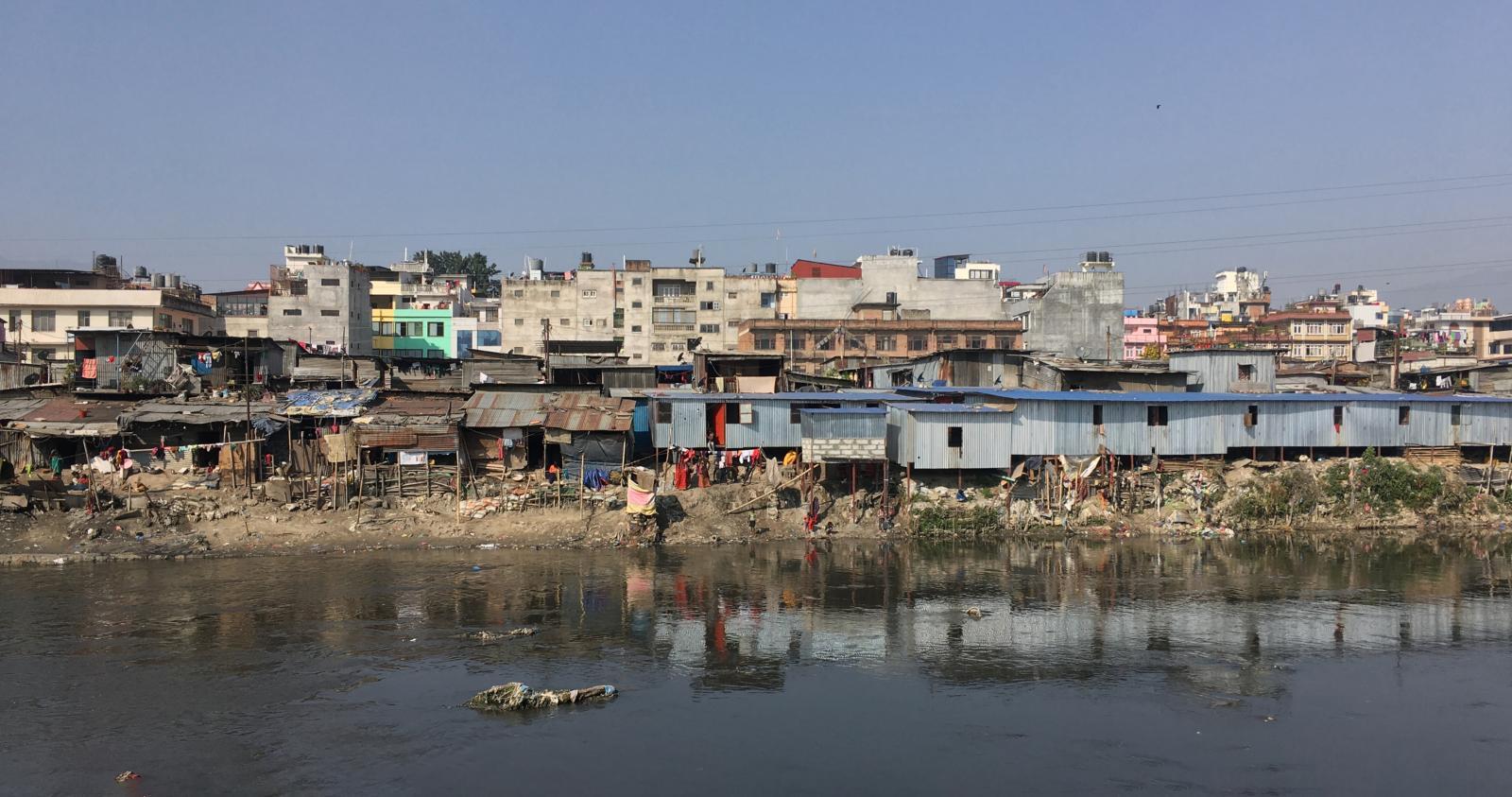
"What fascinates me most about informal settlements are the stories and the fact that what appears to be chaos always turns out to have its own precise logic," says Hodulíková. Her research began with personal experience. She lived for around two and a half years in the Kazanchis neighbourhood of Addis Ababa, which has since been demolished. Since 2022, she has returned regularly to Ethiopia for field research. Petr Preininger found a second home in Kathmandu, where he first travelled in 2019 and where he has continued his long-term research ever since.
And what should Researchers' Night visitors remember? "That 'informal' certainly does not mean 'temporary' or 'worthless'. These neighbourhoods gradually become permanent parts of cities, and demolishing them rarely solves the underlying problem. It merely shifts it elsewhere, along with the people who call these places home," conclude the researchers.
|
Researchers' Night takes place on Friday, 25 September, with all faculties and institutes of Brno University of Technology taking part. Laboratories, classrooms and research facilities will open their doors to the public, offering a programme full of experiments, interactive demonstrations and opportunities to meet scientists. More information is available on the Researchers' Night website. Come and discover how technologies that shape everyday life are created – and experience BUT for yourself! |
Author: Lenka Hubáčková
BIOM Research Project: Architects from BUT will test technology that can sustain entire cities
Women from BUT who move the world of science and technology
“You don't hear sirens?“ shouted the fleeing Ukrainians
The interior of the church should be the opposite of the outside world, architect Marek Štěpán says
Roman Bolcek from FA BUT presents a BIOM vision of future cities in a book. Nothing terrible awaits us, he thinks