Topic
28 August 2025
They wanted to teach English. In the end, they are "raising" new IT specialists and preparing a revolution in education
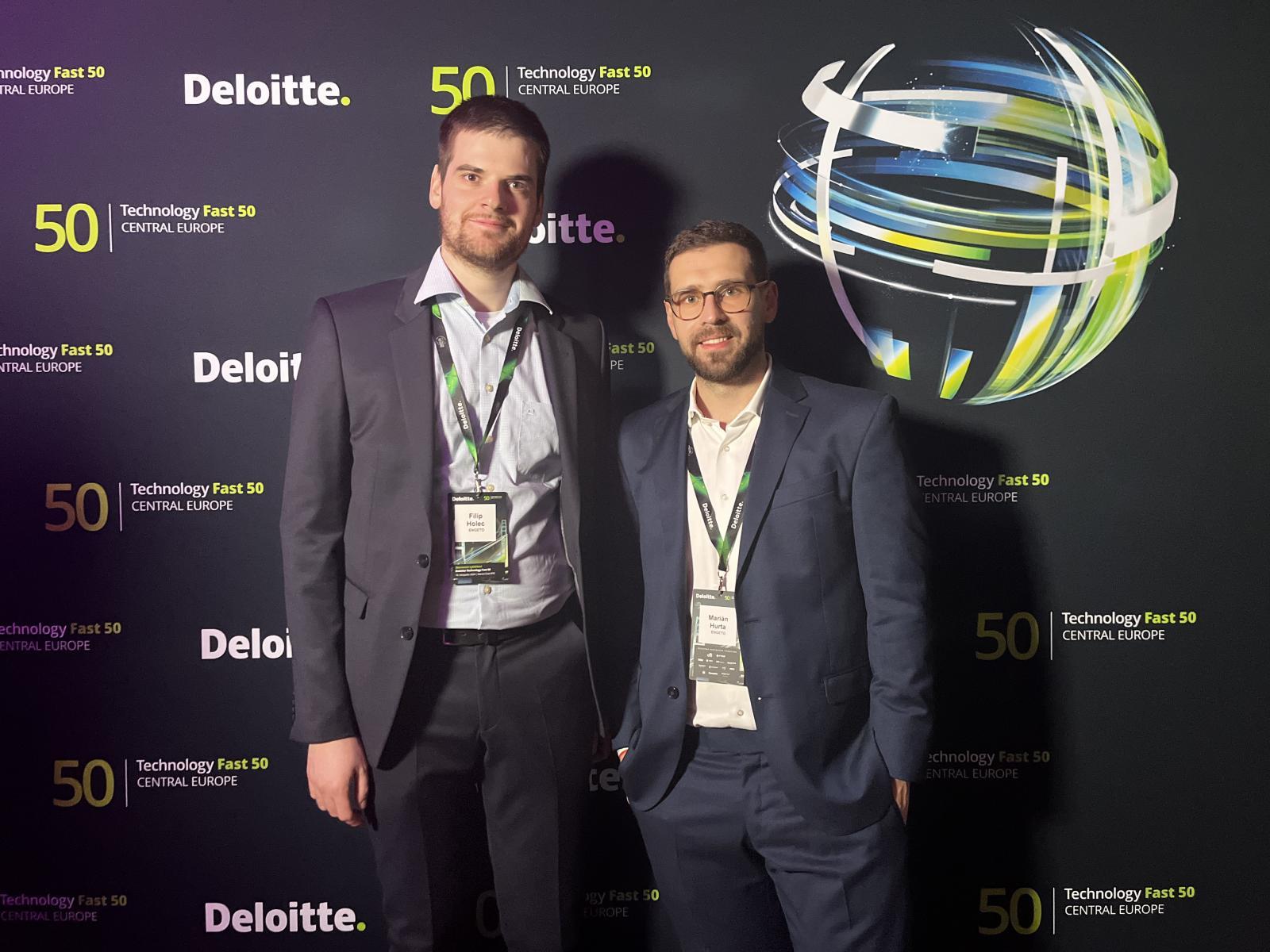
Originally, Filip Holec and Marián Hurta planned to improve students’ English skills. Gradually, both started working in IT companies and realized that the market was lacking IT specialists. They decided to take advantage of this and focus on IT education – that’s how ENGETO was born. Since then, their courses focused on IT, AI, and other digital skills have been taken by more than 18,000 people, and many “IT folks” owe them for kick-starting their careers. Now they have decided to use AI to take education to a new level. Thanks to their new app, people all over the world will have a personal teacher right in their pocket.
In 2013, Filip Holec was finishing his bachelor’s studies at FIT BUT and working for a technology company. At that time, his cousin approached him saying that he and his friend Marián were working on an educational portal designed to help people learn English. “My cousin was in charge of the educational part, Marián handled the business side, and I joined them for the technological part,” says Filip Holec. But two years later, they realized that while they had a finished product, they didn’t have customers. “We went about it the wrong way, without a solid business model behind the idea. We were young and lacked the necessary experience,” Holec adds.
ENGETO’s co-founder and today’s CEO, Marián Hurta, then started working as a recruiter at IBM. And he saw an interesting opportunity. “They had a big demand for junior employees at the level of system administrators, level 1 and 2. The knowledge required for this job can be taught quite easily in a short time. We discussed it with managers and recruiters and found that there was real potential to train practically anyone with at least some technical aptitude to the point where they could be employable,” explains Filip Holec.
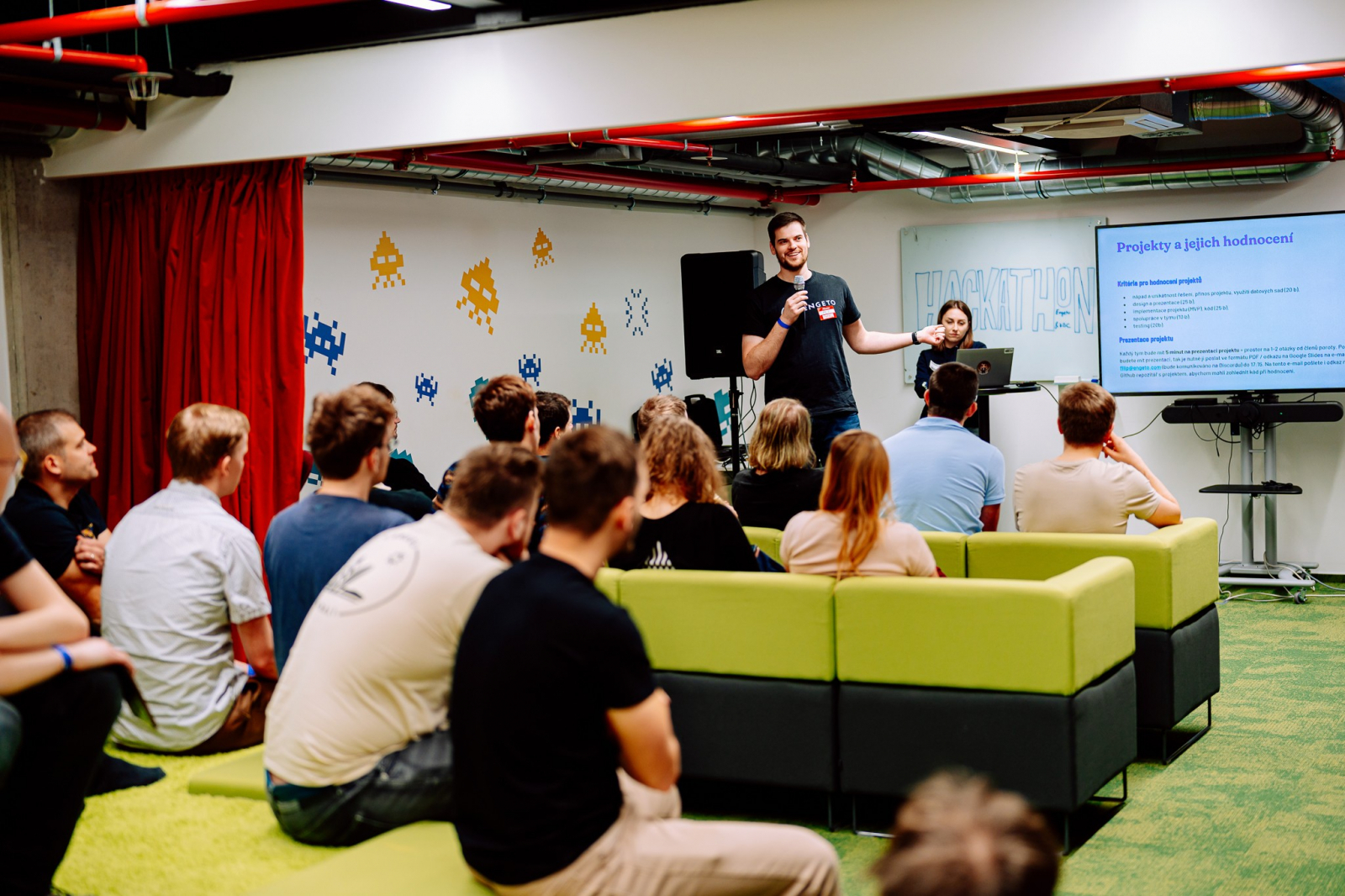
So they started training people interested in IT jobs and created a three-month Academy that could take a complete beginner to a specific level of skills. “A smaller part of our income came from courses, while a larger part was from bonuses paid by companies where we placed prepared candidates,” Holec explains.
ENGETO worked this way for four years. “But the market gradually changed. Many companies froze hiring, so we couldn’t deliver the same volume of people. And with the way our business model was set up, it became unsustainable,” says Filip Holec. They therefore scaled back cooperation with companies and started focusing mainly on education itself. “We added new courses on important technologies and expanded to Prague as well,” Holec lists.
Covid helped ENGETO
The real turning point came in 2020 with Covid. “Until then, we operated entirely in person, but the pandemic showed us that we either adapt – or shut down. But we didn’t just want to survive. We were the first in the country to switch entirely to live online classes with an instructor. It was a big risk, but we went all in – and it paid off. It opened doors to students from all over the country,” says Filip Holec.
“We created educational packages based on IT knowledge currently in demand,” Holec adds, pointing out that what also sets them apart from the competition is a robust educational portal that allows students to study largely on their own.
ENGETO’s developers are constantly improving the portal and adding new features. “We combine live online classes with our educational portal, where students practice practical skills through interactive exercises and track their progress at their own pace. The latest addition is a contextual AI mentor – a personal assistant who knows the progress of the student’s learning and advises just like a real instructor. It doesn’t skip topics and is available anytime, even at midnight,” says Holec.
But ENGETO’s own data also show that the market is now more saturated and demand for IT juniors is not as high as it once was. “Companies are cautious not only because of economic uncertainty and cost pressures but also due to the rise of AI and automation. Today, artificial intelligence takes over many tasks, and what used to require five people is now done by two with AI support,” warns Filip Holec. According to him, entering IT will therefore become increasingly challenging. “In the future, those who can combine programming or server administration knowledge with other skills, such as data analysis, marketing, or other areas, will have a greater chance,” he adds.
A teacher in your pocket – a revolution in education
It is precisely this personalized upskilling in other areas that the tool Filip Holec is currently devoting most of his time to should provide. “We are working on an AI-powered learning app. With it, people will be able to learn in a hyper-personalized way in areas that are important to them, and at an affordable price,” says Holec. The app, which should be on the market in a few months, will work with the learning patterns of a specific user as well as their strengths and weaknesses. “The problem now is that groups of people usually learn in the same way, even though everyone has different paces, prior knowledge, needs, and goals. The result is often that some get bored while others fall behind. We want everyone to be able to learn at their own pace and in areas that really matter to them,” says Holec, adding that they plan to start with IT but eventually want to include finance and useful life skills such as time management or project management. “And in time, we would also like to get involved in the school system so that students can use the app for learning any school subject,” he adds.
Czech companies underestimate security
Besides education, Filip Holec is also interested in ethical hacking and cybersecurity. Together with friends, he founded the non-profit organization TunaSec, which aims to improve security and raise greater awareness of cybersecurity in the Czech Republic. “We do a small number of penetration tests and occasionally phishing campaigns,” says Holec, noting that Czech organizations still underestimate security. “From what I’ve seen, I dare say that only a few companies take security seriously and invest in it adequately. In a situation where various hybrid operations are taking place even from countries that are not particularly friendly, it’s better not to take this lightly,” he warns. That’s why, in his free time, he is also involved in a small project designed to help people and organizations raise their level of security. “It will be an analysis that anyone will be able to carry out to determine their security score and then take further steps accordingly,” he explains. For Filip Holec, ENGETO is a key business part of his life, where he also develops his technical skills. “And working with TunaSec allows me to gain knowledge in cybersecurity while also giving something back to society and contributing to its development,” he concludes.
(zeh)
BUT graduates are behind successful startup coworkers.ai, which is changing world of customer support
Sensorie greenhouse wants to make growing vegetables at home the norm. It offers smart solutions for year-round harvesting
Matúš Nosko: "Don't be on your own—neither in your studies, nor in your business."
Even in a highly competitive environment it is possible to build a successful global company, the founder of codasip Karel MAsařík tells students of BUT
The brain is still a mystery to us