Topic
Code orbiting the Earth: How the KOSTKA satellite software was developed

Only a small number of Czech satellites have made it into Earth orbit – fewer than twenty, to be precise. Their number has grown significantly in recent years, reflecting the current strength of space research and development in the Czech Republic. The latest addition is KOSTKA, the first entirely student-led satellite project, developed by the YSpace team based at Brno University of Technology (BUT).
The cube-shaped satellite, measuring 10 cm on each side, was launched into Earth orbit on 7 July aboard SpaceX's Falcon 9 rocket. Following deployment, KOSTKA established communication with the command and control station on the roof of BUT's Faculty of Electrical Engineering and Communication and now orbits the Earth approximately every 95 minutes. The student team monitors the satellite's condition, receives data from orbit and controls individual experiments. KOSTKA measures UHF radio interference within its coverage area, transmits a radio beacon, serves as a digital repeater (digipeater) for the amateur radio community and sends telemetry data to ground stations around the world.
The project represents a significant milestone in Czech student space activities. The YSpace team's project began in 2023. In just three years, team members developed the concept, carried out numerous experiments, designed and manufactured most of the components, tested the finished satellite and prepared it for the conditions of Earth orbit. Securing the necessary administrative approvals and meeting the safety requirements for launch also involved considerable effort. Beyond its technological contribution, KOSTKA gives students the opportunity to gain experience in developing space systems according to European space industry standards and to build on programmes run by the European Space Agency (ESA). The YSpace team is currently preparing another, even more ambitious mission – the CIMER satellite, which will carry a biological payload and has been selected by ESA for its Fly Your Satellite! Design Booster 2 programme.
KOSTKA is an interdisciplinary project involving several faculties, and BUT's Faculty of Information Technology has also played a crucial role in its development and implementation. To simplify somewhat, the software side of the project has largely been developed by people with strong ties to this faculty. We therefore invited Jiří Veverka, head of software development for the project and a graduate of the bachelor's programme at BUT's Faculty of Information Technology, to talk about his experience.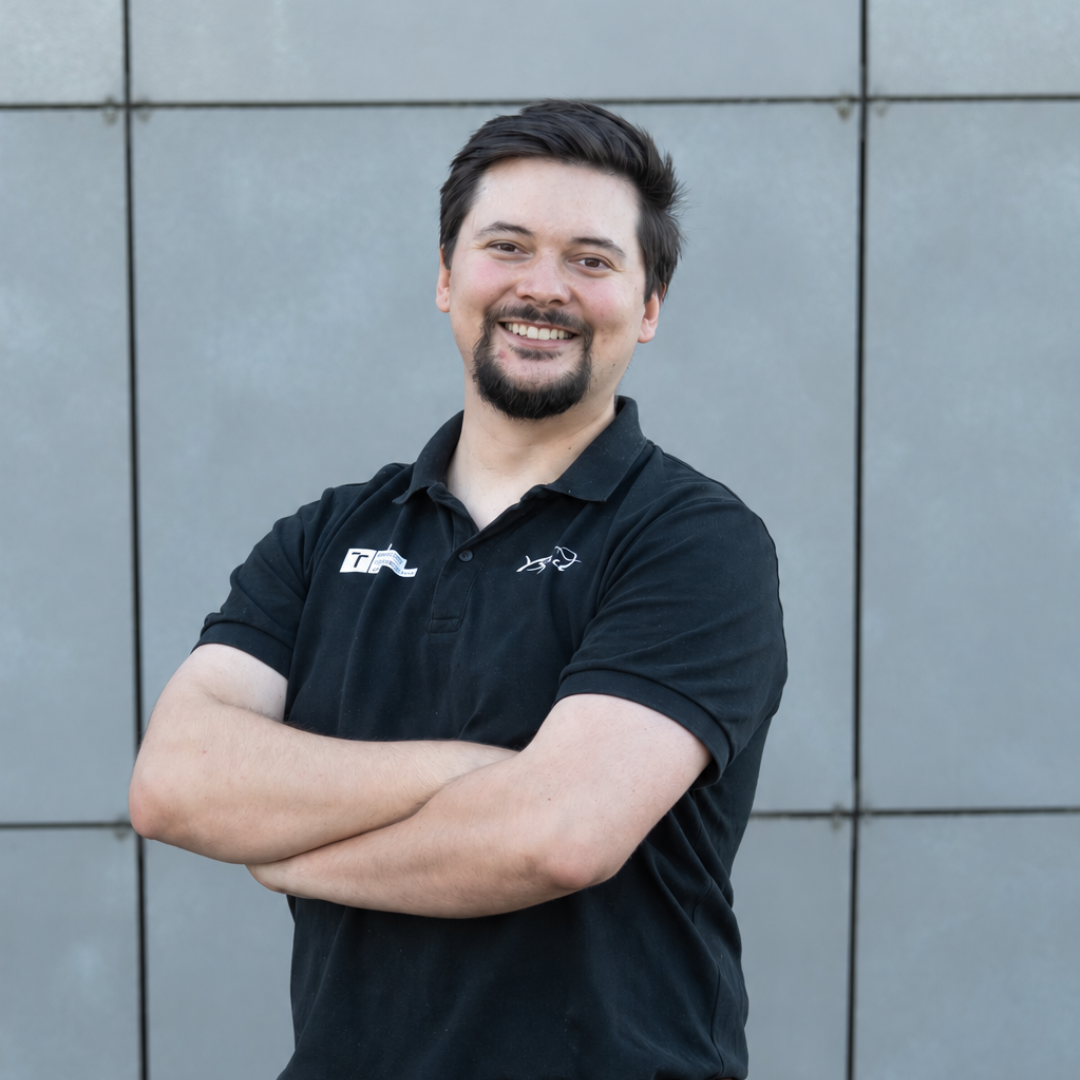
How did you get involved in space research and development? After all, it is a very specific application of IT and, for many people, something rather distant and difficult to grasp.
Quite pragmatically, actually. One fine day, I was sitting at work when an advertisement popped up saying, "Study space at BUT." I was nearing the end of my bachelor's degree and thinking about what to do next and which area to specialise in. It caught my attention. What attracted me to space research from the very beginning – and still does – is how complex and multidisciplinary it is. Right from the start, I could clearly see how everything we had learned during our bachelor's studies could be applied in this field. You also get a little more freedom and the opportunity to explore electronics and systems engineering. Today, I'm highly motivated by the chance to work with applied information technologies and actually send my work into orbit. I live by the motto: If something is interesting, it isn't easy. This field fits that perfectly.
Could space research be described, in simple terms, as a "sexy" area of IT?
Yes, definitely. I often meet IT professionals who would like to get involved but don't really know what the field entails. This is often accompanied by an oversimplified perception that space research is extraordinarily complicated and involves highly specialised requirements and procedures. In reality, the opposite is true. Space research uses standard IT techniques and tools – complex systems design, database systems, testing tools, programming for real-time operating systems, network protocols and so on. Of course, the field has its own specific characteristics, but there's no need to be afraid of them.
When most people imagine satellite development, they probably think of the structure, electronics, antennas or solar panels. How important is software to KOSTKA's operation? What would the satellite be unable to do without it?
I'll use an analogy: electronics are the satellite's circulatory system and heart, while software is its mind. Without software, the satellite wouldn't be able to automatically process inputs and respond to them, and it wouldn't be able to communicate. It simply wouldn't work. On KOSTKA, software handles communication between different parts of the system, regular reporting and situations where the satellite has to deal with emergencies autonomously when it's out of contact with us. There's a lot involved. And then there's the ground segment, the control station and its operation: software controls the antenna, stores incoming data in a database, manages automated commands sent to the satellite and much more.
When we talk about "programming for orbit", what makes this kind of work different? How does programming a device that will be sent 600 kilometres above the Earth differ from developing ordinary software?
The first thing that probably comes to everyone's mind is that once the satellite is operating, you simply can't physically access the device. You don't have an astronaut standing by with a reset button. The satellite either restarts on command or does so autonomously if we don't receive the expected response within a certain period. There are also numerous safety standards and requirements in the aerospace industry that must be met. That's typical of space development.
What has been the biggest challenge on the software side of the project so far?
I'll mention two challenges: one personal and one related to the team. The personal challenge was that I had no experience managing a technical software team. That was a big challenge. I'd even say that, at the beginning, we approached the whole thing with enthusiasm but also in a rather improvised, do-it-yourself spirit. From the team's perspective, it was difficult to establish a clear vision of everything the software should be capable of and what we expected from it. Precisely defining individual problems and tasks was demanding and required frequent consultations with experts, including those from the European Space Agency (ESA). Another chapter altogether involves the demanding and numerous aerospace standards that have to be met. This goes hand in hand with continuous testing, which we also had to learn. Finally, I'd mention the challenge of keeping the team motivated in a student-led project. Today, I'm proud that the YSpace software team has a strong core of guys, most of them from FIT. I'd like to mention Lukáš Houzar as at least one name representing them all.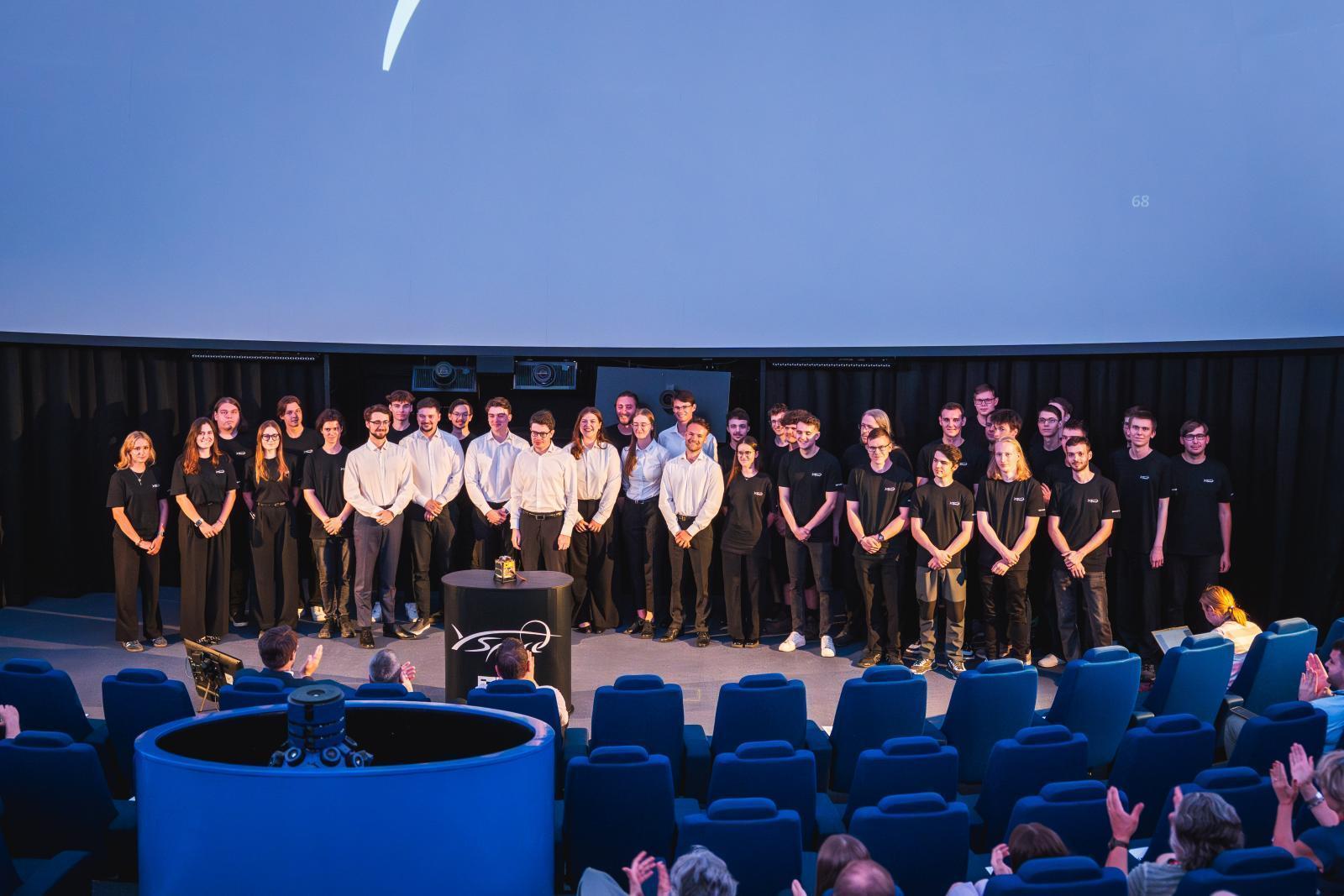
Am I right in understanding that KOSTKA is essentially preparation for an even more ambitious project – CIMER?
Exactly. KOSTKA is the foundation on which we're currently building the next generation of our software. It gave us the structure, a basic set of tools and procedures, and we'd like to use all of that for the CIMER satellite as well. I therefore expect its development to be considerably faster. The current plan is to launch it into space in 2028. What makes CIMER special is its biological payload. The satellite will carry, in a hermetically sealed container, what are essentially dried algae, which will be tested after being rehydrated in orbit. Specifically, we'll investigate whether they are capable of producing oxygen and, if so, to what extent. The potential practical applications of this kind of research in the future are quite obvious. The biological part of the project is being handled by our colleagues from Mendel University in Brno.
Both KOSTKA and the upcoming CIMER mission are open projects. Are you looking for potential collaborators, including students from the Faculty of Information Technology?
Yes, absolutely. Several bachelor's and master's theses have already been completed in connection with the KOSTKA and CIMER projects, and more topics will be offered. Anyone who wants their code to do more than just sit in a drawer and instead have a chance to make it all the way into orbit is welcome. Specifically, we're looking for talented people to work on communication protocols, data structures, automated protocols, simulations, ground software, backend development and mission control tools. You don't have to join us already knowing how to develop satellites. We need good programmers who want to learn about embedded systems, distributed systems, networking or perhaps DevOps. They can learn the "space" part with us. What's more, they can start by working on a relatively standard IT problem. To put it very simply, I would say that practically everything students learn during their bachelor's studies at FIT can be applied in our projects. The key is not to be intimidated by the complexity of the subject or the time commitment. You just have to give it a try. As one of our associate professors at the Faculty of Electrical Engineering and Communication once said: The meaning of life isn't to find something easy that you can achieve quickly. It's to have a complex challenge that will keep you engaged for the rest of your life.
Today, KOSTKA can be considered a successful project, while work on CIMER is progressing intensively. How do you see your future in space research? Do you have a major professional goal?
I'm currently responsible for developing control software for an onboard computer for one of the upcoming missions at VZLU Aerospace. At the same time, I'm pursuing my PhD at BUT. And my professional dream? Perhaps to work at ESA or at one of the major multinational companies that have extensive opportunities in space development today. Of course, preferences can change as your life circumstances change. But from where I stand today, ESA is something of a professional holy grail.
| In addition to developing its own satellites, the YSpace student team is also involved in educational and science communication activities. Every year, for example, it organises SpaceBeer, a series of lectures by experts from the space industry and research community held in an informal setting. This year's edition is currently being prepared. For more information, follow their Instagram account or visit the YSpace website. If you're interested in getting directly involved in space research, come along to one of the team's events. |
Source: BUT Faculty of Information Technology
BUT sensors protect bee colonies from starvation and theft
Doctoral students in engineering study the behaviour of the circulatory system. Neural networks also help them
Young scientists want to use Cubesat to photograph the solar eclipse from the space
Device is being developed at strojLAB that students hope will help them succeed in a prestigious biotechnology competition
We haven't reached worst point yet. Interview with Anton Firc, Joseph Fourier Prize awardee