Topic
30 July 2026
Spin waves could transform future of AI and quantum computing. Jan Klíma from CEITEC BUT is exploring how to harness them

Artificial intelligence consumes enormous amounts of energy today. One path toward more energy-efficient computing may lie in spin waves—magnetic phenomena that scientists are studying as the basis for a new generation of chips and quantum technologies. Jan Klíma, a Ph.D. student at CEITEC BUT, is looking for ways to better understand and utilize their behavior. For his research, he received the prestigious Ministry of Education, Youth and Sports (MŠMT) award for outstanding graduates, as well as support from Brno Ph.D. Talent.
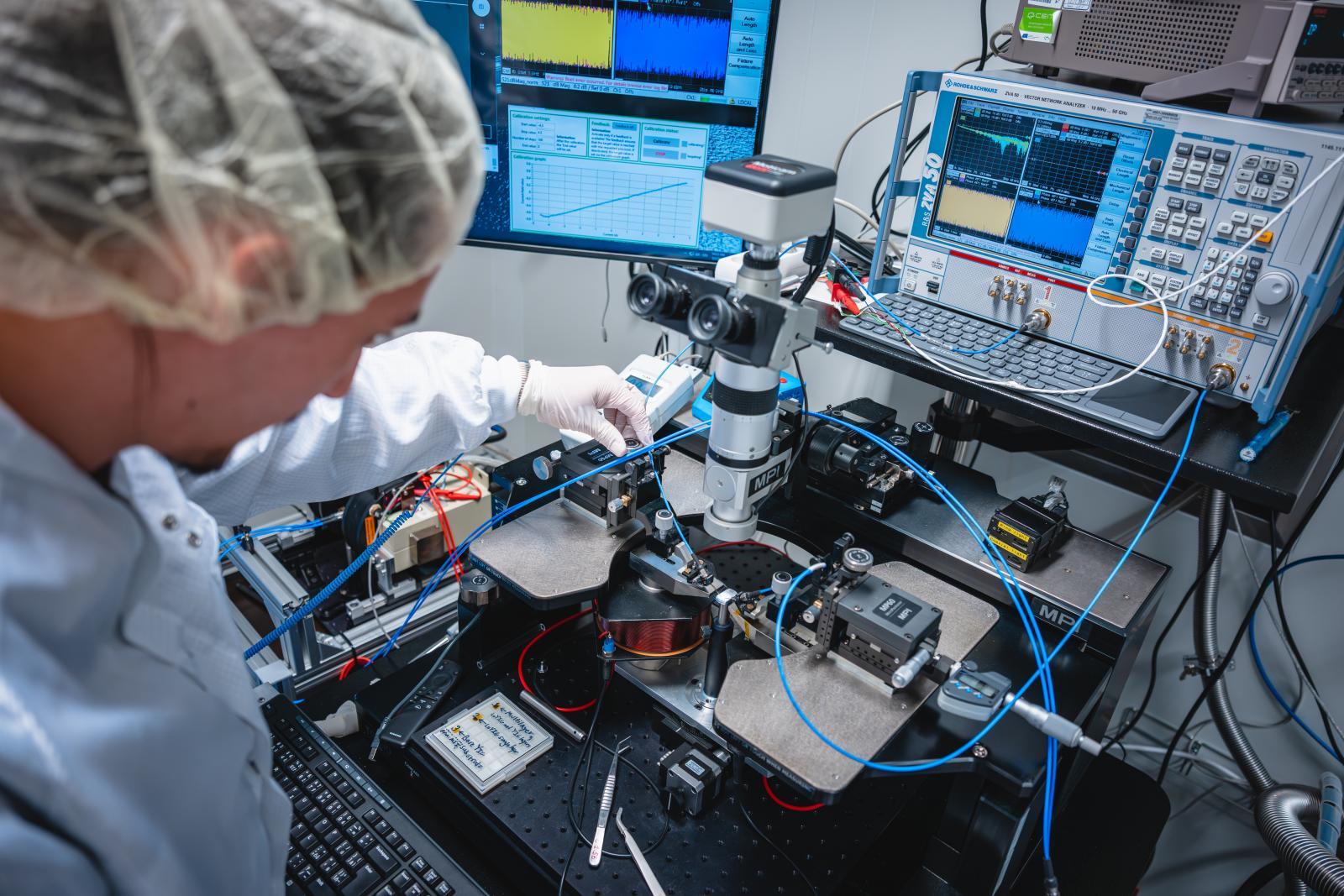
Modern electronics is based on controlling the flow of electric charge. However, this principle results in energy losses and heat generation. One way to overcome this limitation may be spin waves—a special form of magnetic wave that allows information to be transmitted without the conventional flow of electric current. Jan Klíma, a member of Michal Urbánek’s research group at CEITEC BUT, is investigating precisely these properties.
“Our goal is not only to describe how spin waves behave, but above all to determine how these waves can be controlled. It is precisely the ability to control these processes that will be decisive for their future use in magnonic and quantum technologies,” explains Jan Klíma.
{{photo|2026_-_CEITEC_CleanRooms_BTS_PhDReels-17.jpg|775}}
“Our goal is not only to describe how spin waves behave, but above all to determine how these waves can be controlled. It is precisely the ability to control these processes that will be decisive for their future use in magnonic and quantum technologies,” explains Jan Klíma.
{{photo|2026_-_CEITEC_CleanRooms_BTS_PhDReels-17.jpg|775}}
Spin waves, also known as magnons, arise due to the magnetic properties of materials and propagate through them similarly to other types of waves. Unlike conventional electronics, however, their use does not involve the transfer of electric charge and thus does not result in significant heating. This makes them an interesting candidate for future low-energy technologies—from microprocessors to specialized computing systems.
“It is precisely the nonlinear behavior of spin waves that is of interest for applications in machine learning and neural networks. There are already experiments showing that they could be used, for example, for signal recognition,” says Klíma.
However, his doctoral project focuses on another significant challenge—linking magnonics with quantum technologies. Spin waves can interact with other physical systems, such as electrical or optical signals, and could thus serve as a medium for transmitting information in quantum devices in the future.
The key problem Klíma is addressing is magnetic noise. This noise can disrupt sensitive quantum processes and cause information loss. The researcher is therefore trying to determine how to better describe the behavior of spin waves and how to modify the properties of materials so that this noise can be reduced.
“If we could suppress magnetic noise even at higher temperatures, this could lead to more efficient and accessible quantum technologies in the future that wouldn’t require as much cooling,” he adds.
Magnonics is one of the rapidly developing fields of modern physics. Although it is still a young discipline, it has experienced significant growth in recent decades and is being pursued by leading research institutions, primarily in Germany, France, Austria, the U.S., China, and Japan. Michal Urbánek has been working in the field of magnonics since 2015. Over the past decade, his research group has become a respected member of the international community focused on spin wave research.
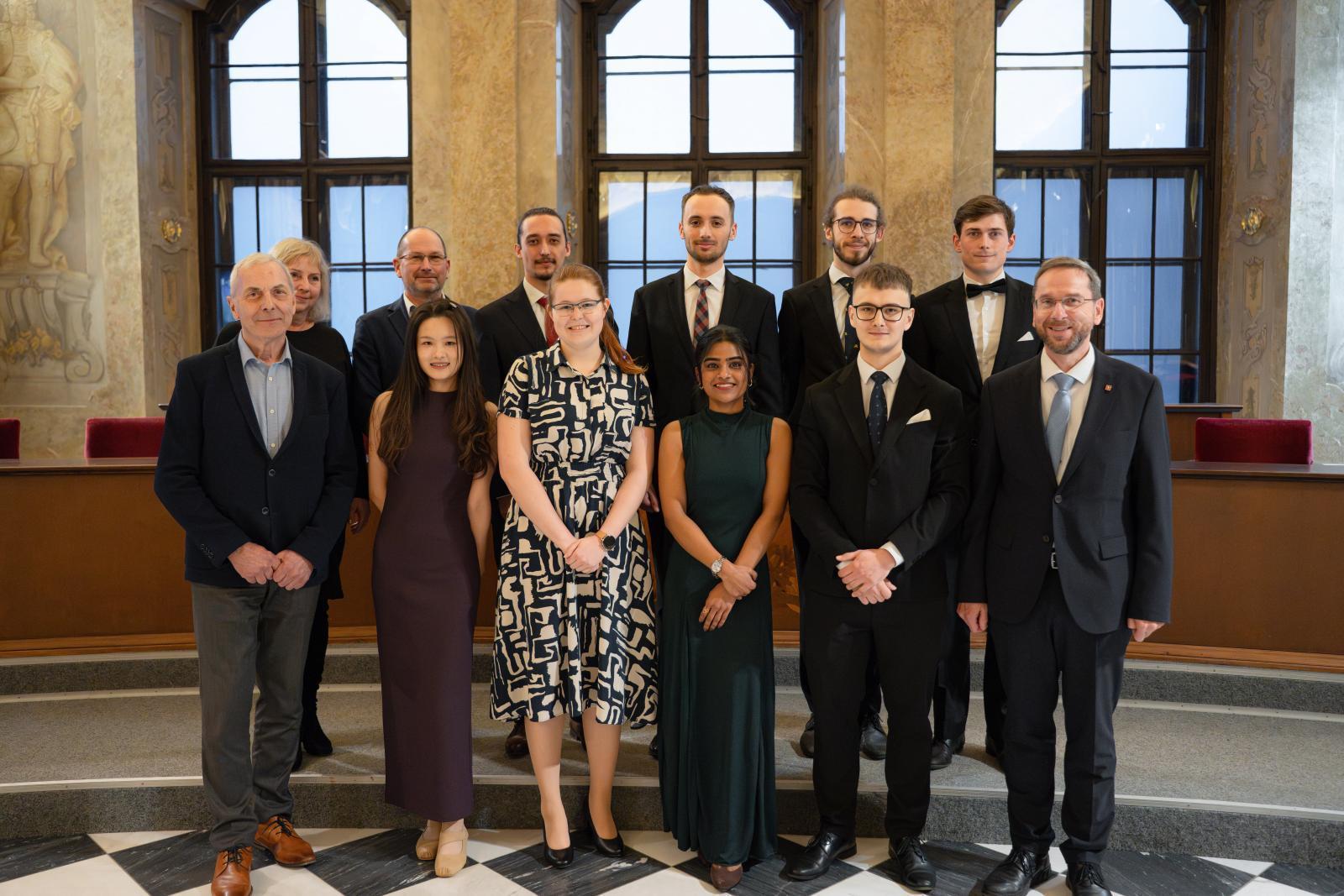
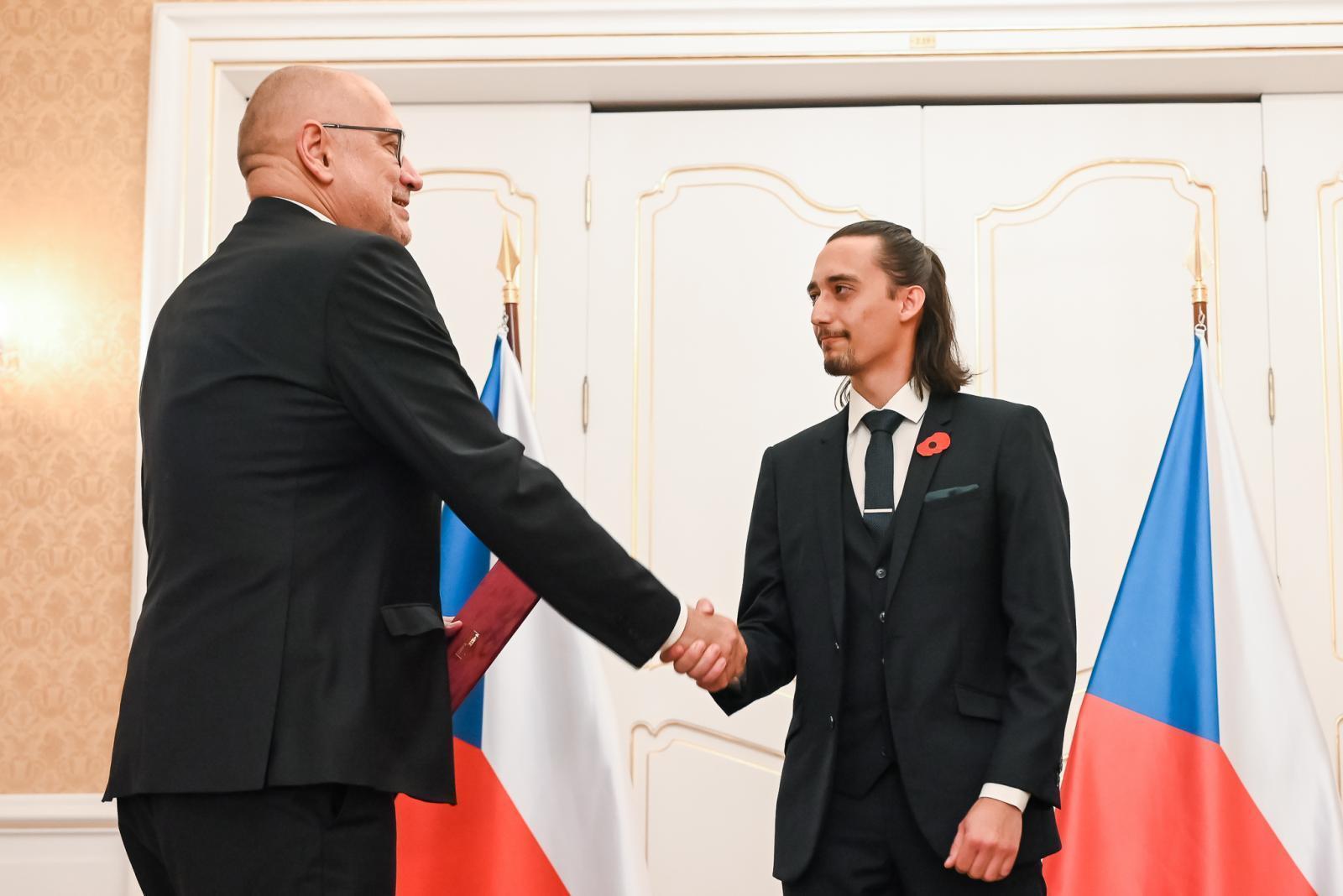
Jan Klíma has been part of the group since his bachelor’s studies, during which he also wrote his thesis under the supervision of Michal Urbánek. Last year, he received the Ministry of Education Award for Outstanding Graduates and was also awarded a grant from the Brno Ph.D. program Talent, which helps develop gifted doctoral students.
“I was very pleased to receive the Brno Ph.D. Talent. The fact that my colleague Dominik Pavelka from the same research group also received funding shows that BUT is successfully advancing research in this promising field,” concludes Klíma.
{{photo|nz6-084_1600.jpg|775}}
{{photo|DSC04340_1600_1600.jpg|775}}
How to apply for the new Brno PhD Talent program?
(Mar)
{{photo|nz6-084_1600.jpg|775}}
{{photo|DSC04340_1600_1600.jpg|775}}
How to apply for the new Brno PhD Talent program?
(Mar)
Awarded student Jiří Kabát uses an electron microscope to measure the temperature of nanoparticles
Ceramics that glow. Young scientist wins award for research into new materials for lasers and X-rays
Petr Viewegh’s Microcosm and Macrocosm
František Jeřábek, winner of the Hlávka Prize: In research, curiosity is more important than perfection
Bismuth as a cheaper alternative to gold