Ideas and discoveries
Graduate of FA BUT is among winners of BIG SEE Awards 2026. He succeeded with his vision of interactive architecture
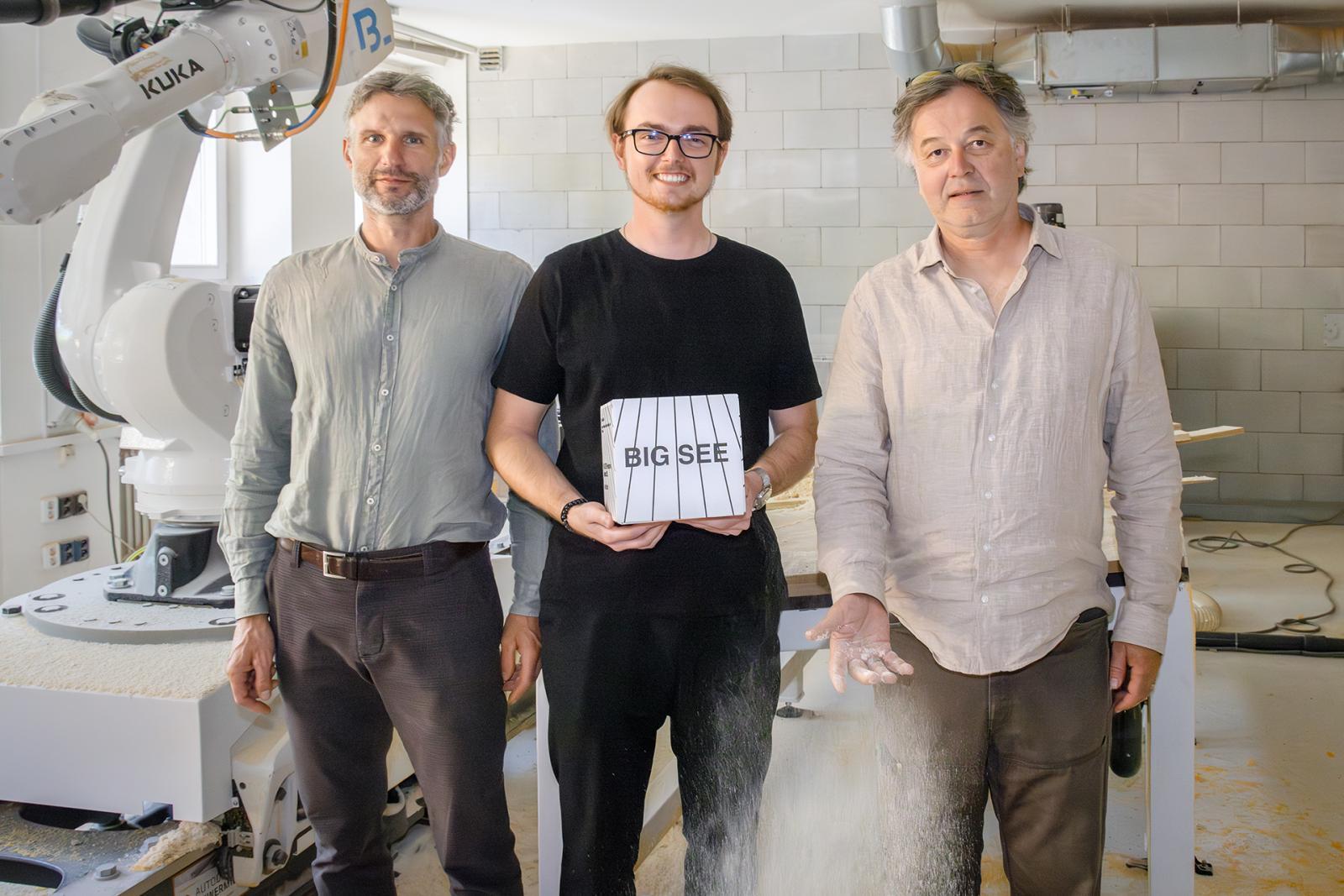
The Faculty of Architecture at Brno University of Technology is represented among the prominent young designers who have made a name for themselves on the international stage. Graduate Tomáš Müller was among the recipients of the BIG SEE Awards 2026, in the Perspectives category, where he impressed with his project focused on adaptive and interactive architecture. His nominator, architect Marek Jan Štěpán, also agreed on the project’s quality. In his evaluation, he particularly highlighted the “freshness and clarity of architectural and conceptual thinking,” which he believes can significantly influence the future of architecture.
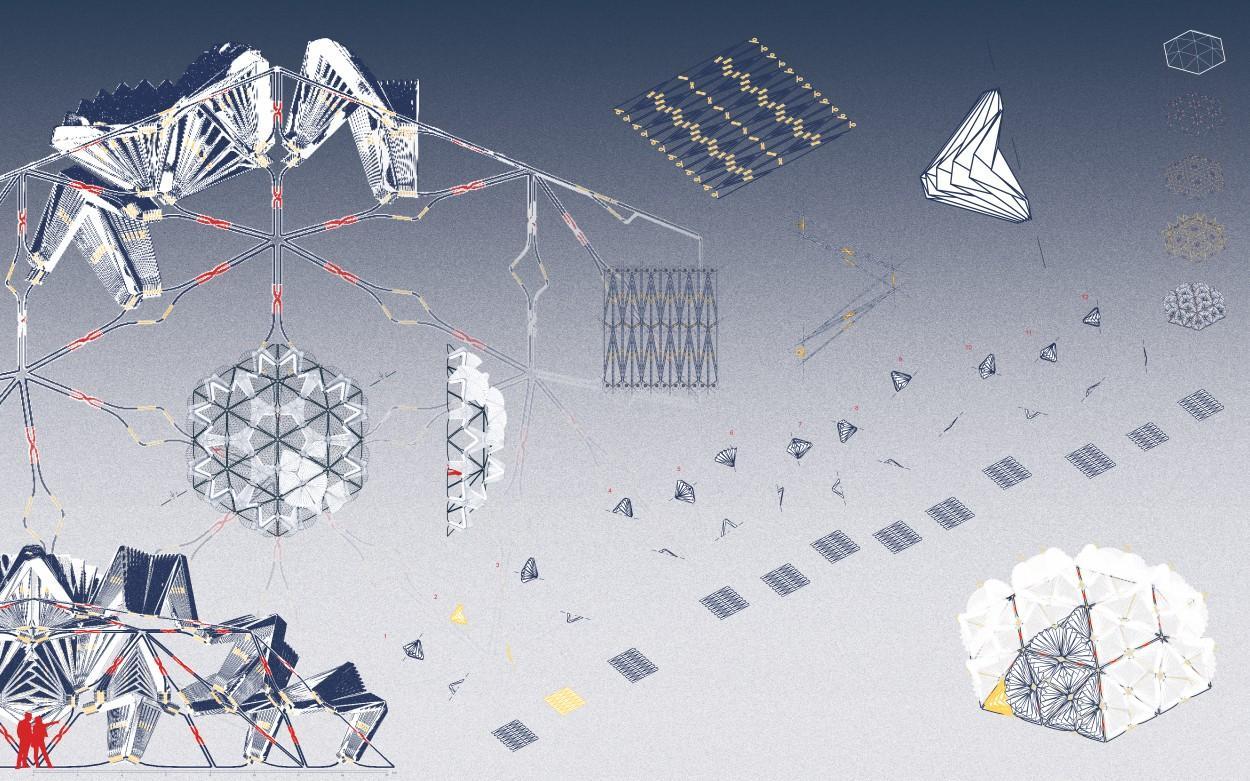
Müller’s project Interactive Architecture: Origami-Based Kinetic Shells, which he developed as his thesis under the supervision of Martin Kaftan at the Department of Experimental Design, FA BUT, presents an approach in which architecture is not static but actively responds to changing environmental conditions.
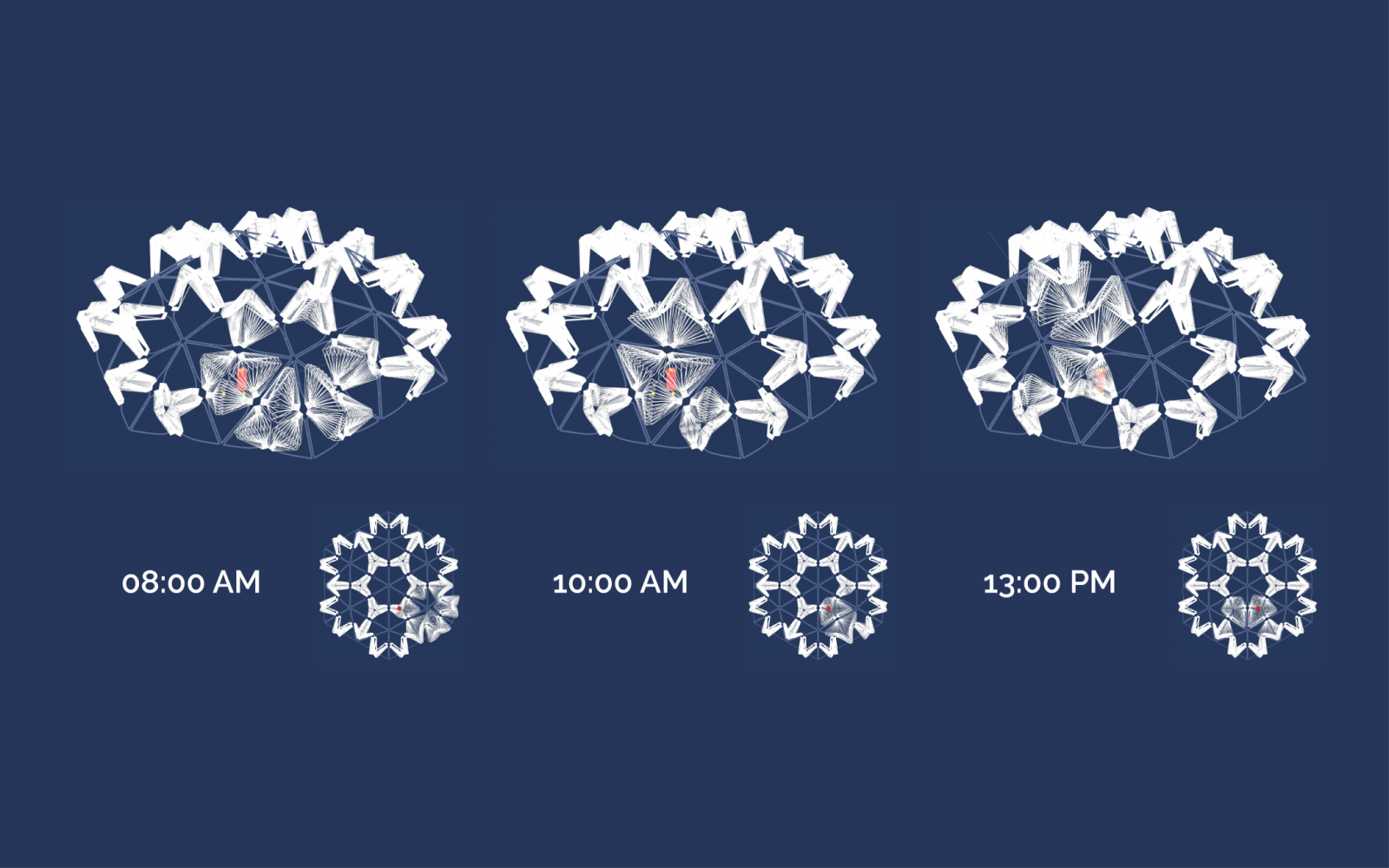
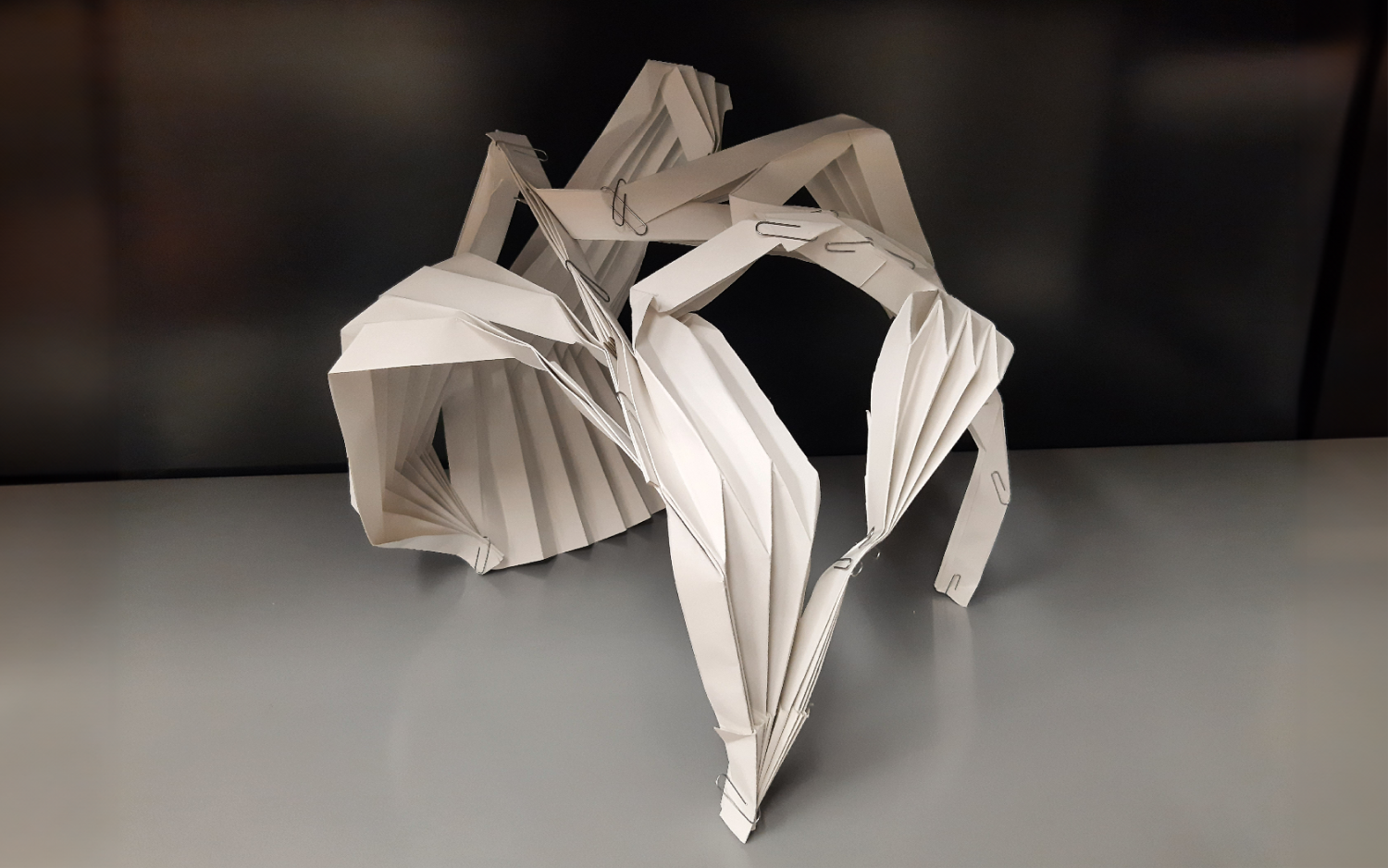
The design is based on the principles of paper folding—origami—and combines them with digital design, parametric tools, and advanced manufacturing processes. The result is a system of kinetic shells capable of adjusting their shape in response to sunlight or user movement.
This creates a dynamic environment that adapts in real time and opens up a new type of relationship between people and space. At the same time, the project addresses current environmental challenges – adaptive shading systems represent one way to improve the thermal comfort of buildings and contribute to more sustainable design.
Interview with Tomáš Müller
In your project, you work with kinetic structures inspired by origami. What was the biggest challenge for you during development, and how did your original concept evolve?
The Interactive Architecture project began with an exploration of origami. Using digital design tools (the Rhino Grasshopper environment), it was no problem to create complex structures and their manufacturing data. However, to simplify the development of the kinetic shells, it was necessary to compromise and work with more regular forms. At this point, I reached a stage where I needed to come up with a mechanical principle that would further enable the development of the adaptive system that interactive architecture is.
During this development, interdisciplinary consultations with Petr Frantík, an expert in structural mechanics from the Faculty of Civil Engineering BUT, were absolutely invaluable. The opportunity to connect architectural conceptual thinking with structural mechanics was a fundamental experience for me, one that shifted the entire concept from a purely theoretical vision significantly closer to potential feasibility.
When my thesis advisor, Martin Kaftan, introduced me to the basic principles of environmental analysis in the Climate Studio environment—a specialized add-on for digital simulations in the Rhino/Grasshopper design environment—subsequent digital simulations of the behavior of kinetic structures posed no further problems.
The BIG SEE Awards highlight the relevance and social impact of architecture. In your opinion, how can interactive architecture realistically respond to climate change and the needs of users?
Interactive architecture emerged from an effort to avoid designing structures that consume large quantities of building materials, the overproduction of which in the post-World War II era (the Great Acceleration/Anthropocene) contributed to climate change. This led to the exploration of lightweight and durable origami structures. Furthermore, as the natural balance shifts, extreme weather events are becoming increasingly common, which further compels us to develop adaptive systems that might one day be able to counterbalance these changes.
However, the resulting work did not achieve this. Instead, it focused on demonstrating the ability to create an adaptive space that automatically ensures the comfort of its users by monitoring surrounding conditions. The first area in which this was demonstrated was the adaptive shading of the structure’s users. Imagine a space you walk through that monitors where the sun is shining in the sky and how you are moving through the space. The kinetic structure changes shape and consumes energy only when and where it is truly needed.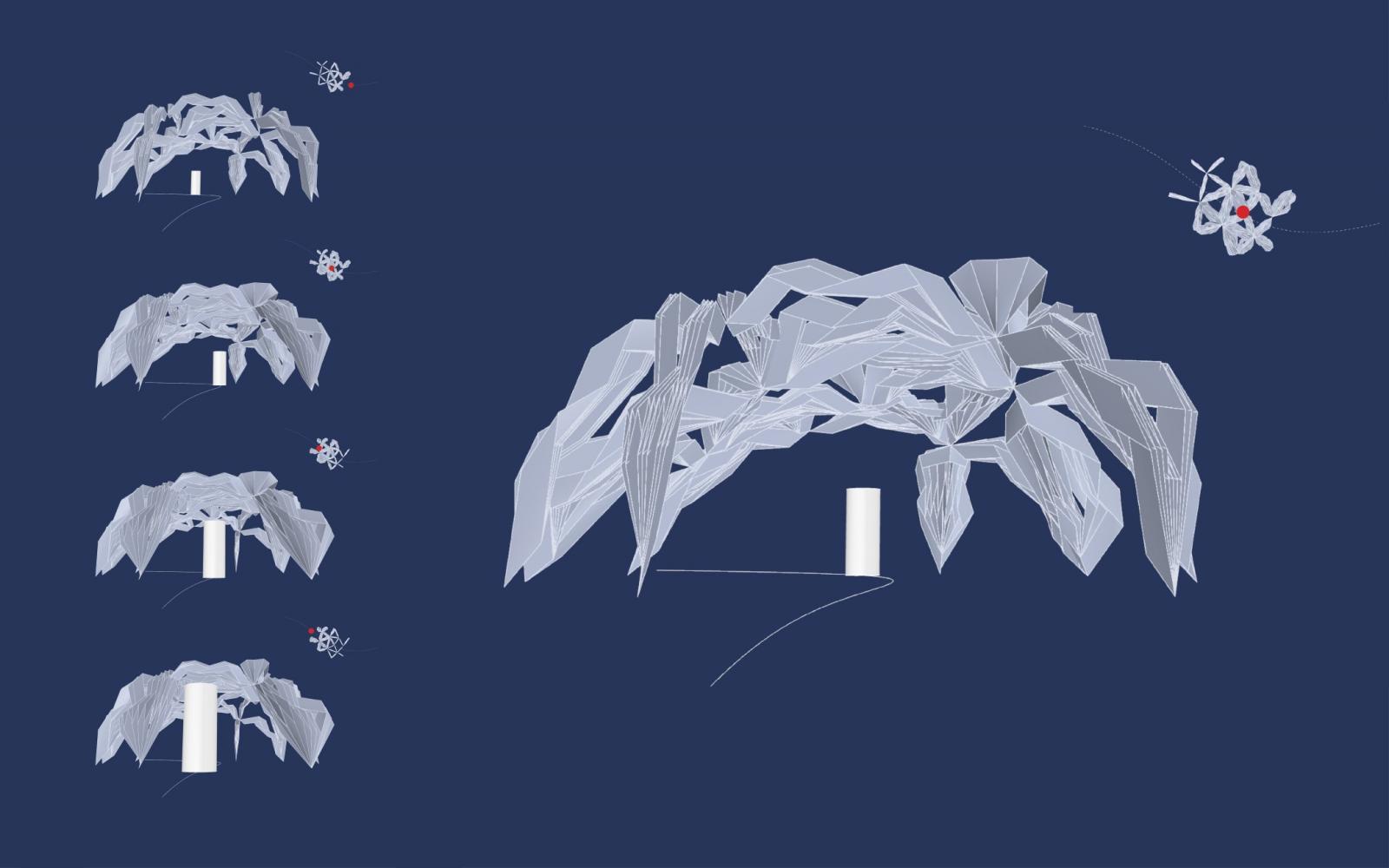
How did your studies at FA BUT influence your approach to experimentation and working with technologies—and what are you taking from it into your future practice?
I view experimentation as a way to test all possible variations in design. There’s no need to be afraid of making a mistake, because often it isn’t a mistake at all, but simply a variant that can be improved upon and developed further. This experimental process can be accelerated if you manage to actively collaborate with experts across disciplines, which I was able to do thanks to my studies at the Department of Experimental Design FA BUT.
During my studies, I learned to model nearly unlimited forms, but that is no longer enough today. It is truly necessary to integrate and interconnect disciplines; architecture combined with computer science gives us the ability not only to design any form, but also to create its iterations. At the same time, using the same tools, we can and must subject the resulting form to analysis and, based on evaluation, choose the best possible variant, or adapt the form so that it responds to changing conditions.
It is also extremely important to follow technological developments, explore the possibilities these advancements offer, apply them, and demonstrate what can be achieved. From my entire studies, I take away the courage to experiment, a passion for keeping up with technical innovations, and the confirmation that digital design remains relevant. 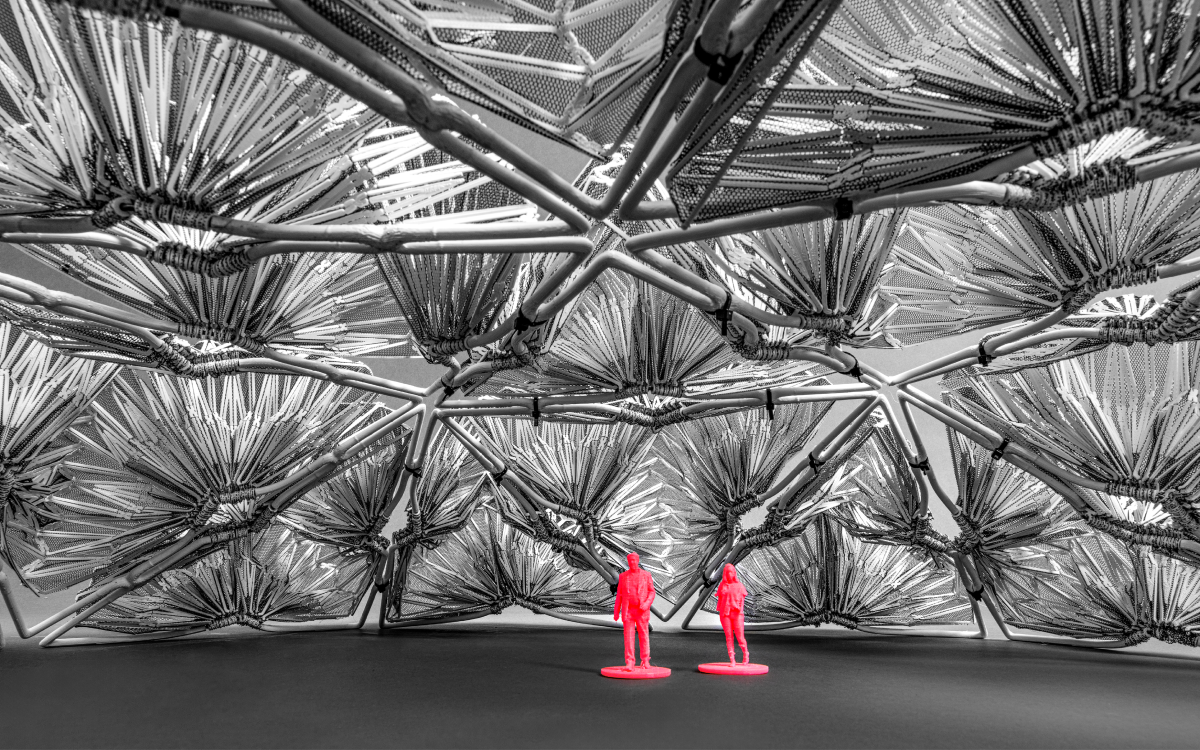
Full text of the article on the Faculty of Architecture, Brno University of Technology website (CZ only)
BIOM Research Project: Architects from BUT will test technology that can sustain entire cities
The Czech Republic of the future. Young architects presented more than a hundred unconventional ideas
The interior of the church should be the opposite of the outside world, architect Marek Štěpán says
Women from BUT who move the world of science and technology
“You don't hear sirens?“ shouted the fleeing Ukrainians