Ideas and discoveries
11 August 2025
Hybrid pallets save nature. Experts from FME BUT are also helping with the development of Flexipal
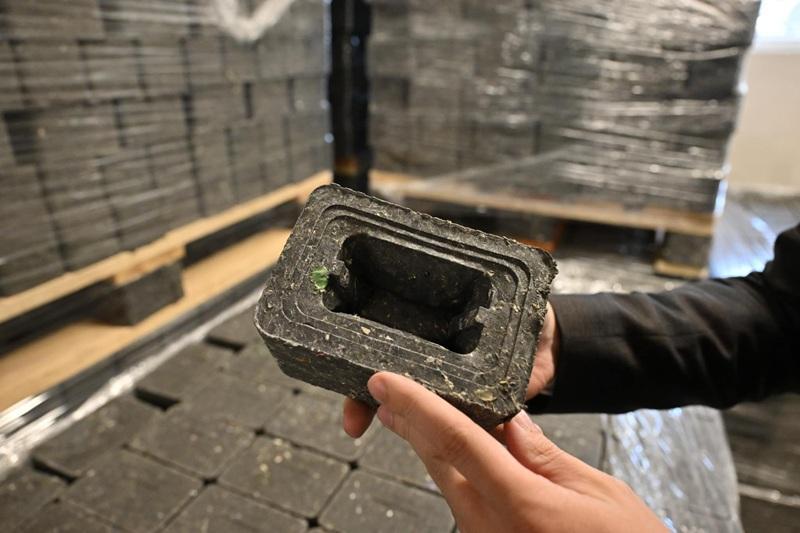
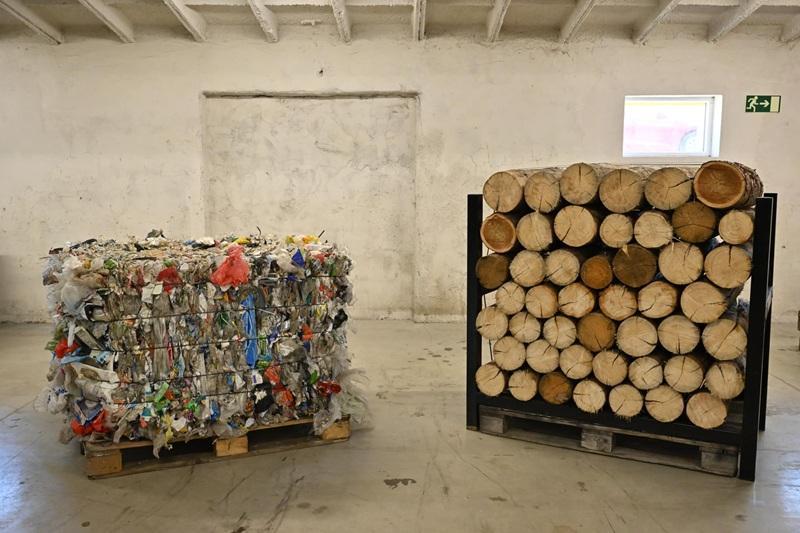
In the Czech Republic, around 200,000 tons of plastic waste are produced annually. Until now, this type of low-grade plastic waste had no practical use and was incinerated. That is now changing with hybrid pallets that combine wood and plastic blocks. Flexipal plans to process 5,000 tons of this waste in the first year – the equivalent of 250 truckloads of plastic – which is half the amount of plastic that Brno residents throw into yellow bins each year.
“We got involved rather by coincidence. At first, we weren’t very interested – after all, we build machines, not pallets. But it soon became clear that technologically, it was far from a simple matter,” recalls Professor Jiří Marek from the Institute of Manufacturing Machines, Systems and Robotics at the Faculty of Mechanical Engineering at BUT. Collaboration on hybrid pallets now forms just part of the projects that Flexipal is developing together with Jiří Marek and his colleagues.
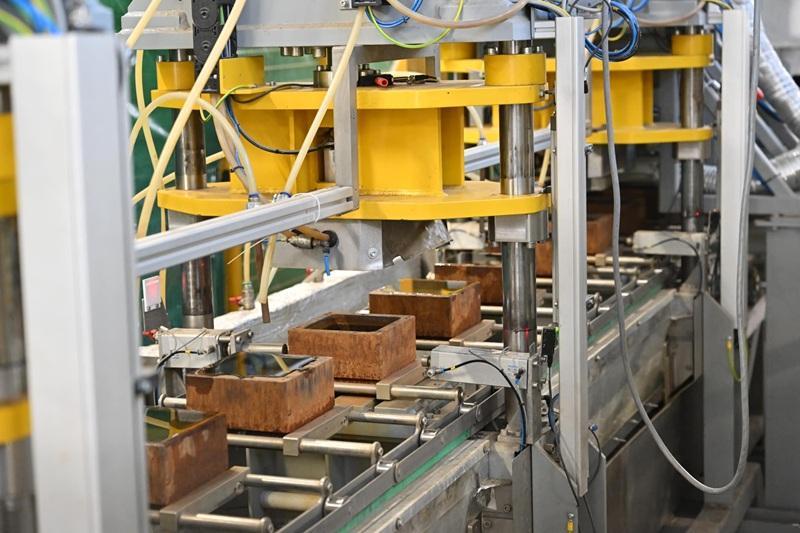
The first task agreed upon with the company was the robotic solution for a pallet repair line. The existing sorting line didn’t meet the company’s needs, and the repairs were done manually – a demanding physical task. “It turned out that a robot could do it. Moreover, we proposed a better and more efficient defect detection method using machine vision,” says Marek, referencing two current development projects. “Our team is now finalizing a defect recognition system, and Flexipal is even considering marketing the technology we co-developed,” he adds.
In the current version of the hybrid pallet, FME experts acted only as consultants. The combination of wood and plastic blocks offers greater resistance to moisture and chemicals, longer lifespan, and a more sustainable solution for logistics and storage. Free take-back for full recycling of used pallets is also ensured. As Flexipal has further ambitious plans, the company is now collaborating with BUT experts on developing a new pallet made almost entirely from plastic waste.
“We're currently developing additional parts of the pallet where wood could be replaced by plastic. We’re building prototypes of entire pallets that could save even more wood and waste. It’s a great example of circular economy,” says Marek, adding that many technical issues still need to be addressed. “We must solve not only the shape and production method but also the tools for machining – because the waste-based plastic is extremely hard and durable. The challenges are many – this is something entirely new,” he emphasizes.
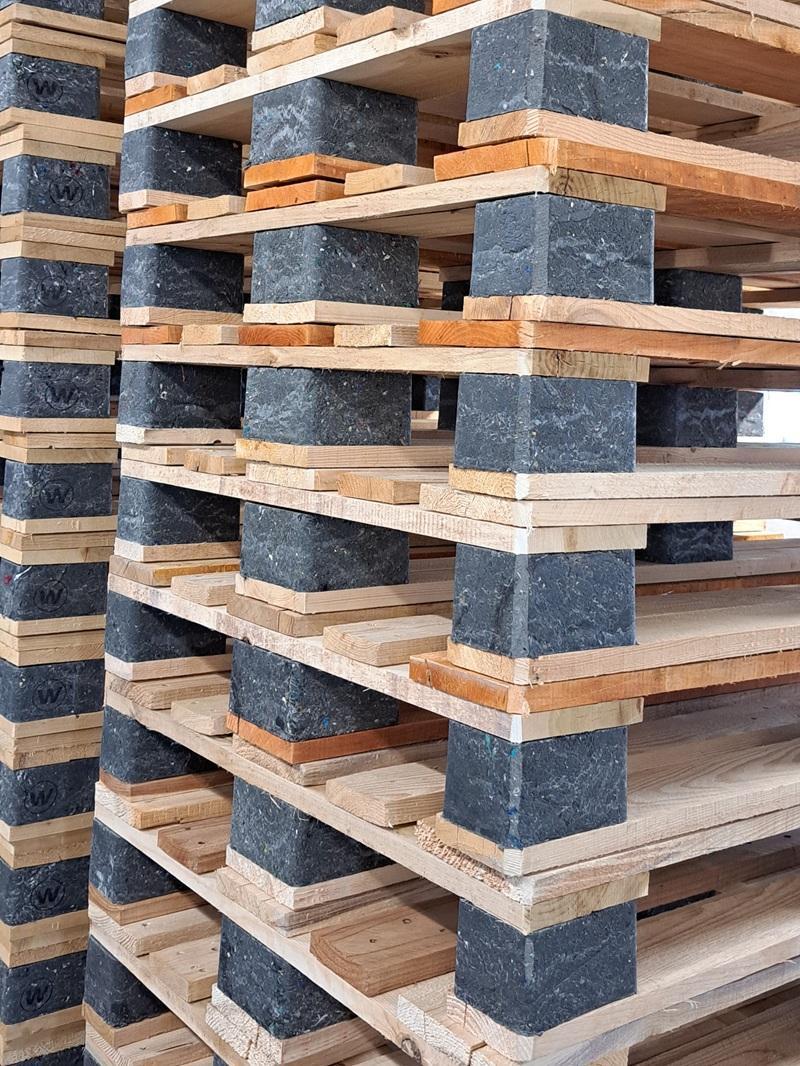
In Europe, about 500 million pallets are produced annually, of which less than half are returnable. The new hybrid pallet line in Stanoviště has a capacity of 500,000 pallets per year. “Using plastic blocks saves 30 percent of the wood. One ton of plastic waste corresponds to 3 cubic meters of raw wood. Annual operation of this first facility will save 15,000 cubic meters of wood, which is equivalent to a forest the size of 10 Wenceslas Squares or 71 football fields. Moreover, the hybrid pallet has at least double the lifespan of a standard one, so the real savings are even greater,” explains Flexipal’s owner Tomáš Vojtěch. Within five years, the company plans to build another production line, increase production to millions of pallets, and process up to 50,000 tons of waste annually.
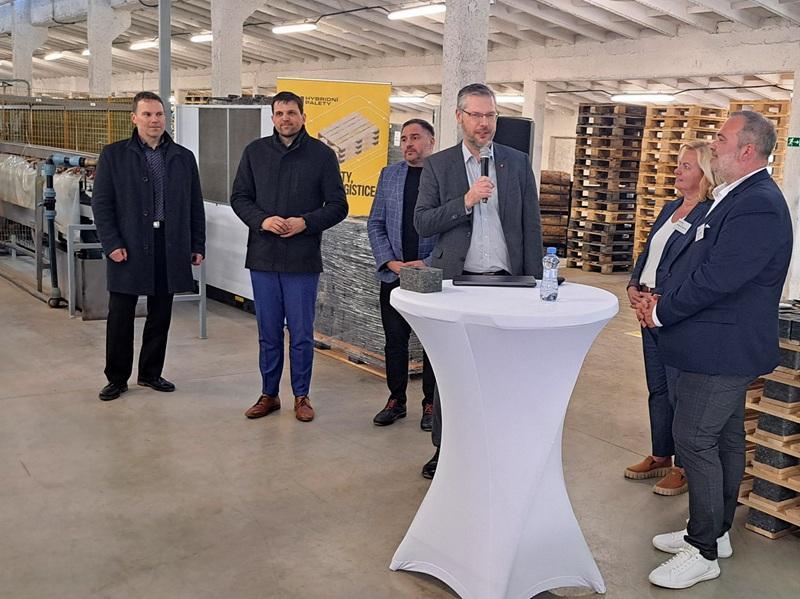
Source: Faculty of Mechanical Engineering
Software as a bachelor thesis helps with soil erosion research
“An astronaut doesn’t have to be the best person in the room,” says cadet Tereza Bednářová
New biogas treatment technology: BUT cooperates with top European teams
Waste is science. Thanks to experts from BUT, the Czech Republic has a forecast of their production
Device is being developed at strojLAB that students hope will help them succeed in a prestigious biotechnology competition