Ideas and discoveries
Ordered nanocrystal ensemble that degrades pollutants using light. Meet Brno PhD Talent winner Anjali Valadi Palliyalil

Some pollutants are nearly invisible - leftover antibiotics and tiny fragments of microplastic that pass straight through normal water treatment. Anjali Valadi Palliyalil, a PhD student at CEITEC at Brno University of Technology, is trying to break them down using nothing more than light and a crystal she designs herself. This spring, her work also earned her a place among this year's winners of the Brno PhD Talent, a scholarship awarded by the City of Brno to outstanding first-year doctoral students from Brno's universities.
Anjali works in materials science, where her job is essentially building things atom by atom. She combines several metal oxides, most often titanium dioxide and iron oxide, into a single material with a very particular internal architecture. "I'm not focusing on a single component. I'm merging multiple components into ordered heterostructures," she explains. In an ordinary crystal, the tiny building blocks are arranged randomly. What Anjali is working toward is something rarer - a so-called mesocrystal, in which those building blocks line up in a neat, repeating pattern, almost like bricks in a wall, instead of being scattered every which way. "You can actually see the building blocks - the nanocrystals are arranged perfectly, in a crystallographic orientation," she says. According to Anjali, mesocrystals were only described in 2005, and the field is still young and growing fast.
Light as the trigger
That orderly structure isn't just elegant to look at under a microscope. It matters for performance. When light hits the material, its arrangement helps trigger chemical reactions that break down pollutants dissolved in water. This year, Anjali and her colleagues published a study describing a manganese-doped titanium dioxide–iron oxide material, synthesized using microwave, that degraded both antibiotics and microplastics in water. 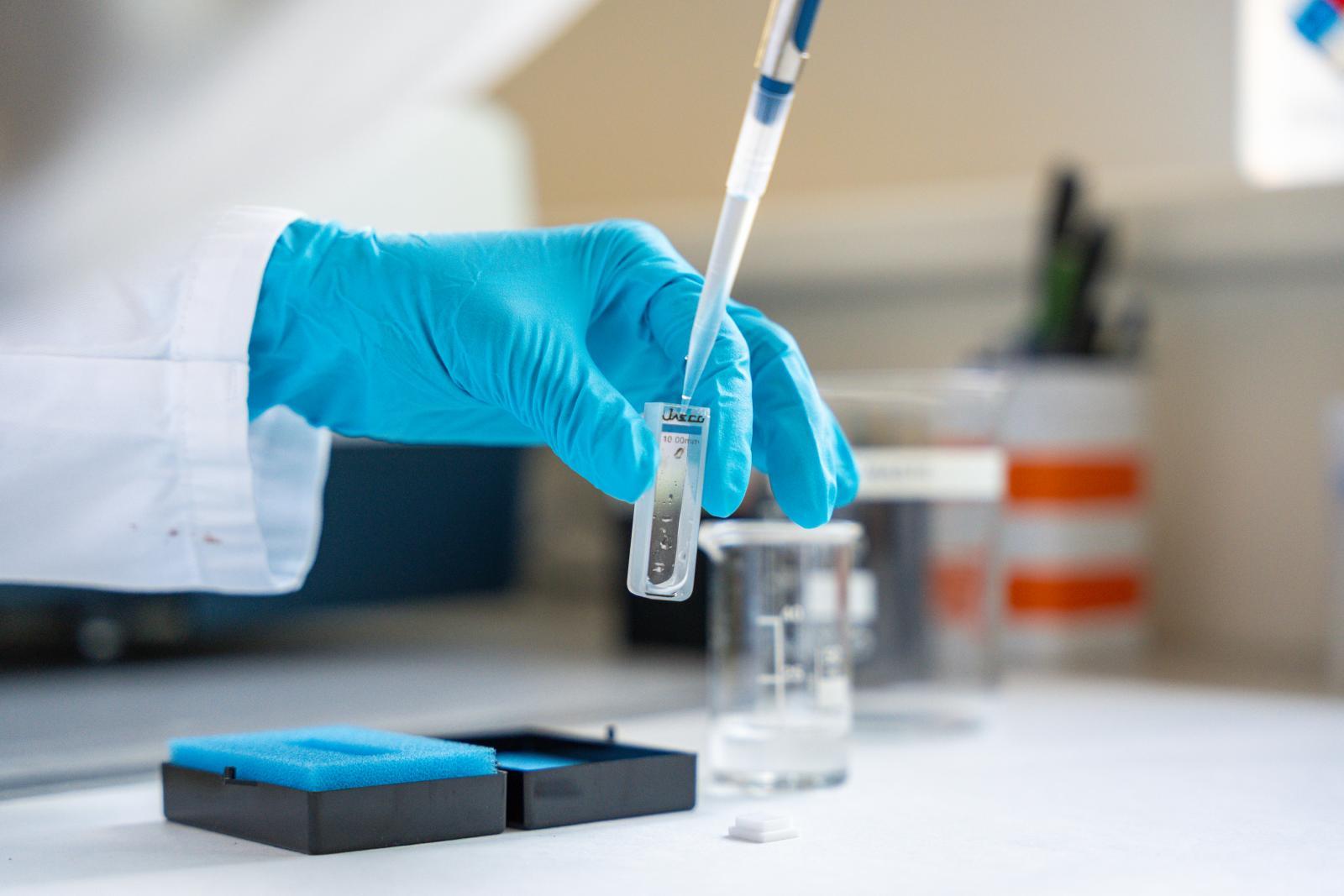
Together with researchers from Masaryk University, the team also tested the material on living cells and found it to be biocompatible, at least over short exposure times. This is an important step before such materials could ever be used in real environmental clean-up. As she puts it in describing her broader research goal: "I develop new materials, mesocrystals and mesocrystal-inspired heterostructures, that can use light to accelerate chemical reactions. These technologies may help clean the environment and support more sustainable polymer production."
A long process of trial and improvement
Anjali's PhD itself is essentially a long process of trial and improvement. She is now fine-tuning her microwave-based synthesis. Adjusting temperature, timing, and the chemical templates she uses to push her materials closer to the ordered mesocrystal structure she is aiming for, checking her progress at every step with techniques such as X-ray diffraction and electron microscopy. "It's a trial and error method for me," she admits, though she expects to reach her goal and finish her doctorate around 2028. 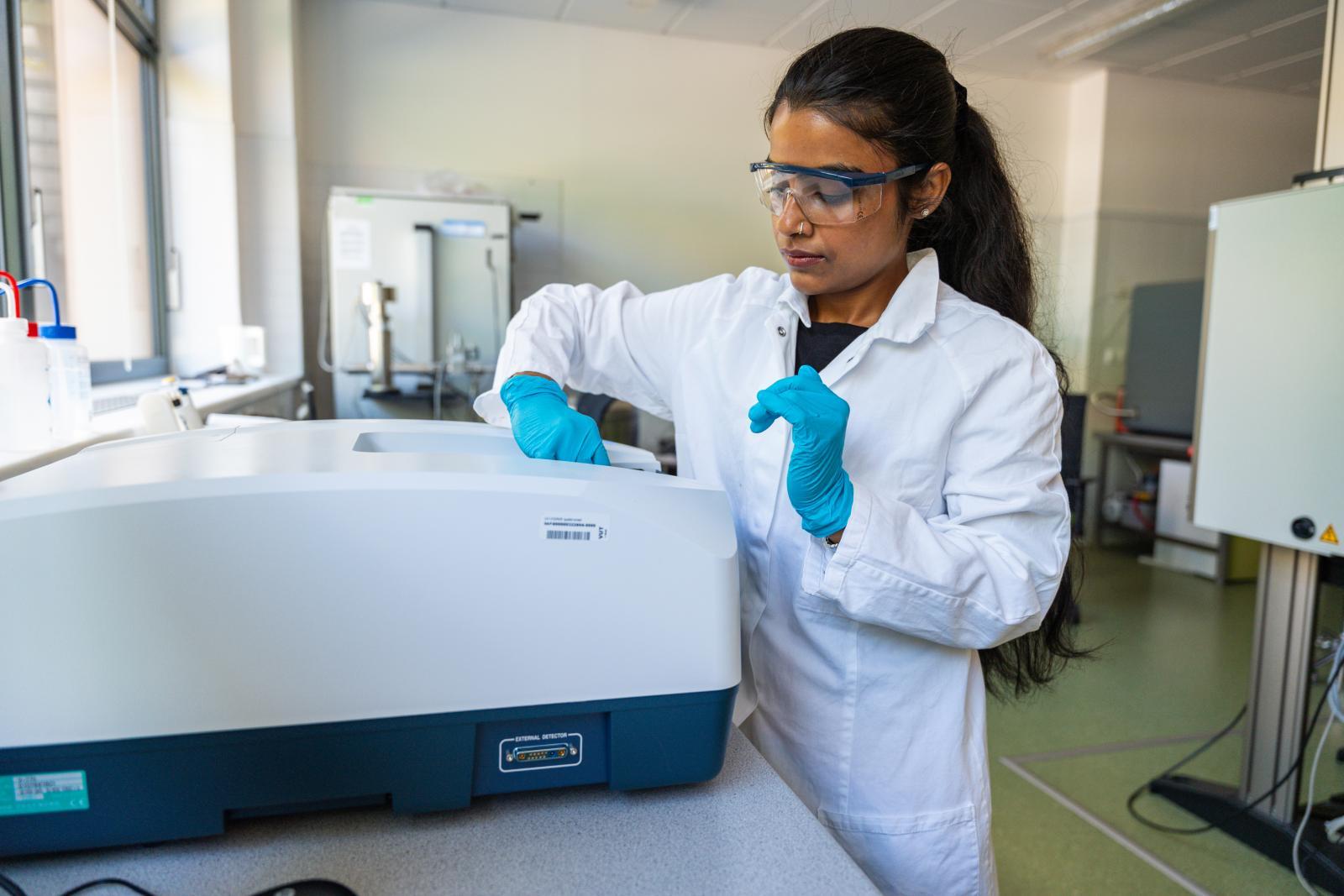
Looking ahead, she plans an internship studying whether her particles can move on their own, which could let them degrade pollutants without needing a stirrer support, and even open doors toward biomedical applications. She describes the mesocrystal field as still wide open: "We are open to collaborations. We really need to know what exactly the capabilities of these crystals are."
Originally from India, where she studied general and organic chemistry for her master's degree, Anjali found her way to CEITEC almost by chance, after spotting an opportunity through her current supervisor’s LinkedIn post and going through three rounds of interviews. Applying for the Brno PhD Talent was her supervisor's idea, and the experience of presenting her project to a panel in just six minutes left her certain she hadn't made the cut. Until the results came out that same evening. "It was truly surprising for me when I got that. They didn’t ask me a single question and I was almost sure that I wouldn’t be awarded," she says. The scholarship will support her research as she continues developing mesocrystals and mesocrystal-inspired materials for environmental remediation.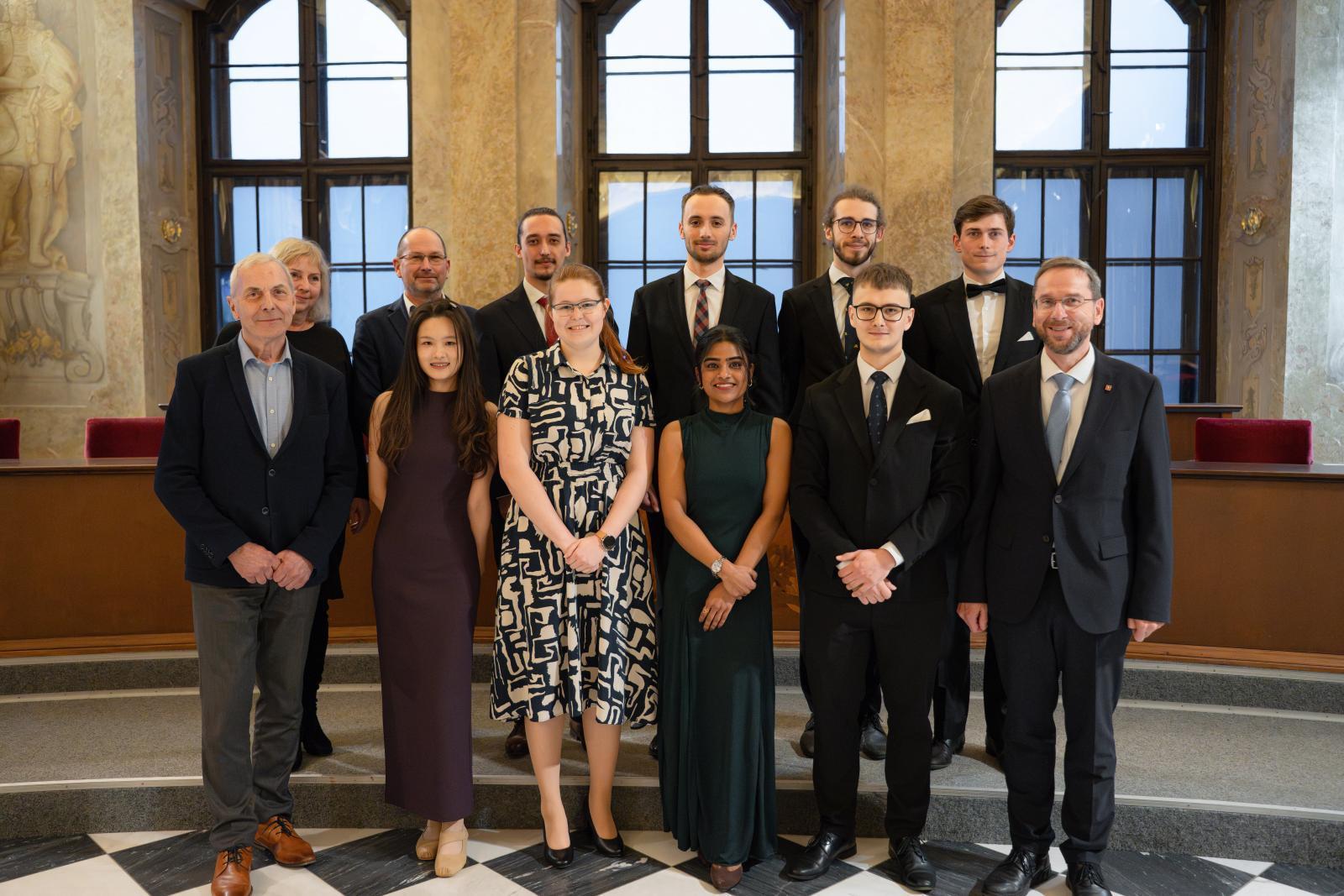
How do I apply for the new Brno PhD Talent program?
(zeh)


Motor failures in electric vehicles can be detected by mathematical algorithms from the BUT
From Pharmacy to Microrobotics: Yanzhen Song Explores the Future of Light-Driven Medical Technologies
Pavel Václavek: Sustainability Will Succeed If It Brings People Tangible Benefits
Awarded student Jiří Kabát uses an electron microscope to measure the temperature of nanoparticles
Purifying Water Using Light? Laboratory Tests Have Shown 97% Efficiency