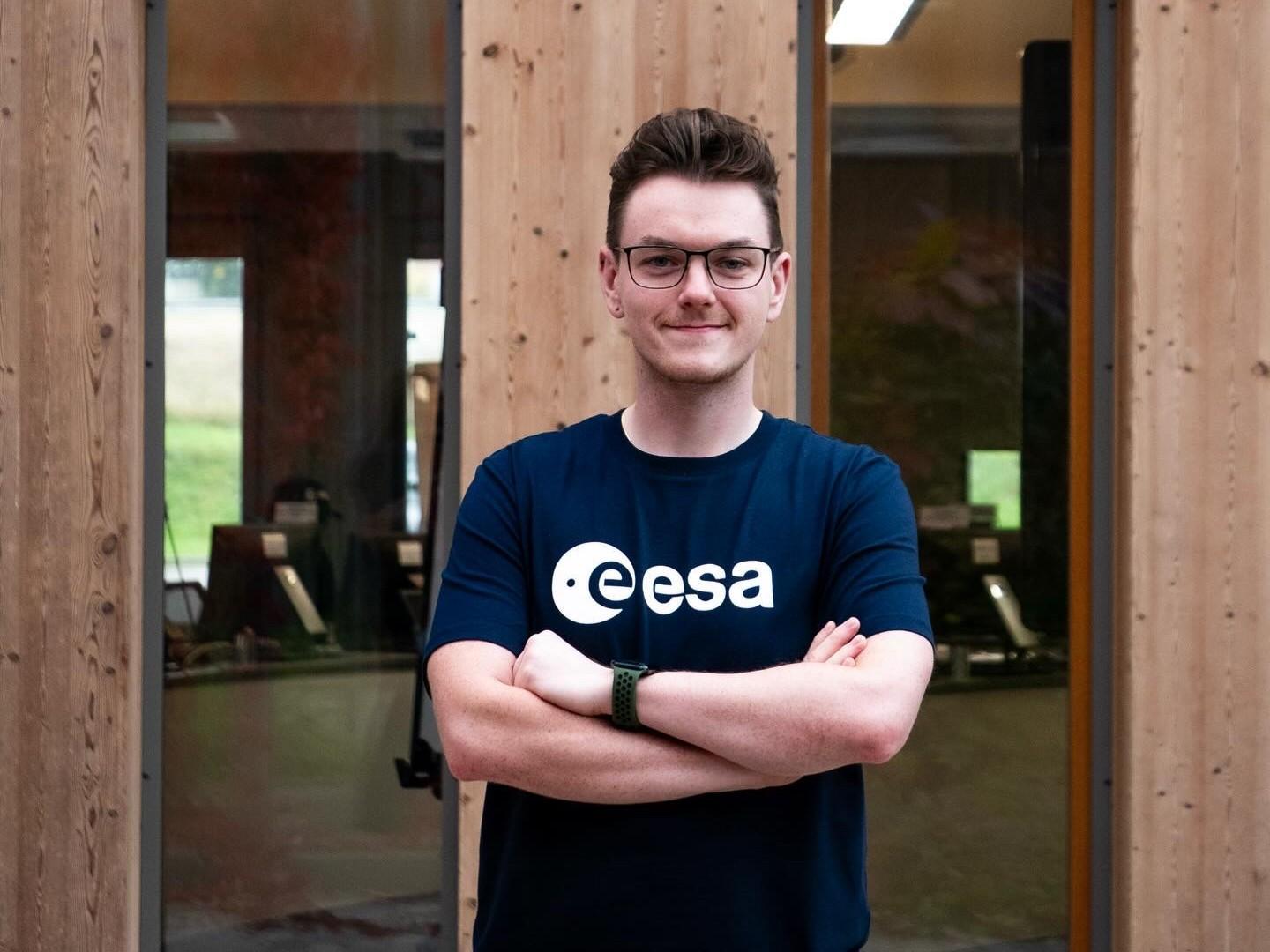
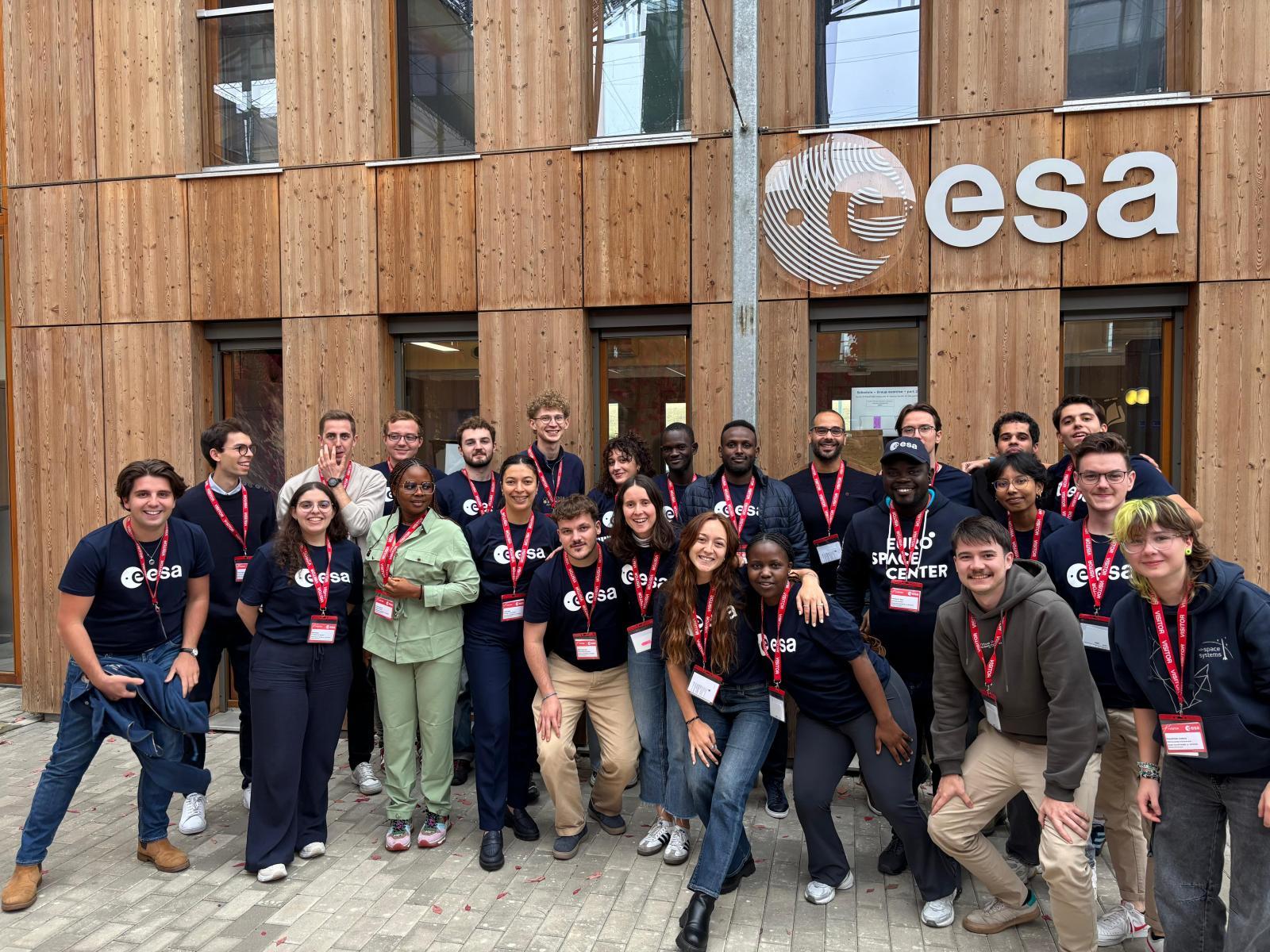
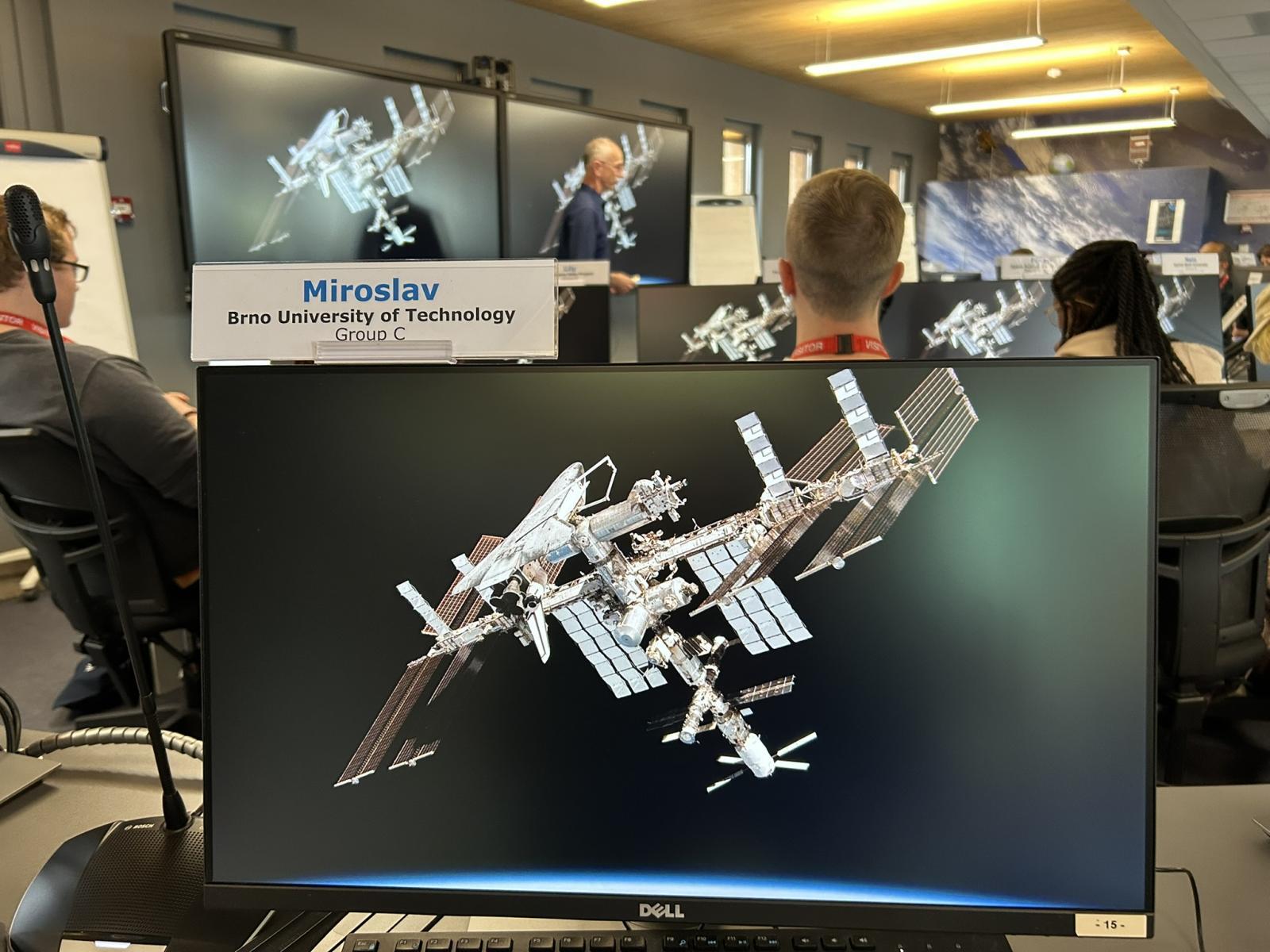
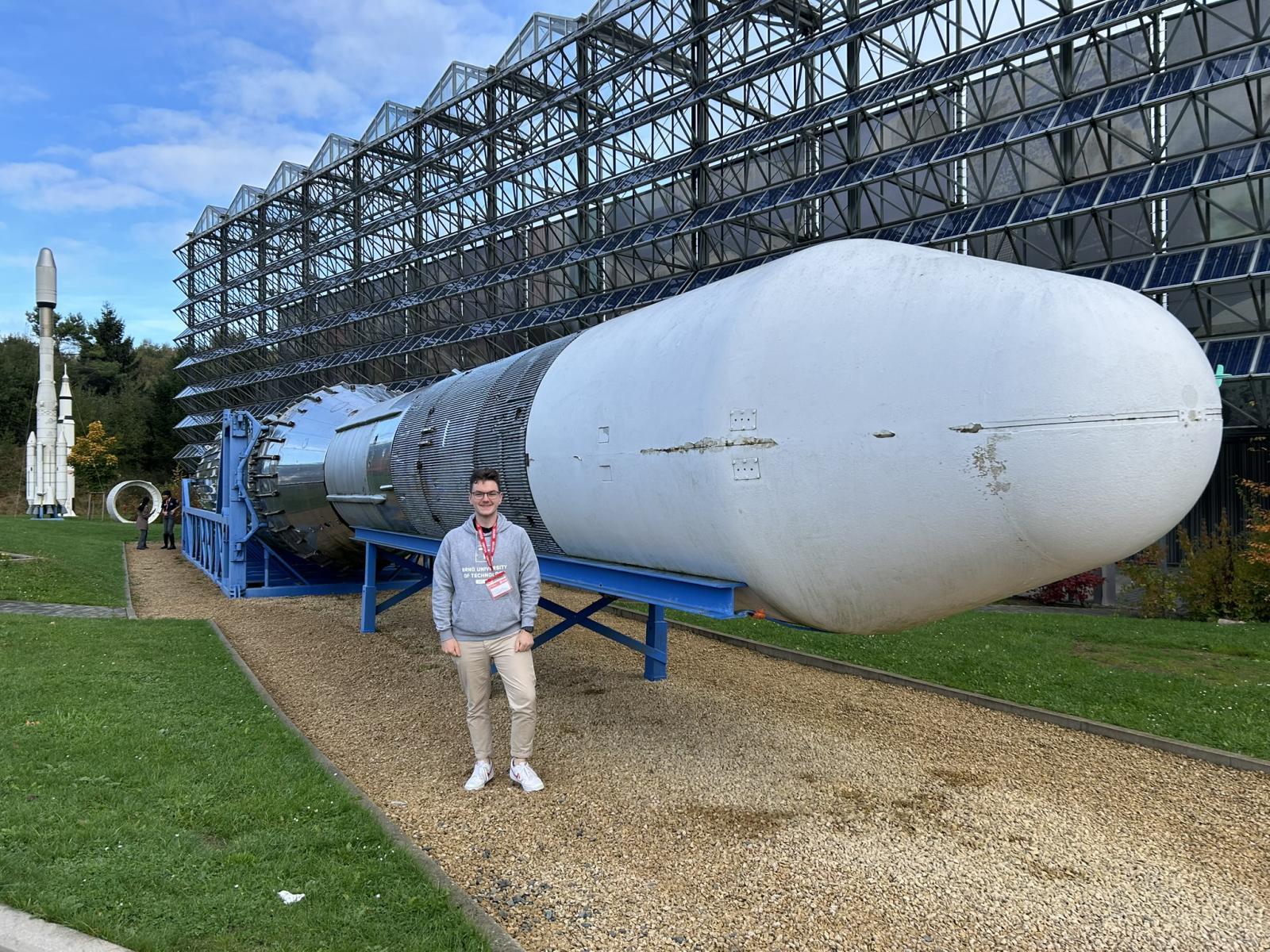
This autumn, doctoral student from FME, Miroslav Palán, became a systems engineer for space technologies. Although only for a week and just as a trial run. Together with thirty other young experts from Europe and Africa, he took part in the ESA Academy – Space Systems Engineering Training Course at the agency’s ESEC-Galaxia training center in Belgium.
Miroslav Palán is pursuing his PhD in tribology — the science of lubrication, friction, and wear. At first glance, it may seem like a field far removed from space research — or perhaps not? “Friction is actually quite a key issue in space. If something seizes up on a satellite, you can’t exactly send someone to fix it. By reducing friction, we ensure reliability, extend the lifetime of space equipment, and save energy,” explains Palán. That’s why he and his colleagues at the Institute of Machine and Industrial Design are quite active in the space domain as well.
Despite the romantic aura space holds for many people, in reality it’s a very inhospitable environment — and a major challenge for engineers. “There’s a vacuum in space, and also extreme temperatures — from very high to extremely low. All of that affects how mechanisms move. In low Earth orbit, satellites also face atomic oxygen, which leads to material degradation. Unlike on Earth, where we’re protected by the atmosphere, the conditions are truly very different. But not always for the worse — for example, the absence of air humidity means it’s not such a corrosive environment as on Earth, which is actually a plus,” Palán explains.
In a way, I’m returning to my childhood dream...
He’s always been interested in space, though he didn’t initially envision a career in it. “Like any kid, I was fascinated by space and the planets. I still like to go to the observatory for a program or a lecture. But I originally studied Fundamentals of Mechanical Engineering and continued to the Institute of Machine and Industrial Design for my master’s, because I wanted to be a design engineer. However, during my studies I realized that I enjoy science and teaching, and that I’d like to stay at the faculty and do research,” says Palán, describing his path to doctoral studies. “After that, I started looking for a topic I could apply for — and what appealed to me most was space. So in a roundabout way, I’m returning to my childhood dream. I mean... I wanted to be an astronaut, of course — but we have to stay a bit realistic,” he adds with a laugh.
Still, a piece of his work will make it to space: he’s helping his colleagues develop a cubesat that is set to be launched into orbit in the coming years as part of the BRNOsat mission. “I have to say, I never expected I’d be doing something like this. I really thought I’d be stuck in an office or lab somewhere — and now I’m working on a real cubesat,” says Palán with enthusiasm. He’s currently responsible for preparing vibration tests for the small satellite.
ESA as inspiration and motivation
Thanks to his colleagues, Miroslav Palán got a tip not to hesitate and take advantage of the training opportunities offered by the European Space Agency (ESA) to young professionals across Europe. “I took that advice seriously — and within a week, I submitted my application,” he recalls. He succeeded and could set off to Belgium for the Space Systems Engineering Training Course, a week-long training for systems engineers in the space sector from Europe and Africa.
“A systems engineer is kind of a ‘manager’ of the technical side of a project. They oversee that the whole system works and runs smoothly — from design to final testing and operation. During the training, my broad technical knowledge from the Fundamentals of Mechanical Engineering course really helped me, as did the basic management skills I gained from one of the subjects in Design Engineering,” says Palán. “But I learned the most about how and what is actually sent into space — the pre-launch contracts and other paperwork, weight limitations, and so on,” he adds.
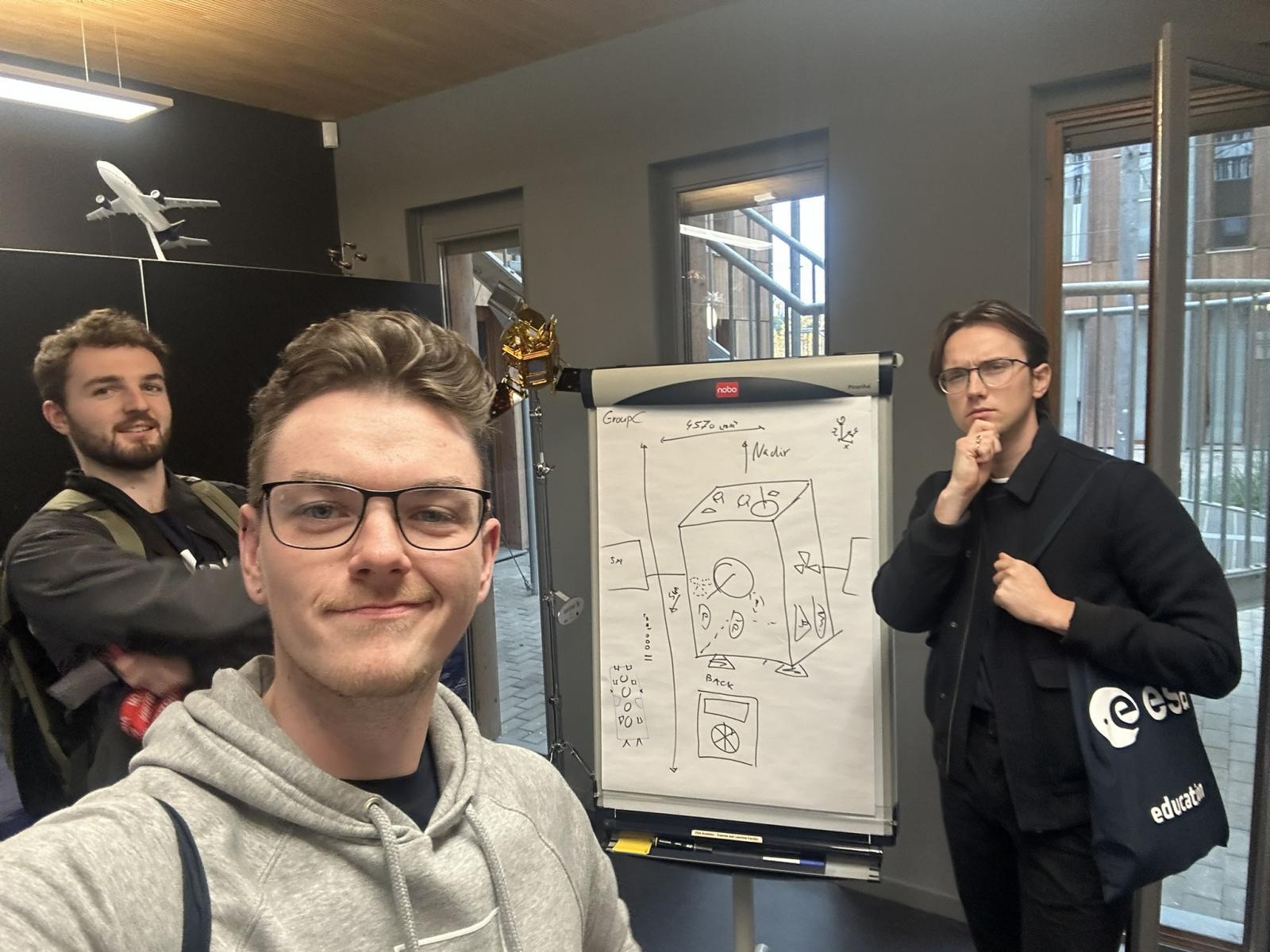
Participation in the training was also a valuable source of contacts with peers in the field. | Author: M. Palán Archives
The four-day program culminated in a special board game designed by one of the ESA lecturers, simulating the 52 weeks leading up to a rocket launch. “You play the role of a systems engineer whose task is to make sure the rocket launches on time. Of course, there are also those classic chance cards like ‘component failure’ or ‘transport issues,’” he recalls with a smile, adding that despite all the pitfalls, his team managed to send their imaginary rocket into space right on schedule.
For him, the ESA training was both an inspiration and a major source of motivation — as well as a great opportunity to connect with peers in the field. “I recommend it to anyone interested in the topic to give it a try. ESA covers the entire program cost, so it didn’t cost me anything besides my time. They run these trainings regularly, usually two per month on different topics,” Palán encourages others, adding that it’s by no means just for doctoral students — in fact, most participants were master’s students.
And what “question of life, the universe, and everything” would he like to know the answer to, if he could? “I’d like to know whether there exists a more advanced form of life somewhere in the universe than the one we know here. I’m not saying life in general — because I believe life in some form definitely exists somewhere out there,” Palán concludes.