People
100 years since the birth of Josef Dadok, pioneer of instrumentation technology
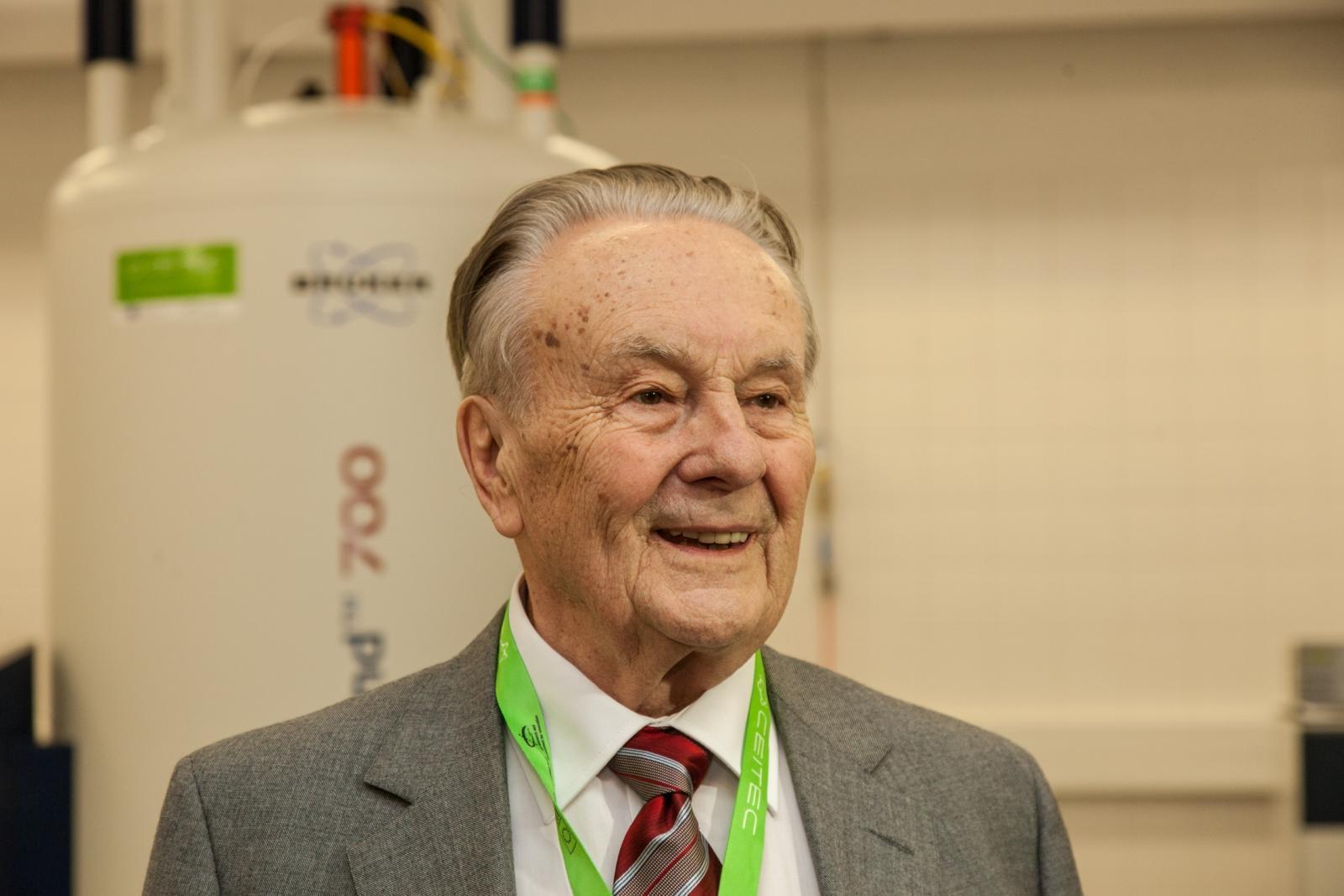
The 100th anniversary of Josef Dadok's birth commemorates the legacy of a scientist who linked his career with the Brno scientific community and the development of nuclear magnetic resonance. A graduate and honorary doctor of BUT, he was one of the world's leading experts in his field. His work laid the foundations for modern spectroscopy and inspired generations of Czech and foreign scientists. Despite his long career in the States, he always remained proud of his Czech roots and cherished fond memories of Brno University of Technology.
He devoured electronics at BUT
The youth of Josef Dadok, who was born on February 28 in Dětmarovice into a miner's family, was significantly marked by World War II. He was drafted into the Reich Labor Service and later into the German army, from which he defected to the English side, where he devoted himself to radiotelegraphy and its training at Barnard Castle at the end of the war. It was this experience that foreshadowed his later technical focus.
Shortly after the end of the war, Dadok returned to Czechoslovakia and wanted to devote himself to his studies. He originally considered Masaryk University, but his interest in technology prevailed. In 1946, he therefore began studying electrical engineering at what was then Dr. Edvard Beneš Technical University, now Brno University of Technology. Already during his studies, he was involved in research, teaching, and cooperation with industry, and after passing his first state exam, he was entrusted with teaching certain electrical engineering topics to younger students.
Professor Aleš Bláha and his Institute of Theoretical and Experimental Technology (now DTEEE at FEEC), where Dadok met, among others, Armin Delong. "Aleš Bláha became part of my life – he simply gave me a start. Of course, I devoured electrical engineering, not only from his lectures, but I also borrowed books. At that time, I went to the British Institute, where they had really excellent books. They had the entire MIT Red Series there," he recalled in an interview for the BUT Archive. Josef Dadok maintained a warm relationship with DTEEE throughout his life. 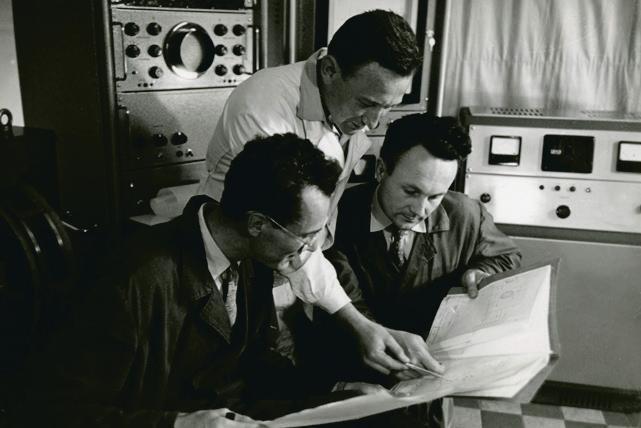
Development of the first NMR spectrometers
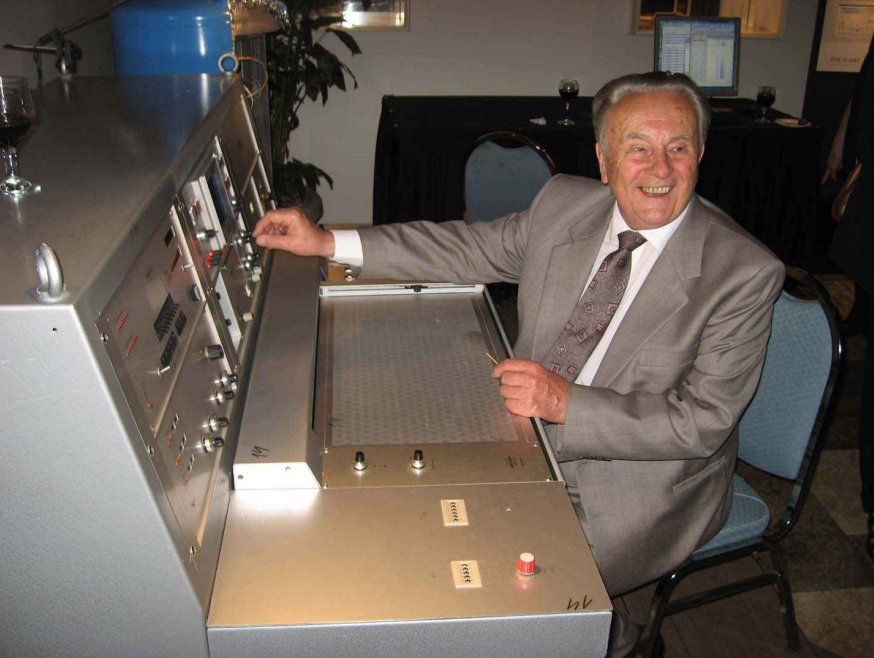
In the 1950s and 1960s, Dadok first worked at Tesla Brno, where he and his team developed high-frequency measuring instruments. He then worked at the Institute of Scientific Instruments of the Czechoslovak Academy of Sciences, where he formed a working group with his old classmates from Brno University of Technology and led the development of the first NMR spectrometers (devices used to study atoms and molecules using nuclear magnetic resonance). These were later mass-produced at Tesla Brno and placed Czechoslovakia among the world leaders in this field. The first high-resolution NMR spectrometer with a frequency of 30 MHz was built on the ground floor of a rental building on what is now Kounicova Street.
In 1963, he defended his candidate thesis on the topic of Sensitivity and resolution of nuclear resonance spectrometers at the Brno University of Technology, and in the following years he registered three patents related to the stabilization of electromagnet current and voltage and magnetic flux stabilizers. Tesla Brno later built a 60 MHz NMR spectrometer based on Dadok's development, and the company thus became the third manufacturer of industrial NMR spectrometers in the world in 1965. The start of industrial production was also an impetus for broader cooperation between the Czechoslovak Academy of Sciences, Brno University of Technology, and Tesla Brno.
Work overseas and honor in Brno
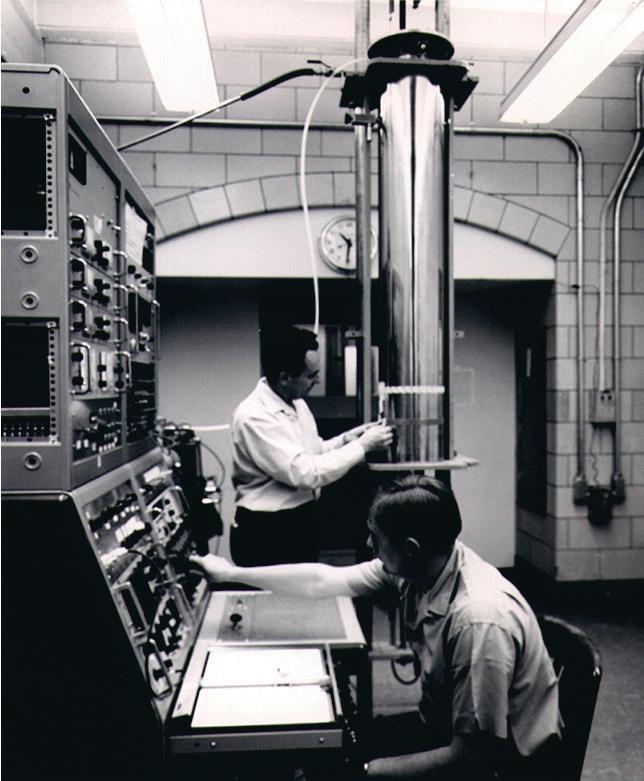
At first, Dadok seriously considered returning. He had his own working group in Brno and, being an optimist, assumed that the situation in Czechoslovakia would improve. "Unfortunately, that didn't happen. The children grew up, my eldest son got married and had children, and when we were finally able to return, there was no longer any reason to do so, so we stayed there," Dadok explained in an interview for Czech Television. Brno universities have always held Josef Dadok in high regard and, despite his long-term engagement abroad, considered him one of their own. In 2013, the Brno University of Technology awarded him an honorary doctorate in technical sciences at the suggestion of Radimír Vrba, director of CEITEC VUT, and Jarmila Dědková, dean of FEKT. honorary doctorate in technical sciences. He received the same honor in the field of chemistry at Masaryk University, which named the Josef Dadok National NMR Center after him on the CEITEC Masaryk University campus. To this day, it serves users from all over the world and commemorates Dadok's fundamental contribution to the development of technology in Czechoslovakia and on the world stage.
Dadok's legacy lives on at BUT
Dadok's legacy lives on not only in the archives, but also in real-world research today. The development of spectroscopic instruments and methods continues, primarily at CEITEC BUT. "We have recently followed up on Josef Dadok's pioneering work the development of a spectrometer that can simultaneously measure electron spin resonance and nuclear magnetic resonance with revolutionary scanning speed," said Petr Neugebauer, head of the research group for magneto-optical and THz spectroscopy. According to him, the latest technologies developed at the Josef Dadok National NMR Center will enable the simultaneous measurement of different spectral signals and support interdisciplinary research. 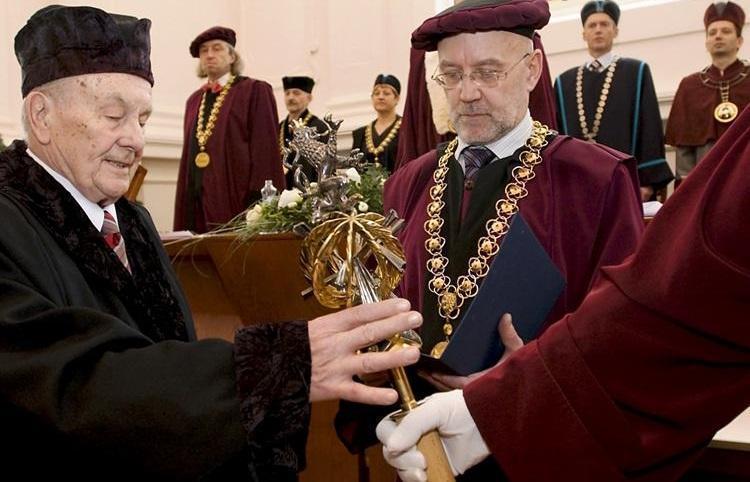
Josef Dadok died on October 4, 2024, in the USA at the age of 98. He left behind not only a number of technical solutions, patents, and international awards, but above all an inspiring example of a scientist who managed to combine deep professional knowledge with the joy of discovery.
His life credo, understanding science as a creative game, remains relevant for future generations of students and researchers at Brno University of Technology. "I've actually been playing my whole life, and many people have appreciated it. My wife says, 'You were born on a Sunday, so you're good at a lot of things.' I guess that's how it was."
Related articles:
- Revolutionary spectrometer developed by CEITEC BUT team wins Golden AMPER 2025 award
- 100 years since the birth of the father of Czechoslovak electron microscopy
Story of Professor Dinara Sobola: From First Experiments to Professorship
Women from BUT who move the world of science and technology
A student from BUT founds OMG Robotics and changes the way computer science is taught in Czech schools
Artificial intelligence will help to detect failures of the energy system
Multi-agent system of drones and robots controlled by artificial intelligence will assist the army