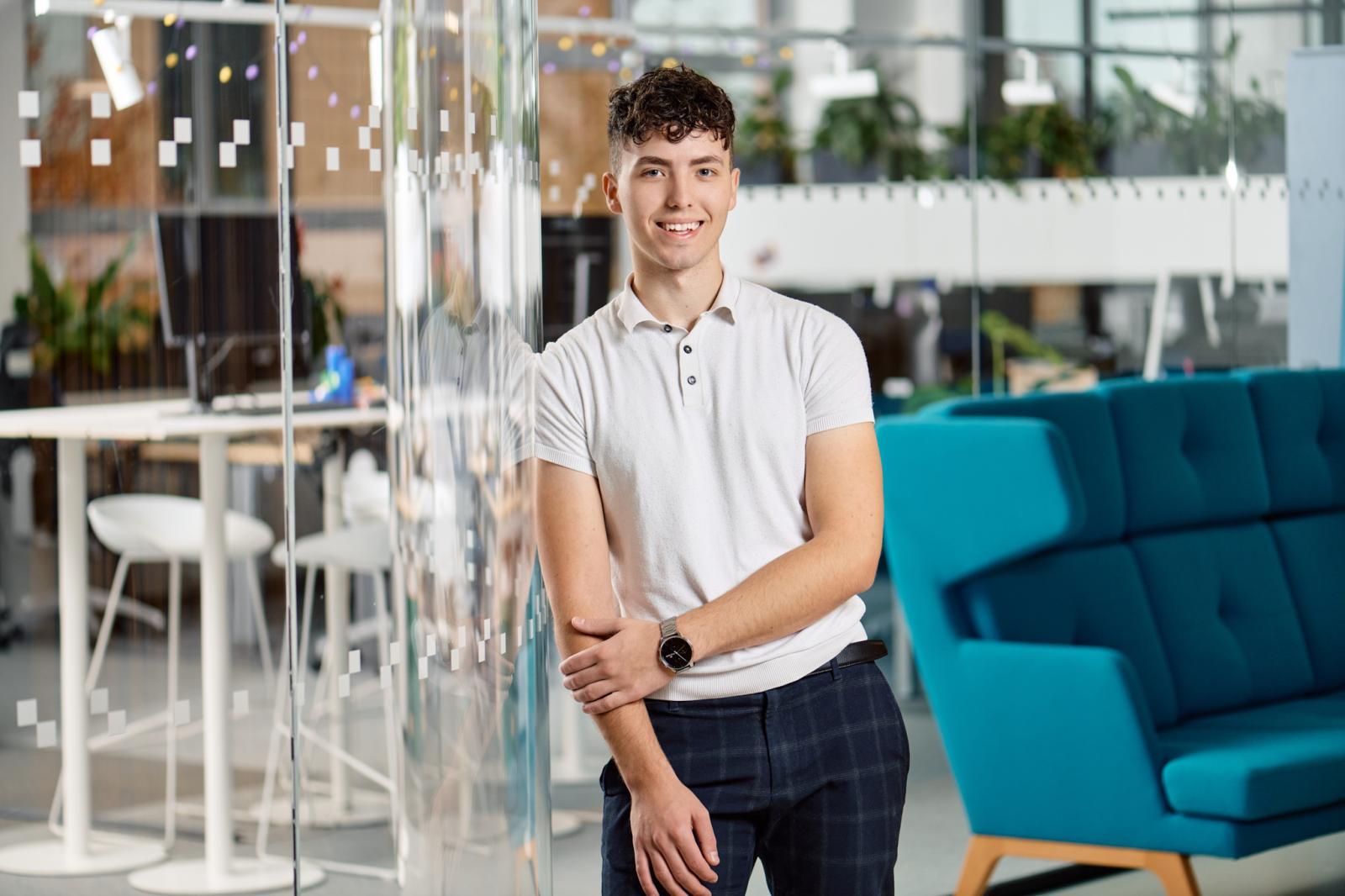
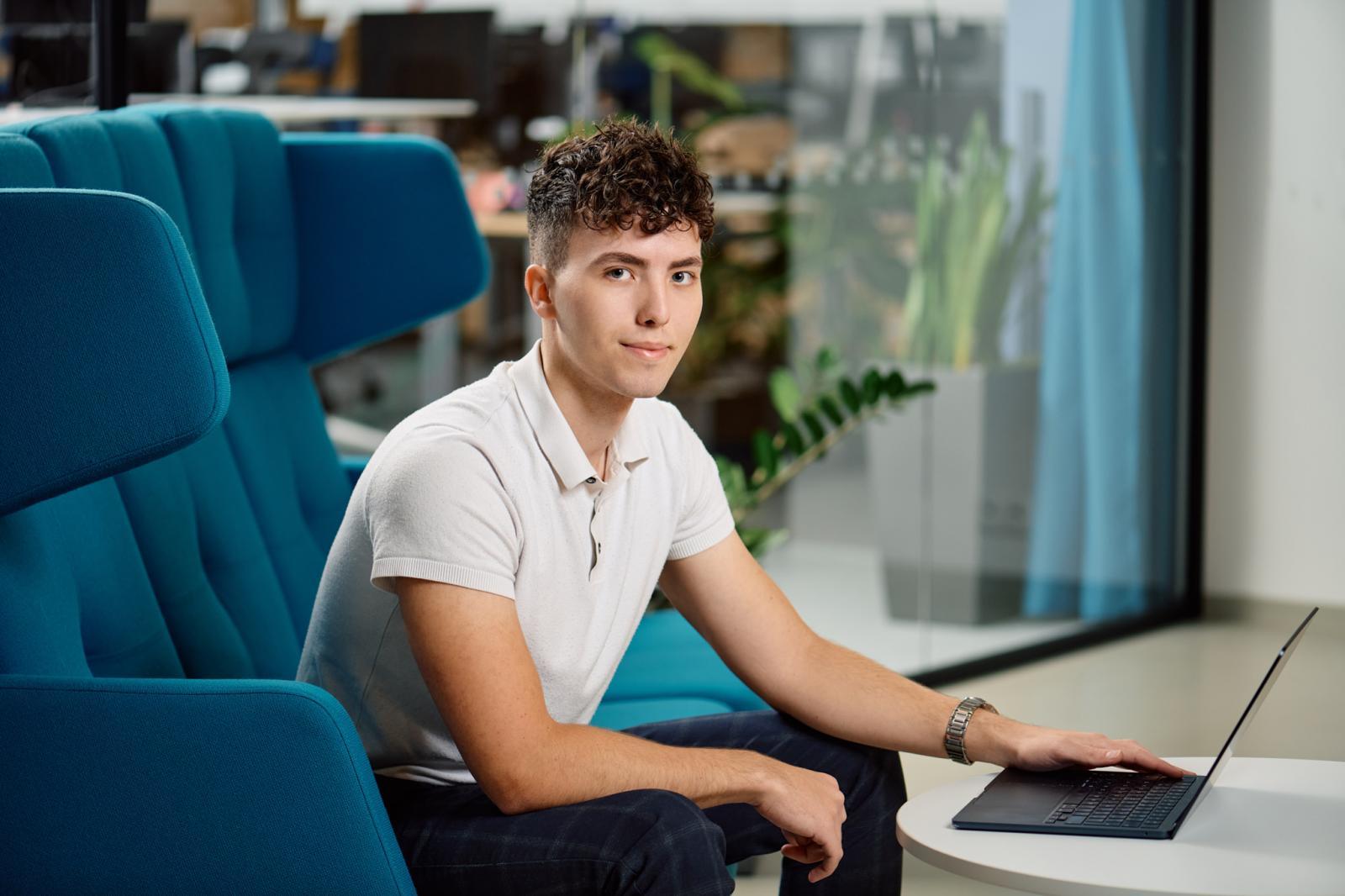
Online shopping is changing – data shows that more than half of consumers now use artificial intelligence models when making purchases. Responding to this shift is the Czech startup Ranketta, founded by twenty-one-year-old Vojtěch Oravec from the Brno University of Technology’s Faculty of Business and Management. Just a few months after its launch, the company secured an investment of one million euros. And because the Czech market is no longer enough for him, he is now preparing to expand into the United States.
Founded in the autumn of 2025, the Czech project focuses on so-called AI visibility – ensuring that brands appear in responses generated by artificial intelligence, whether through ChatGPT, Gemini, Perplexity, or Google’s AI mode. The startup responds to changing user behavior, as people increasingly ask chatbots complex questions instead of relying on traditional search engines.
Within just a few months of its founding, the startup secured contracts with some of the largest Czech e-commerce companies, including Sconto, BrainMarket, and Rossmann, while also sparking a discussion about the future of digital marketing.
Ranketta was founded by Vojtěch Oravec, a student at the Brno University of Technology’s Faculty of Business and Management, who won the BUT Entrepreneurship Award with his first project. The young entrepreneur originally wanted to become a pilot, but a single injury changed the course of his life.
Can we say, somewhat jokingly, that your business success started with a broken thumb?
Yes. In high school, I broke my finger twice and had to undergo a complicated surgery. It looked as though I might lose mobility in it, and my eyesight also deteriorated slightly. I wanted to become a military pilot, and suddenly that was no longer possible. Then I considered becoming an airline pilot, but the training cost three million Czech crowns. I started thinking about what skill I could learn to earn that kind of money. That was when I taught myself programming at home.
How does someone teach themselves programming at home well enough to join Tomáš Mikolov’s team just two years later?
During the lockdown, we were all stuck at home, and I came across an advertisement for Harvard’s Computer Science program. Because of the pandemic, universities were making materials available online, so I was able to complete a series of twenty-hour lectures. I started learning Python and joined my first company six months later. I worked as a software developer and later joined Tomáš Mikolov’s student group at the Czech Technical University in Prague. He is one of the world’s most cited experts in artificial intelligence, and that was where I first became involved in AI research. At the same time, I was also working as the youngest product manager at Henry Schein.
So were you studying at both CTU and BUT at the same time?
I started at BUT, where I studied at both the Faculty of Information Technology and the Faculty of Business and Management. I am currently in the third year of my bachelor’s degree at the Faculty of Business and Management, but I had to suspend my studies. Ranketta presents a unique opportunity, and we need to try to enter new markets in the United States. There is a window of opportunity that must be seized right now. Such an opportunity may come only once in a lifetime—or never at all. However, I would like to return to my studies at BUT in the future.
What exactly does Ranketta do, and what problem does it solve?
It is a response to a fundamental change in the way people obtain information online. They no longer search only through Google; increasingly, they use AI models that directly recommend products. Naturally, this changes the landscape for companies and institutions as well.
Just a few years ago, companies were mainly focused on getting to the top of search results through SEO. Today, it is no longer enough to optimize a website for Google. Businesses must understand how AI models select information and what they consider trustworthy. This is where GEO—Generative Engine Optimization—comes into play.
How does GEO differ from SEO?
While SEO was about helping people find you through search engines, GEO is about ensuring that AI models find you and include you in their responses. This fundamentally changes the rules of the game. While SEO can be optimized to some extent through keywords, website structure, and backlinks, GEO is far more complex. It depends on how a brand is mentioned across different contexts and how other sources describe it. If a competitor publishes something negative about you, AI chatbots may use that information as a source.
How does that work in practice?
We identify the prompts used by potential customers of our clients. For example, a relevant query for BrainMarket might be: “What are the highest-quality Omega-3 fatty acids available on the Czech market?” We simulate a real person asking questions. Based on the results, we analyze which sources AI chatbots rely on and how they perceive a particular company. The outcome is a set of recommendations on how to structure communication, along with a detailed analysis of the website from the perspective of SEO, GEO, and optimization for language models.
I noticed that language models work not only with product features but also with brand sentiment. How does that work?
That’s a very interesting aspect. One thing is that ChatGPT mentions your company, but the context is what really matters. If it describes one company as average and another as popular, which one would you choose? In this way, ChatGPT directly influences user decisions. For companies, it is therefore important not only to be visible but also to maintain a strong reputation.
I saw this firsthand with O2. We measured the sentiment surrounding their brand last August. It was very clear that when they experienced a service outage, sentiment dropped immediately. ChatGPT responded: “You can choose from three operators: T-Mobile is reliable, Vodafone is the most user-friendly, and O2 used to be good but occasionally experiences outages.” Naturally, users then choose one of the other two operators rather than O2. Sentiment therefore plays a significant role in purchasing decisions.
How difficult was it for a startup that was only a few months old to secure an investment of one million euros?
Originally, I didn’t even want an investor—and paradoxically, that helped me attract one. I was working on my own, I already had clients, and the company could comfortably support me. I could either continue at a steady pace without much growth or fully commit with an investor and aim for the global market. We managed to create a certain sense of FOMO (Fear of Missing Out, editor’s note) around our unique idea, which made fundraising much easier. In the end, we were even able to choose among investors.
We first went through the JIC Booster acceleration program. We secured what is known as a pre-seed investment (the initial phase of startup financing used to transform an idea into a minimum viable product, editor’s note), provided by venture capital funds Lighthouse Ventures and GI21 Capital. This time, raising investment was relatively easy, but I do not want to jinx it—perhaps future rounds will be much more challenging.
Within six months of founding Ranketta, you had already signed the largest Czech e-commerce companies. Is international expansion the next step?
There are currently eight of us on the team, and we will soon have around one hundred customers. Among our larger clients are Rossmann, Sconto, Datart, CloudTalk, BrainMarket, Vilgain, and GymBeam.
Things move quickly because AI moves quickly—and that makes the global game move even faster. If we stayed in the Czech Republic congratulating ourselves on how successful we are because we have signed all the major brands, a large American player could crush us within six months. For them, the Central European market is just a minor opportunity. They have hundreds of millions of euros, and with only one million, we would stand no chance against them.
That is why we have to go to America now. We already have several customers there, but I will need to relocate and build both a business and a marketing team. We are considering New York, Seattle, Atlanta, and Los Angeles. JIC has been extremely helpful with our expansion, but at the end of the day, it is still the founder who has to make it happen. In the coming months, Vojtěch Oravec will be moving to the United States. | Author: Vojtěch Oravec Archives
By the way, Ranketta was not your first startup—you founded OneCalend before that?
Yes, that was the project with which I won the BUT Entrepreneurship Award. I was exploring different ways of applying AI in practice. Since I was incredibly busy—I had two part-time jobs, studied at two faculties, and was involved in a research group—it was difficult to find available meeting times in my calendar. I disliked the standard process where I would send someone my available slots and they would have to compare them with their own schedule. OneCalend connected both calendars and automatically suggested times when we were both available.
There is a funny story connected to that project. Shortly after winning the Entrepreneurship Award, I asked my mentor about it. He said, “Try to sell it.” I followed his advice, and we ended up with two buyers—the offers were worth hundreds of thousands of Czech crowns. It was not an enormous amount, but it could have been my first exit. In the end, the deal fell through, so I put the project aside and started looking for the next opportunity. I am glad I listened to my mentor and did not stubbornly persist. Had I kept banging my head against the wall, I would probably still be working on OneCalend today, it would be draining my energy, and Ranketta would never have existed.
You also presented Ranketta at the Office of the President. How did that happen?
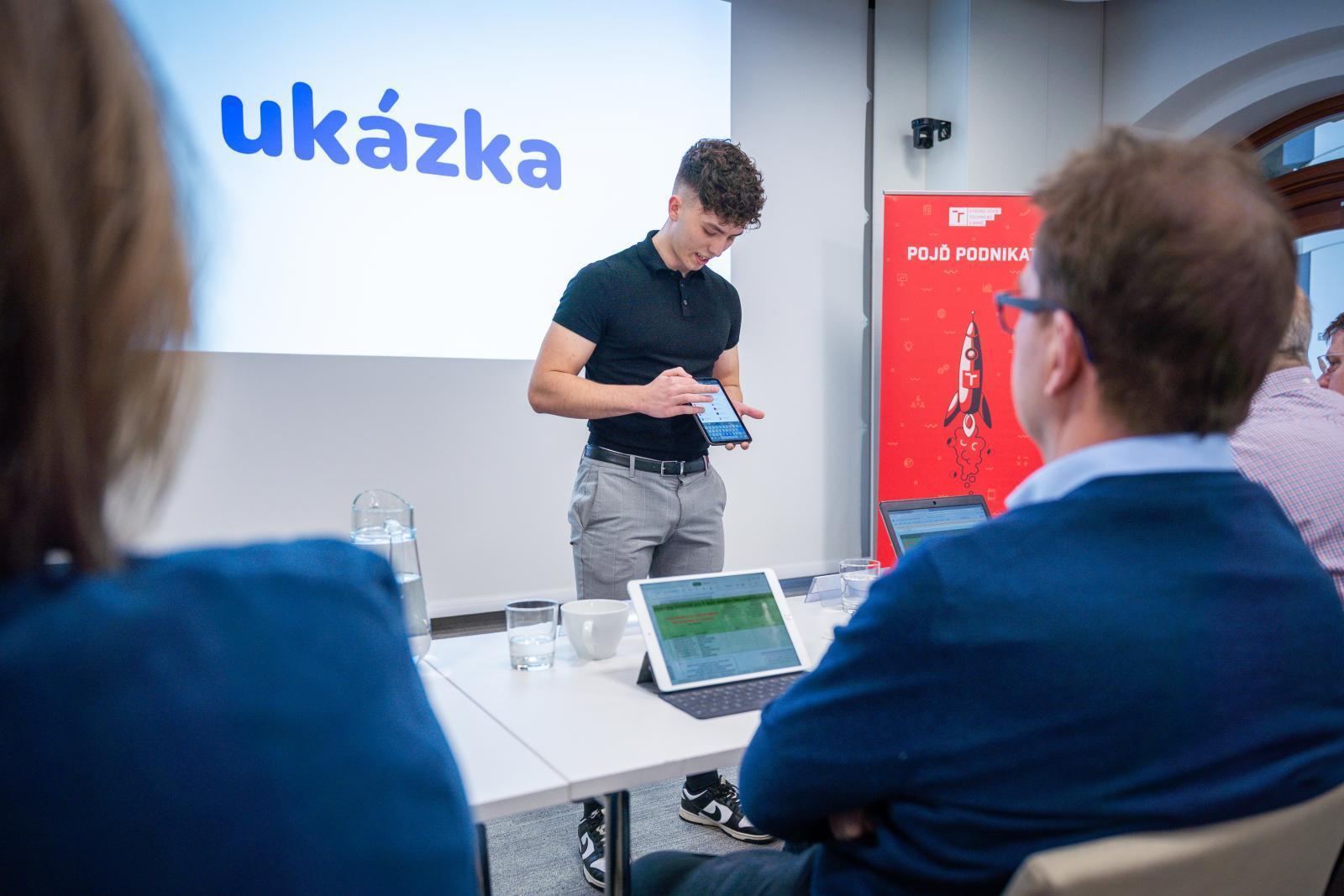
I was invited along with several other young entrepreneurs. I wanted to stand out and come up with something unconventional. I explained that we help companies ensure that ChatGPT recommends them accurately and truthfully, and that we were looking for other organizations we could assist.
I also demonstrated how AI perceives Czech presidents. Interestingly, it viewed Petr Pavel in a similar way to Václav Havel. A week later, I was invited back to Prague Castle, where I showed how different political parties approach organic and AI search, and whether anyone was attempting to influence results a month before the election. The findings were quite interesting.
Did you discover any attempts at manipulation?
Yes, someone was trying to influence the results. And after my meeting with the president, several political parties even approached me to ask whether I would help them. I declined—it is a slippery slope.
Some time ago, people were discussing the influence of social media on voting preferences. Is the same now true of AI chatbots?
Many people around me were shocked by this. So ChatGPT’s answers can be influenced? I had no idea. Maybe I should think about that more and verify my sources. I find it fascinating that many people do not understand how these systems work. They are language models based on statistical methods and trained on source material. If someone influences the sources, they inevitably influence the answers as well.
People should be educated about this. AI can help us choose the right refrigerator, but it should not choose our president, our political party, our dietary supplements, or treat our illnesses.
How would you like your own life journey to develop in the future? Is moving into a cockpit still part of the plan?
I want to learn how to fly. But right now, I have found my purpose in startups. I enjoy new technologies and helping push human knowledge a little further forward. In other jobs, I never felt that my contribution was particularly significant, but here I feel that this is what I want to do. When I die one day, I want to know that I helped society move forward, even if only by a small amount.
It does not have to be anything grandiose—something as simple as developing a better AI shopping assistant that can give people good advice thanks to high-quality product data would be enough.
Before creating the Ranketta app, Vojtěch Oravec worked on the OneCalend project, which won him the BUT Student Entrepreneurship Award in a business idea competition. | Author: Václav Koníček
You have achieved significant success at a very young age. Is there any advice you would like to give to students?
Have self-awareness. Be pragmatic and honest with yourself. Sometimes you need to walk away from something that may not have much potential. What that means will be different for everyone, but the important thing is to keep trying and keep searching for your purpose.
Even in high school, you can gain experience working in a company. At university, you can go on an Erasmus exchange, start a business, or launch your own project. The years spent in high school and university are primarily about finding your direction—and very few people get it right on the first try. That is perfectly fine. I did not get it right either. Choosing the right path sometimes means taking ten wrong turns before finding the correct one.