Topic
29 January 2026
Taiwan: Chip and semiconductor paradise attracts more and more students and researchers from BUT

“I was pleasantly surprised by the high level of technical equipment at the workplaces, the openness of the local colleagues, and their willingness to cooperate. Working with experts from both academia and industry significantly broadened my perspective on the practical application of research,” says Alexandr Matějka from the Department of Microelectronics at FEEC BUT. He spent almost a year on an internship at the Taiwanese startup Jmem-Tek. “I focused on the hardware implementation of cybersecurity at the chip level, specifically on the design of security circuits using physically unclonable functions (PUF). My work involved designing and implementing the circuit itself, verifying its functionality through simulations, and subsequently creating the physical layout of structures intended for chip implementation. The internship also included participation in professional exhibitions and events focused on the semiconductor industry and technology companies, such as COMPUTEX, which helped me better understand current trends in the field,” he adds, noting that he considers the stay highly beneficial both professionally and personally.
Alexandr Matějka was joined by his colleague Petr Mrázek, who chose an internship at the same company. “I was involved in the development of their cryptographic chip. My specific task was to design and implement a hardware version of the AES (Advanced Encryption Standard) algorithm on a chip capable of masking computations during encryption and decryption, thereby practically preventing hacker attacks on the algorithm via so-called side-channel attacks,” explains Petr Mrázek.
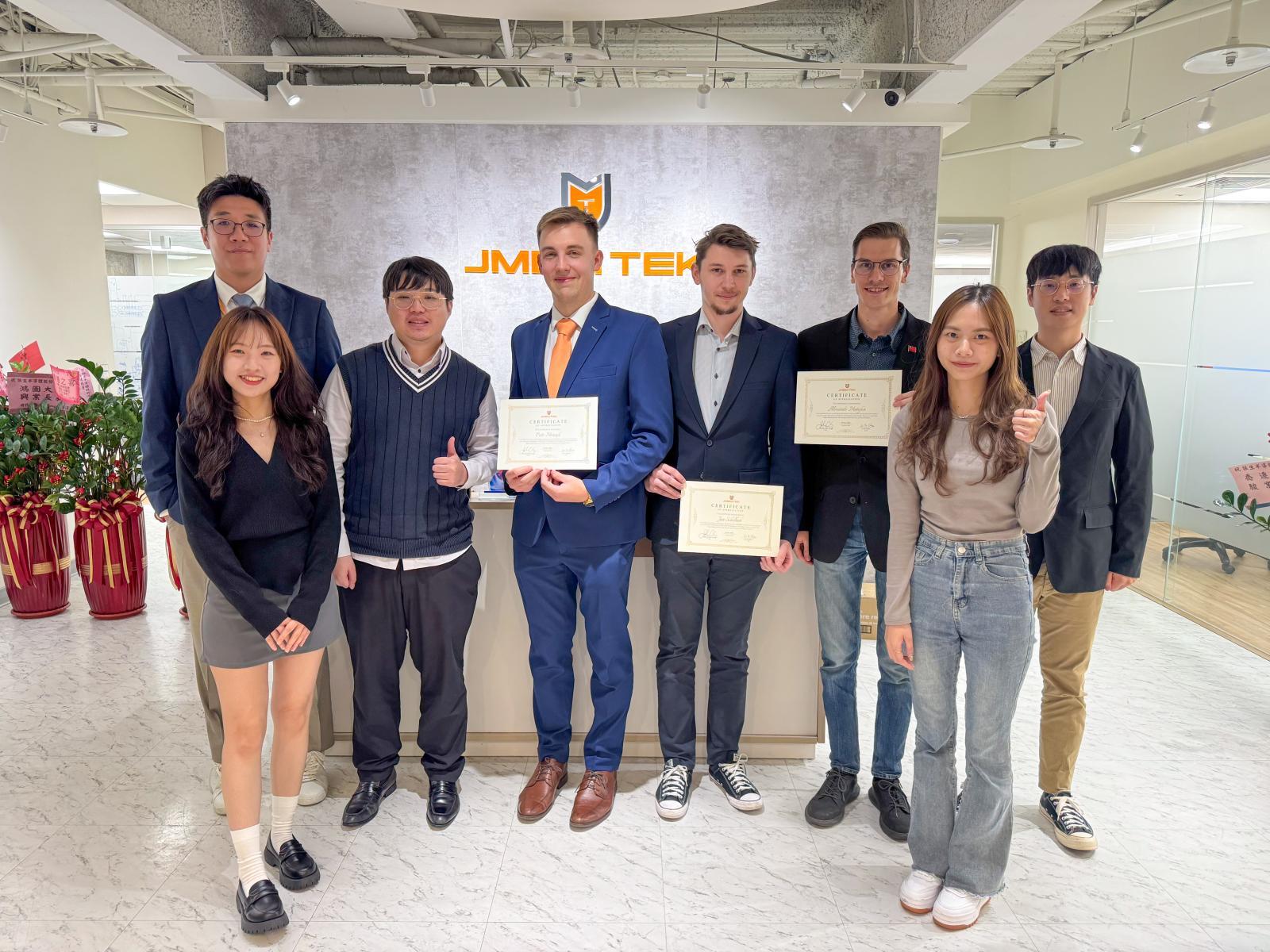
Both agree that their colleagues and the local people were very friendly and kind. “I greatly appreciated the humanity of the local people, who always tried to be helpful. Even if they didn’t speak English, they would try to call someone who did. I felt the same at work, where there was an excellent team and I became good friends with many colleagues,” says Mrázek.
Three months is not enough. A researcher recommends a longer stay
Zuzana Košelová from the Department of Microelectronics at FEEC BUT, who took part in research within the group of Professor Jeng-Rong Ho at the Department of Mechanical Engineering, National Central University, also agrees about the kind and friendly behavior of her colleagues. At the same time, however, she notes that the Taiwanese still kept a certain distance. “They did invite us to meetings, but these were often conducted in Chinese. Our supervisor would then briefly summarize in English what was being discussed,” recalls Košelová. She was also initially surprised that they constantly offered her students to carry out the research itself. “They were surprised that we kept asking when we would go to the laboratories. Later we understood that it is customary there for bachelor’s and master’s students to carry out all measurements and laboratory work,” explains Zuzana Košelová. Once both sides clarified their different habits, the colleagues tried to involve them more in the daily operation of the lab, especially in processing SiC wafers using advanced laser techniques.
Zuzana Košelová spent three months in Taiwan for family reasons and in retrospect considers a quarter of a year to be a short time. She advises those planning a stay in Taiwan to contact directly the PhD students or researchers working on the project they want to join. “With the experience I have now, I wouldn’t rely only on communication with the supervisor, but I would call my future colleagues in advance and ask about specific things,” she says.
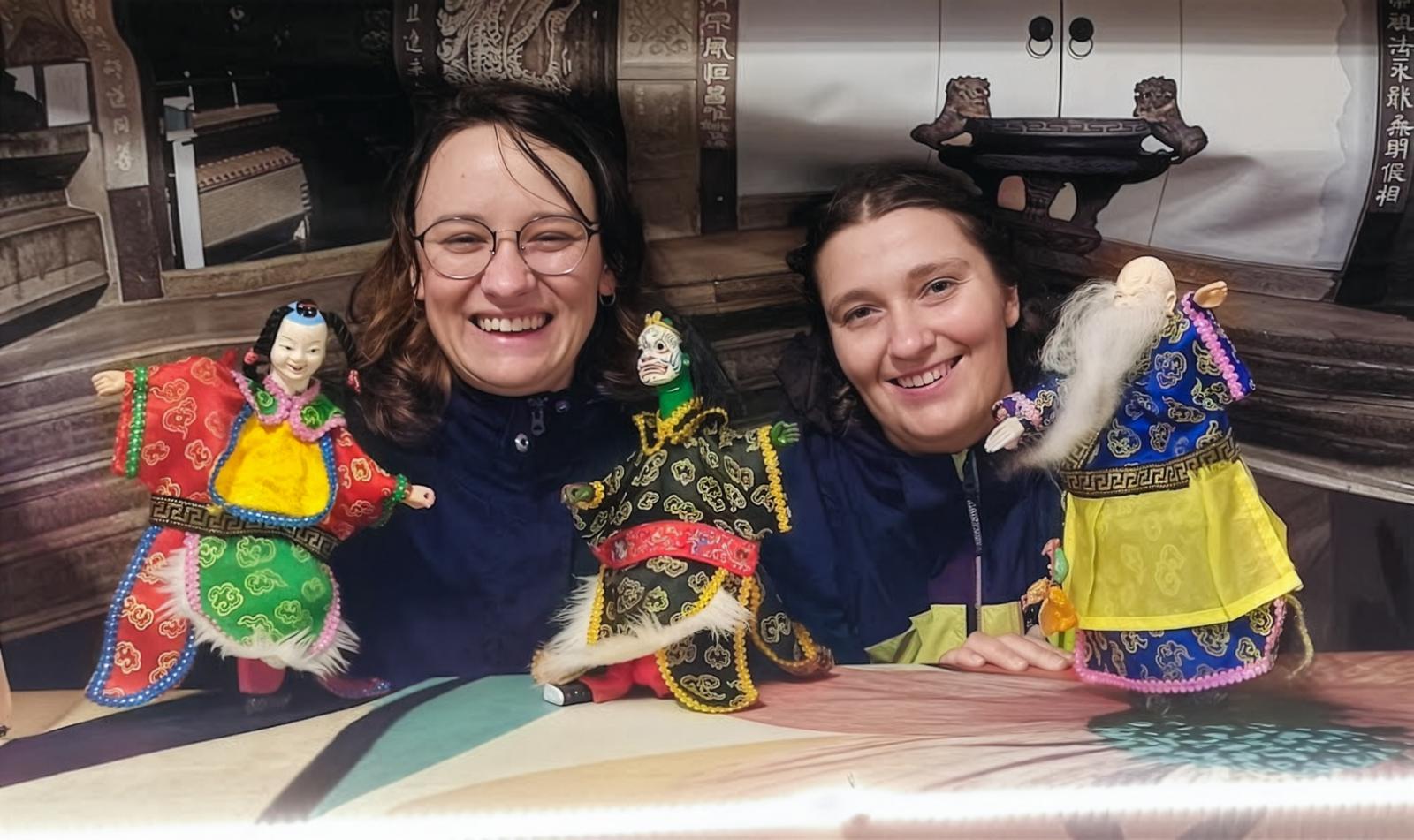
Thanks to the group leader, Zuzana Košelová also had the opportunity to visit a traditional Taiwanese family. “It was interesting to see how ordinary people live outside the city,” she says. She also used her free time to travel and explore local culture. “I really liked that different religions and cultures coexist side by side in Taiwan and respect each other. That’s something we could learn from,” she adds.
Escaping the bustle of the city into the mountains
PhD student Adam Šlechta spent almost the entire last year as part of the research group of Professor Shu-Ping Vivian Lin at National Chung Hsing University in the city of Taichung, located roughly in the center of the island. “I was involved in research in the field of 2D materials, neuromorphic transistors, and neural networks,” he explains. During his stay, he even co-authored a paper published in the scientific journal Small. “The article focuses on the fabrication and application of a neuromorphic structure made of 2D materials. A neuromorphic transistor is a structure that seeks to mimic the properties of neurons found in the human body,” adds Šlechta.
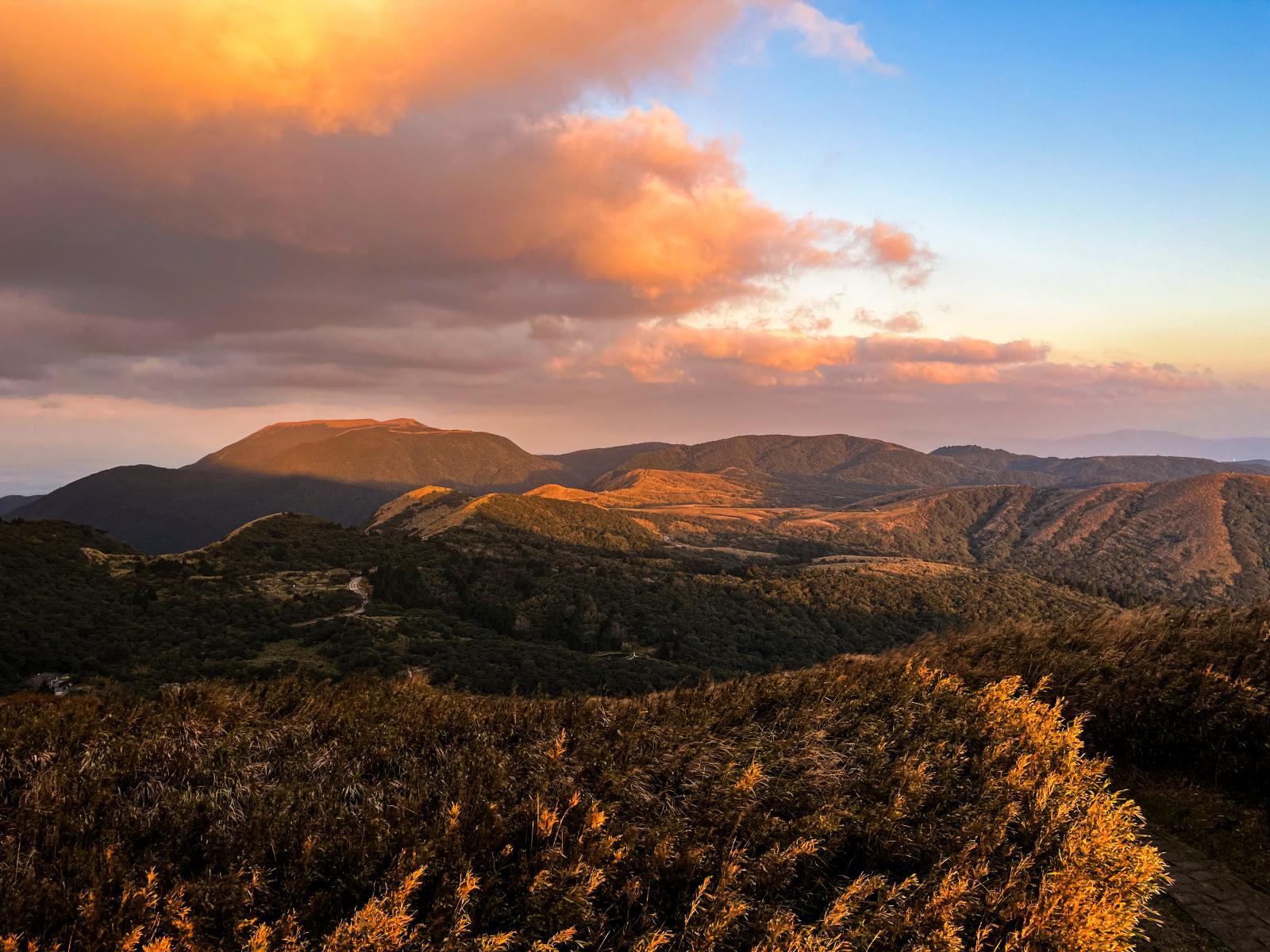
In his free time, he explored the local mountains. “The eastern part of Taiwan is covered by relatively high mountains, and I was very pleasantly surprised by the quality of the hiking trails. Personally, I recommend the mountains as an escape from the hustle and bustle of big cities and the high temperatures in the western part of the island,” he says. He was, however, unpleasantly surprised by an earthquake he experienced there. “We are not used to that in the Czech Republic. However, the local infrastructure is prepared for strong earthquakes, so it was never really a problem,” adds Šlechta.
Long working hours and resting directly at work
Doctoral student Jan Schilhab spent a total of seven and a half months in Taiwan, working together with Alexandr Matějka and Petr Mrázek at Jmem-Tek. According to him, it was also interesting to experience the well-known Asian work culture. “Longer working hours are common, for example. However, this is partly compensated by a longer lunch break, during which most colleagues rest directly at the workplace after lunch,” he describes.
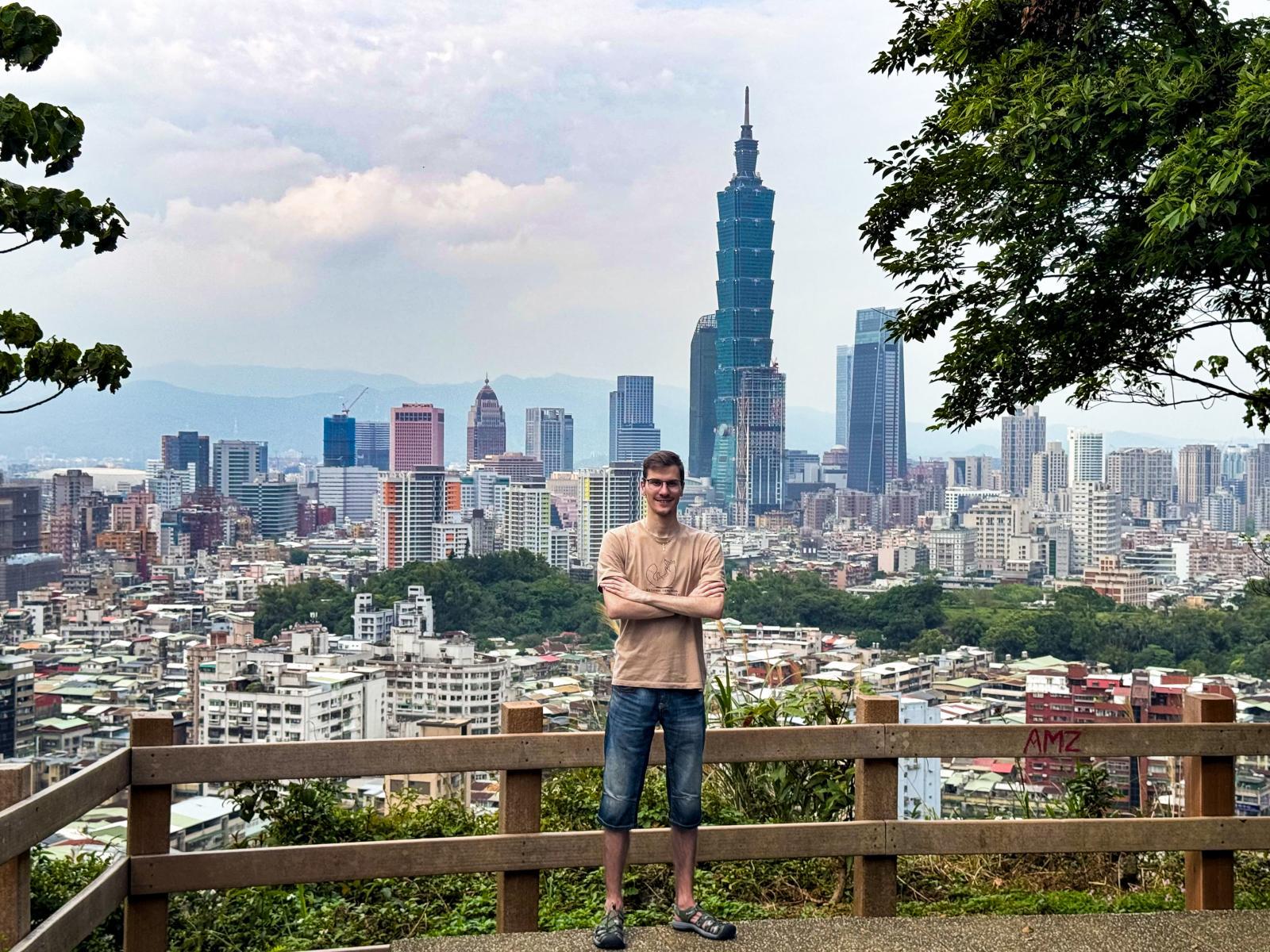
He recommends that anyone interested in studying or doing an internship in Taiwan go for it and keep an open mind. The same view is shared by all the others interviewed. According to Alexandr Matějka, Taiwan is a very interesting and beautiful place with great potential for the exchange of knowledge and experience, both in academia and in technology. He advises those heading there not to be afraid and to remain open to new experiences. “It pays off to try as many things as possible. Openness and a willingness to try new things are, in my opinion, the key to truly enjoying a stay in Taiwan and getting the most out of it,” concludes Matějka.
(zeh)
Fake or real signature? FEEC scientists develop software for handwriting forensics
Miroslav Kasal: Experimental radio electronics is my life's credo
YSpace succeeds in prestigious ESA programme and heads to space
Story of Professor Dinara Sobola: From First Experiments to Professorship
During a prestigious internship in Israel, a student of FEEC UT investigated the effect of anaesthetics on brain activity