Ideas and discoveries
FIT BUT is helping to develop the Záchranka app
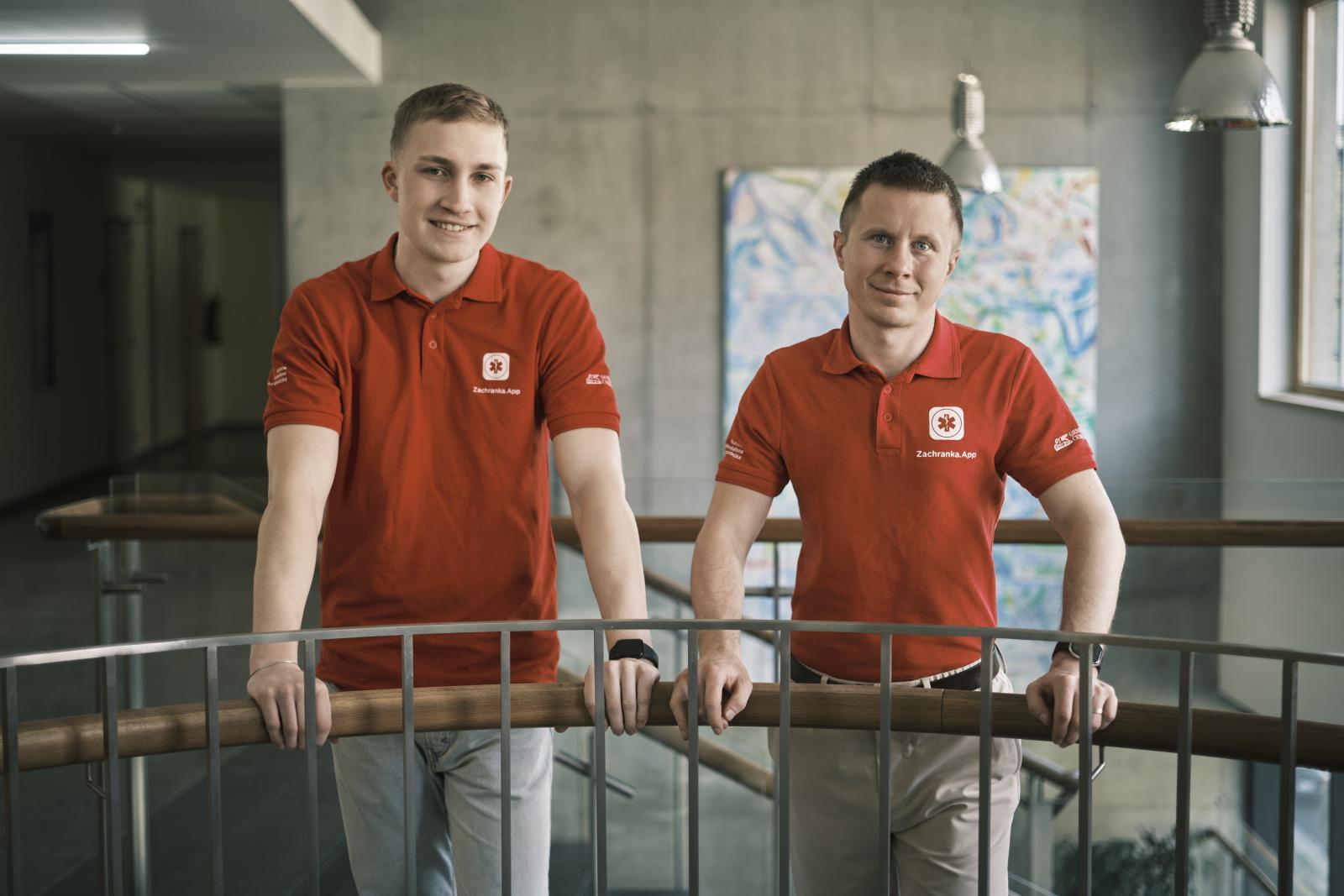
Few mobile apps are as widely used in the Czech Republic. Záchranka has already been downloaded more than 3.5 million times. Over 100 people use it daily, with a total of more than 220,000 contacts made so far. The project, which began as a bachelor’s thesis by Brno University of Technology student Filip Maleňák, is now the official app of the Emergency Medical Service, Mountain Rescue Service, and Water Rescue Service. And it has long since expanded beyond the Czech Republic: Záchranka is also used in Slovakia, Austria, Hungary, Finland (though Záchranka’s own servers do not operate there), and Bavaria, Germany.
From a bachelor’s thesis to an app that many of us carry with us
The original intention of Filip Maleňák, now director of the non-profit organization Aplikace Záchranka, was to locate the person calling 155 in order to assist emergency services. Maleňák’s father developed information systems for emergency services, so his son became well acquainted with the emergency responders’ environment and the challenges they face. The initial version of the app sent an SMS with the caller’s GPS coordinates. It went live in 2016, covering the entire territory of the Czech Republic. Since then, it has undergone significant development, evolving from a “location button” into a comprehensive health protection tool with an ever-growing number of features. It can provide emergency responders with information about the patient’s medical condition, contact details for a close relative, or monitor the situation on-site via video feed. As a result, even before the call is made to the dispatch center, they know what happened, to whom, and where.
Work on the app continues. The ambulance service has its own internal software team, albeit a small one consisting of seven members. Among the new features announced last year are the introduction of a universal SOS button to replace the previous 155 number, which enables contact with the 112 line and communication via SMS chat, as well as the addition of a Psychosocial Module for addressing acute mental health issues, the use of which is gradually expanding to individual regions of the Czech Republic.
The current development of Záchranka is closely linked to the environment of the Faculty of Information Technology at Brno University of Technology. Former faculty student Martin Dybal, now an employee of Záchranka, has been working as an external lecturer at the faculty since 2014 (specifically, he contributes to the ICS and IW5 courses supervised by Dr. Jan Pluskal). Dybal is responsible for assigning projects that allow students to participate in Záchranka’s software development. One of the three projects already defended is a bachelor’s thesis authored by Radek Jestřabík, the results of which have recently been implemented in Záchranka and have brought significant progress in video call functionality.
Utility that is beyond dispute
Radek Jestřabík first encountered the issue as a student in the C# Seminar course, where Martin Dybal offered potential topics for research. Jestřabík reached out to him, drawn to the video aspect. “My motivation? I was trying to improve my skills with .NET, and of course I immediately saw the concrete benefits of such a project for people,” he comments today, looking back on the start of his collaboration with Záchranka. He was familiar with the app before the course began, but he didn’t have it installed. He began working on tasks related to the application at the end of his second year. The result is a system in the form of a multimedia server through which video is transmitted from the user to the Záchranka portal. Although a video solution had existed within Záchranka since 2020, it had its limitations. Perhaps the most pressing issue was the fact that after a video call ended, dispatchers had to wait some time for the recording to be processed before they could do anything with it—that is, rewind it, return to a critical moment to evaluate it, and make further quick decisions based on that. And perhaps an even greater motivation to find their own solution was the announcement by the previous solution provider that it would be shutting down its servers in the near future.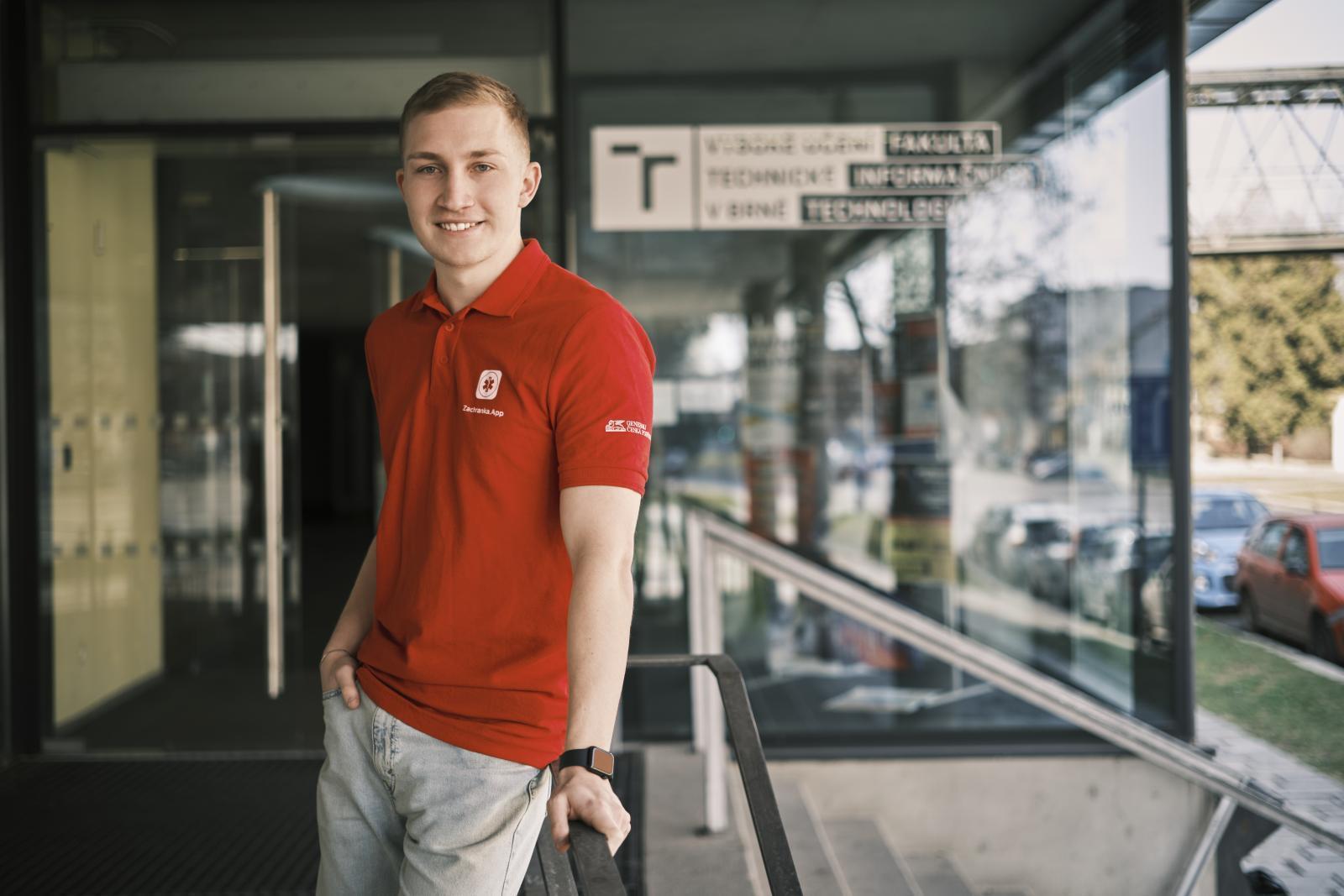
It is precisely the ability to live rewind the video call recording while still on the call with the caller that is the key benefit of Jestřabík’s solution. Other changes added to the portal thanks to him include the ability to capture important moments via a screenshot, which can be forwarded to a newly assigned dispatcher, who then doesn’t have to search through the recording. The solutions are now implemented in the app in all countries where Záchranka operates. “It was challenging; there were a lot of things we had to improve and fine-tune,” comments Jestřabík. Feedback from the field was therefore crucial for the developers. The conditions and operations in different countries alone vary significantly. Another challenge was transmission from locations with weak signals, such as in mountainous areas. “We tried to design it so that the connection would remain active for as long as possible. Before the video call begins, an SMS is sent, and when the app is opened, location information is already being transmitted—so even if the video call isn’t established, emergency services at least know the location of the incident,” says Jestřabík, offering a glimpse into how Záchranka works.
The biggest challenge was the network component. This is logical for such a specific app aimed at the broadest possible audience. “There are countless browsers, operating systems, and mobile phone models of all ages… And the ideal goal is 100% coverage.” According to Jestřabík, the developers found themselves at a dead end several times and had to start over. But today, Radek Jestřabík is pleased to note that the frequency of video calls is increasing, primarily in cases where two people are present at the scene and one can record. In these situations, most connections now take place via video transmission.
Jestřabík designed a solution of such high quality that it earned him a spot directly on the Záchranka development team. So he won’t be continuing at FIT after completing his bachelor’s degree; the choice between school and work was nevertheless not an easy one. As he admits, the desire to gain practical experience was the deciding factor. Moreover, he has his family’s support—his mother is a nurse—so there was no need to discuss the usefulness of what he is currently working on at home.
Radek Jestřabík’s work may not be the last contribution that FIT VUT makes to the Záchranka app. Currently, a topic for a bachelor’s thesis has been announced, which should lead to the creation of a tool for assessing video recordings of performed chest compressions. After all, even in the previous academic year, Jestřabík was not the only student who contributed to the app’s development through his work. At the same time, Kateřina Lojdová defended her bachelor’s thesis “The Záchranka App for Push-Button Phones”.
Thank you to everyone who has participated in this meaningful project!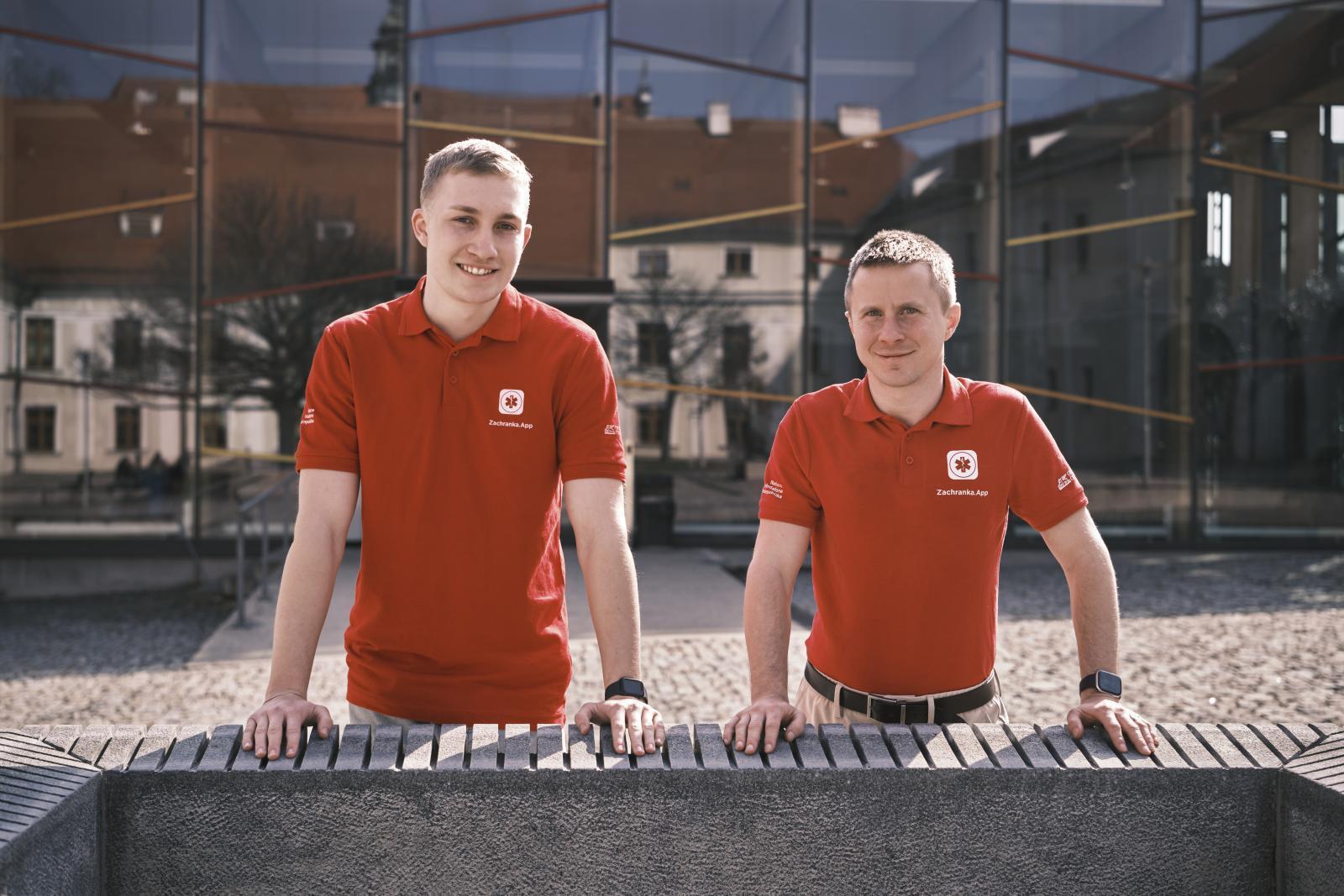
Source: FIT BUT
Doctoral students in engineering study the behaviour of the circulatory system. Neural networks also help them
Tomáš Dacík focuses on static analysis of programs. For his work he received the Brno Ph.D. Talent
Trucks and buses will be equipped with nanoradars and sensors, experts from FIT BUT participated in their development. It will increase road safety
FIT scientists want to prevent pilots from being blinded by lasers. They are developing a security system that will find the attacker
Matús Nosko from FIT BUT came up with an original ecosystem for smart homes. His equipment sells by the dozens