Ideas and discoveries
12 May 2026
Preventing Lubricant Loss in Space: ESA-Backed Research Moves Toward Orbit

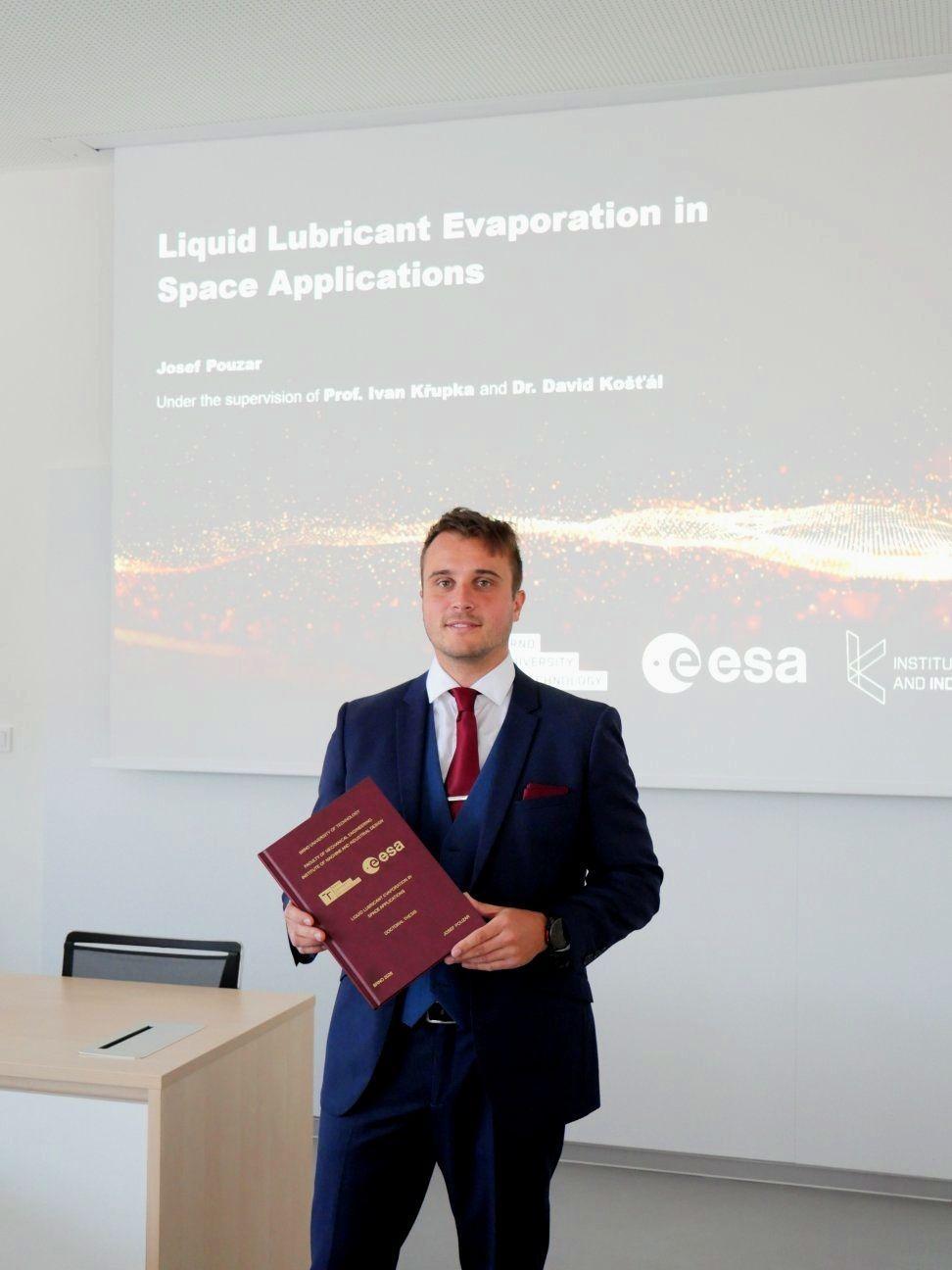
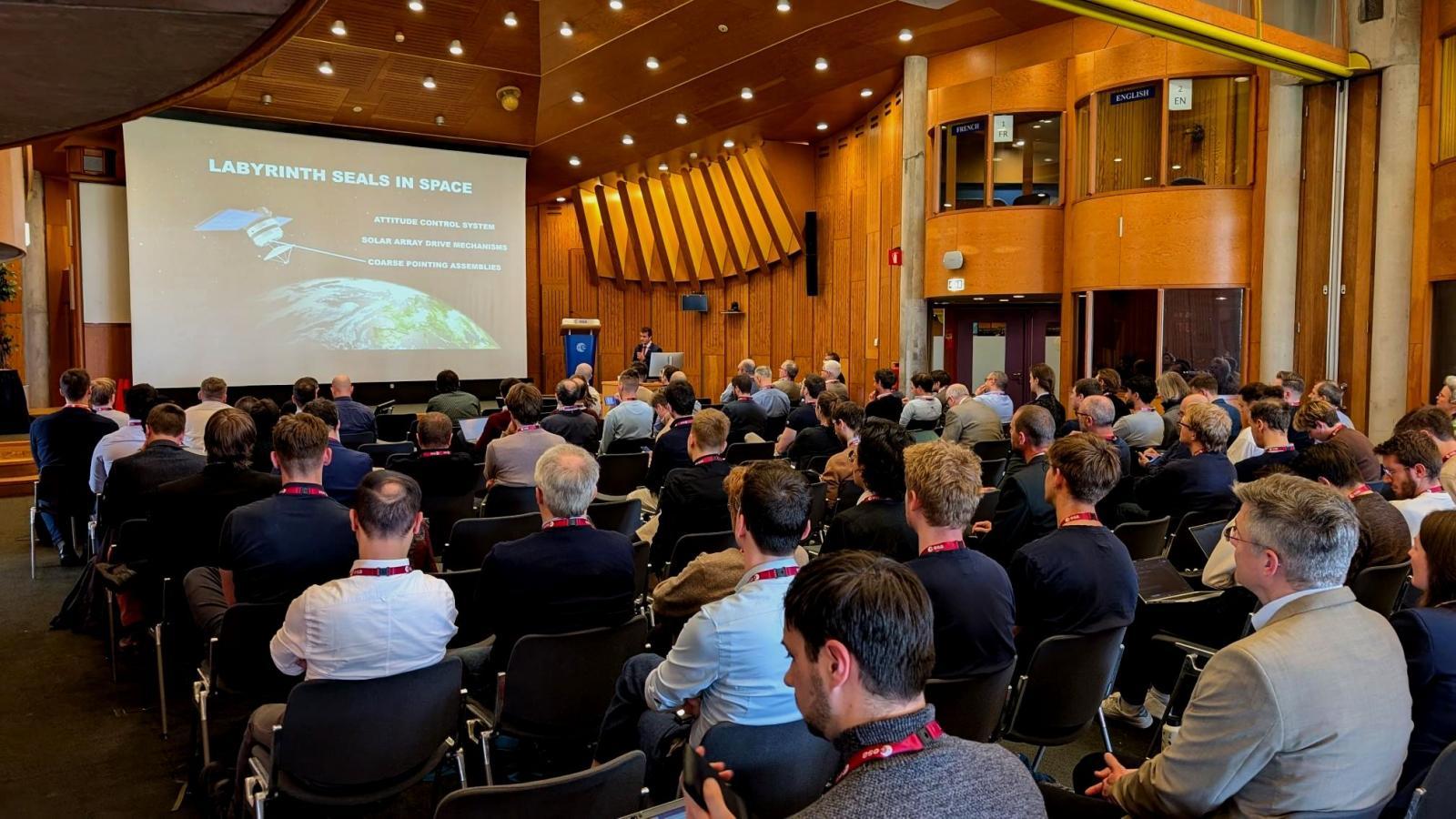
How can lubricant evaporation in the vacuum of space be prevented from damaging sensitive satellite components? During his doctoral studies at the Faculty of Mechanical Engineering, Josef Pouzar set out to answer precisely this question. His research focused on so-called labyrinth seals – inconspicuous yet critical components of space mechanisms. Developed in cooperation with the European Space Agency (ESA), his dissertation results are now heading for validation directly in orbit.
Space is fascinating, but it is also an extremely hostile environment – not only for humans, but for space technology as well. Vacuum conditions, intense radiation and even atomic oxygen can compromise the structure of materials. In space applications, labyrinth seals are designed to keep liquid lubricants in place while preventing contamination of surrounding subsystems. In a vacuum, lubricants gradually evaporate, potentially jeopardizing both the operation of equipment and the integrity of sensitive optical elements. And that is not the only challenge.
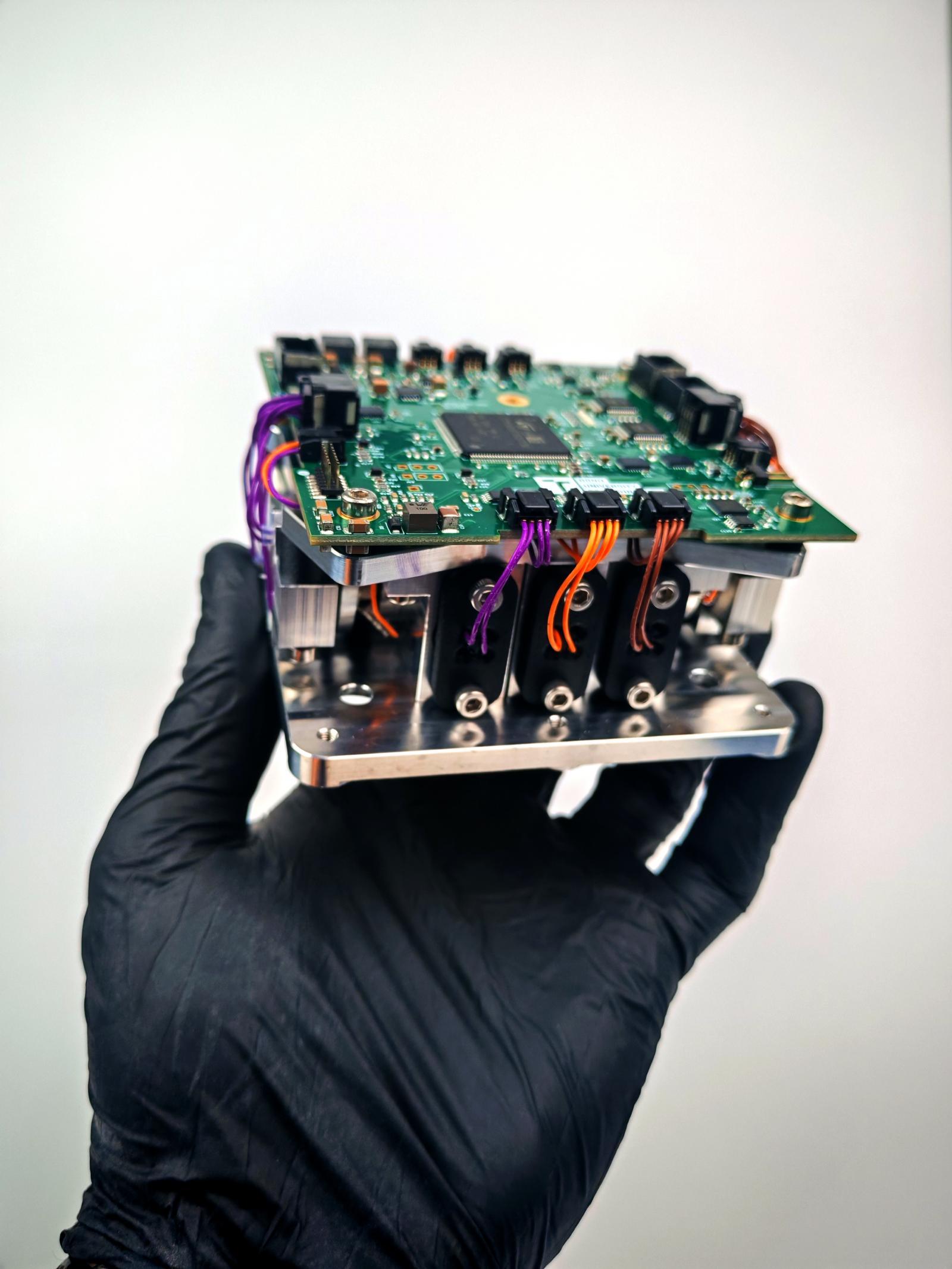
It was precisely the inaccuracies in predicting lubricant evaporation that sparked his research. The topic proved compelling enough to gain support from the European Space Agency through its Co-funded Research programme within the Discovery initiative, which co-finances part of the costs of doctoral projects while also enabling continuous expert consultation. Securing this support is highly competitive, with a success rate of around seven percent. “If your proposal succeeds, ESA covers half of the project costs throughout your doctoral studies. At the same time, I had the opportunity to consult regularly with ESA specialists. My project supervisor on ESA’s side was René Seiler – someone who has worked at ESA for twenty-five years and contributed to most of the agency’s scientific missions,” says Pouzar, appreciating what he describes as a gateway into the world of space technologies.
Alongside Pouzar’s fundamental research, ESA also commissioned a consortium of companies to address a similar problem through the development of computational software for more accurate lubricant leakage prediction. “Their development is still ongoing. ESA aims to deliver one comprehensive outcome combining both projects, so we are currently discussing how my results could contribute to the development of the software,” adds Pouzar, who is looking forward to continuing his collaboration with the agency.
These are not the only plans Pouzar has for the outcomes of his research. Last year, at the International Engineering Fair in Brno, he and his colleague David Košťál presented an experiment they plan to launch into orbit next year as part of the experimental satellite BRNOsat. “We will compare conventional and our optimized seal designs directly in microgravity. At the same time, we are developing new measurement methods, because monitoring data directly in orbit is technically extremely challenging,” says Pouzar.
These are not the only plans Pouzar has for the outcomes of his research. Last year, at the International Engineering Fair in Brno, he and his colleague David Košťál presented an experiment they plan to launch into orbit next year as part of the experimental satellite BRNOsat. “We will compare conventional and our optimized seal designs directly in microgravity. At the same time, we are developing new measurement methods, because monitoring data directly in orbit is technically extremely challenging,” says Pouzar.
The research also extends beyond space applications. The principles of molecular flow and contamination in vacuum environments are highly relevant for semiconductor manufacturing and other vacuum-based technologies. According to Pouzar, the results could also find practical application through industrial collaboration. “One of the possibilities currently under preparation is to build on this research through a spin-off company focused on consulting, simulation, experimental validation and optimization of labyrinth seals for vacuum applications. At the same time, my long-term goal remains further professional development in the field of space mechanisms and continued cooperation with ESA,” Pouzar concludes.
(ivu)
(ivu)
Ondřej's career path led from internship in space industry to ESA
Česká Hlavička awardees with a passion for engineering
Five-time world champion is preparing his bachelor thesis on motorized surfboard
The first woman at the head of the formula team has a great start
Unlocking the Mysteries of the Sun: An Interview with Prof. Shadia Habbal