People
2 February 2026
From scripts to autonomous flight: Jakub Prvý talks about studying, drones, and leading a student team
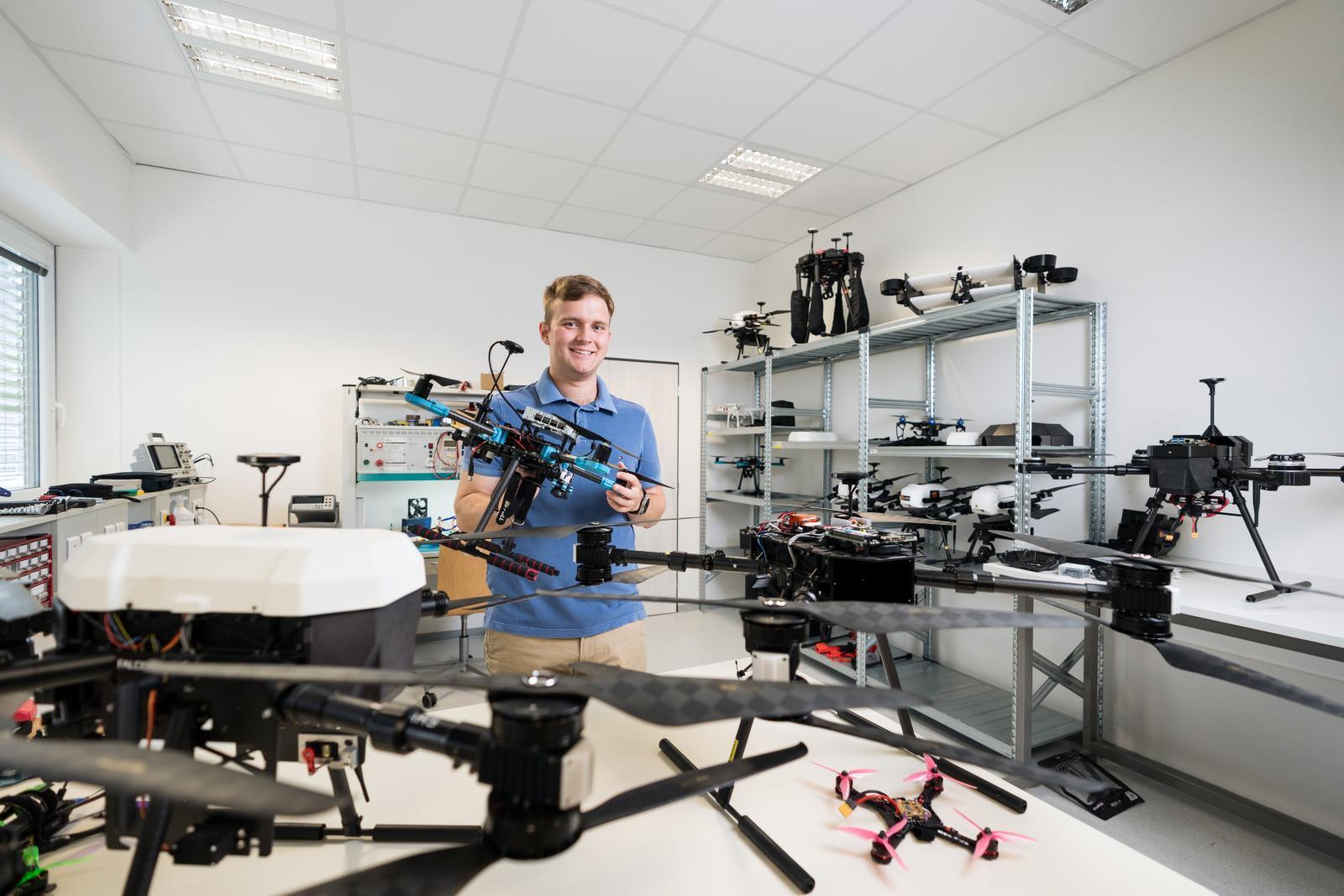
Why did you choose this particular study program, and how does it prepare you for the field of unmanned systems?
Automation at FEEC is a great foundation for drones because there is enormous overlap. From control theory to microprocessors to programming itself. This allows you to understand the entire system as a whole, not just as a remote-controlled toy.
What brought you to the world of drones and unmanned systems?
I have always been interested in swarm flying and flying things in general. The view from above gives you a completely different perspective and possibilities for what you can observe or map. But the main turning point was the "Unmanned Aircraft" course here at the faculty, where we discussed the technical basics. I just thought it was great to be in control of something that can fly and perform tasks autonomously without having to be manually controlled all the time.
What do you consider to be the greatest academic challenge you have had to overcome?
The biggest challenge was learning to work effectively with time and finding a system in the enormous amount of information that school throws at us in the early years. I had to understand that even the most difficult theory has practical significance. Once I began to see these connections and was able to apply them in practice, everything started to fall into place. Mastering these basics was a challenge, but it prepared me well for solving more complex problems as part of a team.
How do you manage to combine demanding studies with the time-consuming role of team leader?
It's mainly about good time management. The role of leader in the DRC is time-consuming, but I like the fact that the faculty understands when students devote themselves to professional practice beyond the scope of their studies. I try to connect things—what I learn in the team when building drones helps me understand the context of the subjects more quickly. School gives me the necessary theoretical foundation without which we would never be able to fly the drones at DRC properly, so in the end, it all complements each other well.
What is the main goal of your student team?
The goal is to develop our own unmanned platforms that are not just for fun, but have real-world applications. We want students to be able to come in, take on a project, and see it through from idea to functional prototype.
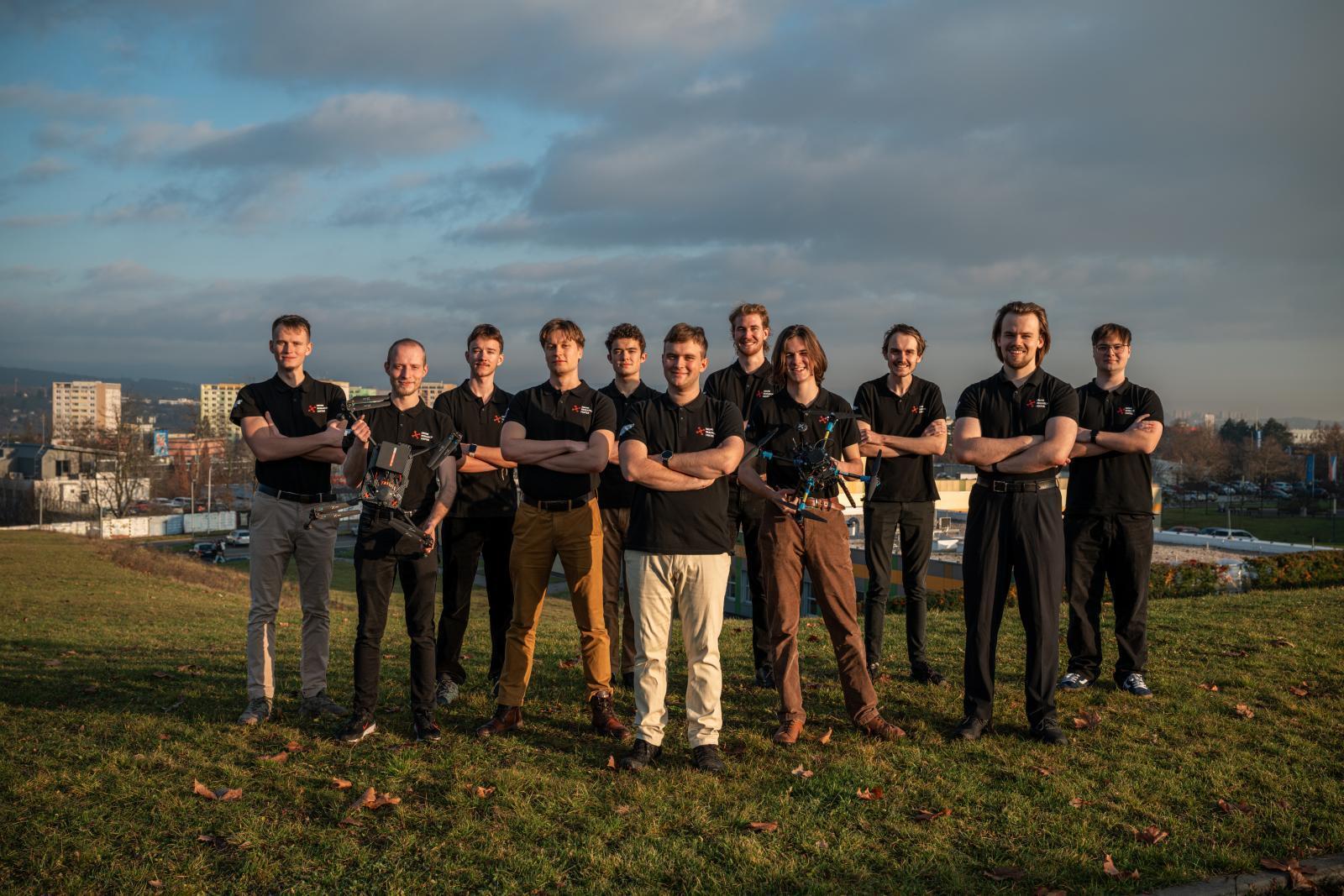
What does being a team leader mean to you? What are your main responsibilities and how do you motivate your colleagues?
It mainly means keeping the team together and making sure that projects move forward. We work on things that we really enjoy, so motivating team members is easy—all they need to see is that what they have built actually works. A successful launch is simply the best motivator.
Which of the team's projects or achievements to date do you consider the most significant, and why?
I consider the Security Drone project to be our greatest achievement. It's like a technical playground for us, where you can try out everything on a single machine—from design to sensors. Currently, about eight people are working on it, and the goal is for the drone to be able to fly completely on its own and autonomously recognize things in its surroundings. But the most significant thing is that everyone has learned more than they would have in traditional classes. This shift in the practical skills of the entire team is the greatest success for me as a leader.
Can you describe a specific technical challenge that you solved as a team?
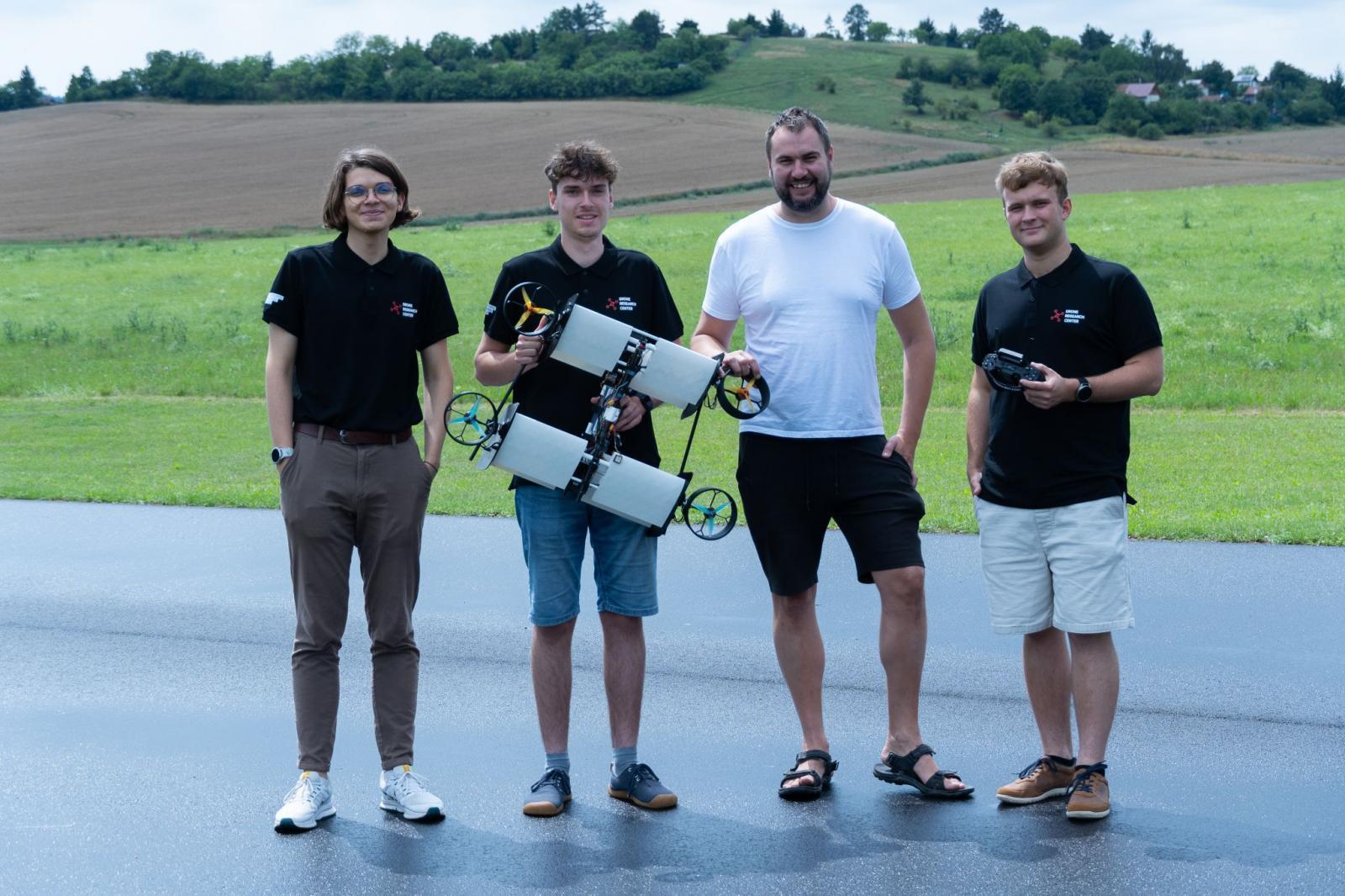
Probably the biggest challenge was developing our VTOL tiltrotor in collaboration with UDX (we wrote about this in the article “Students from Drone Research Center association are collaborating on the development of a flying vehicle”). We had to design the entire structure from scratch. Biplanes are not common in themselves, and when you add a rotor tilt system, you have to solve a lot of mechanical and stability issues for which there are no ready-made instructions. It was a matter of constant testing and tuning to get the concept off the ground.
What benefits do you see for students in joining the club? What can membership in such a team offer them?
It's about trying out the technologies from lectures on a real scale. At FEEC, we have well-equipped laboratories where we spend a lot of time doing practical measurements and testing, and the club is basically an extension of that. You learn to solve problems on the fly and work in a team on complex tasks, which is a great complement to individual work in the labs. In addition, you gain contacts with companies in the field with which the faculty works closely.
Where do you see yourself in five years? Do you plan to stay in the field of unmanned systems?
I enjoy this field and see enormous potential in it for streamlining processes that are currently unnecessarily lengthy or dangerous. In five years, I see myself more involved in the development and testing of autonomous systems directly in the field or in industry. Theory is an important foundation, but personally, I find it most fulfilling to see these technologies in real-world operation.
How do you think your team or drones in general can positively influence the future and society?
Drones have great potential in many fields, whether it's industry or emergency services. As a team, we mainly give students the opportunity to get involved and try it out in practice. I see great potential for use in inspections or emergency services, where drones can save time and people don't have to go somewhere that is dangerous for them.
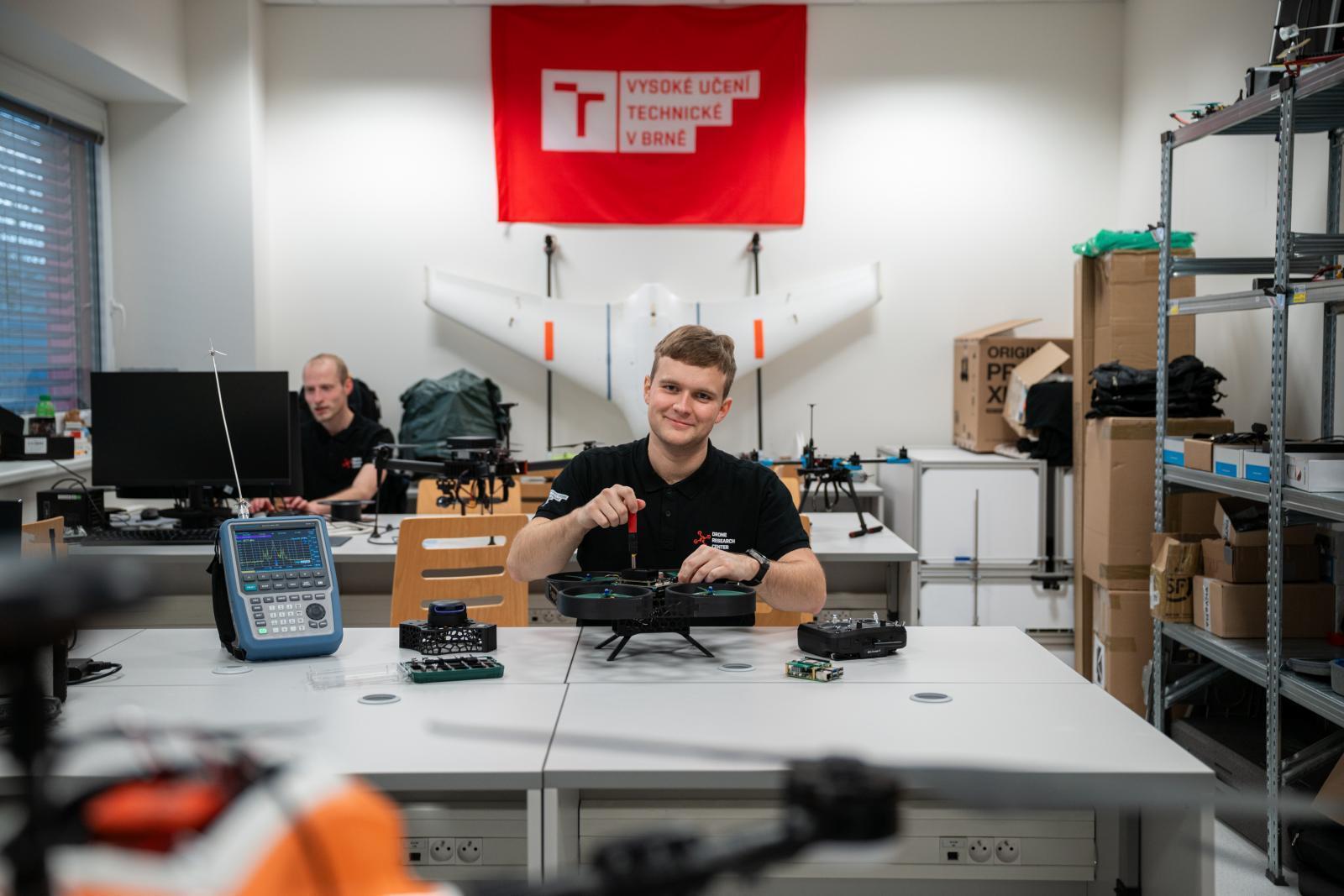
You were chosen as the face of the campaign. What would you like to say to students who are just thinking about studying at university?
I would like to tell them not to be intimidated by the fact that technology is generally perceived as a "hardcore" field of study. Sure, it's challenging, but the important thing is to find your niche – something you'll enjoy outside of your textbooks. BUT will give you the foundation, but it's up to each individual to decide how much they want to take advantage of the opportunities and whether they'll be satisfied with just a degree or if they'll take away something they really enjoy. Don't be afraid of it. Even though it may seem like a lot of theory and math that you won't need, it's just a filter. Once you get through it and find a project or team that you really enjoy, it will start to make sense.
Source: FEEC BUT
From a Master’s Thesis to World-Class Guitars
Summer research programme at BUT inspired American students to pursue PhD
Since he was a child, he dreamed of space. Now he wants to put the first student satellite into orbit
Greater efficiency and completely new applications. Experts from FEEC BUT also collaborate on satellites for very low orbit
A student from BUT founds OMG Robotics and changes the way computer science is taught in Czech schools